
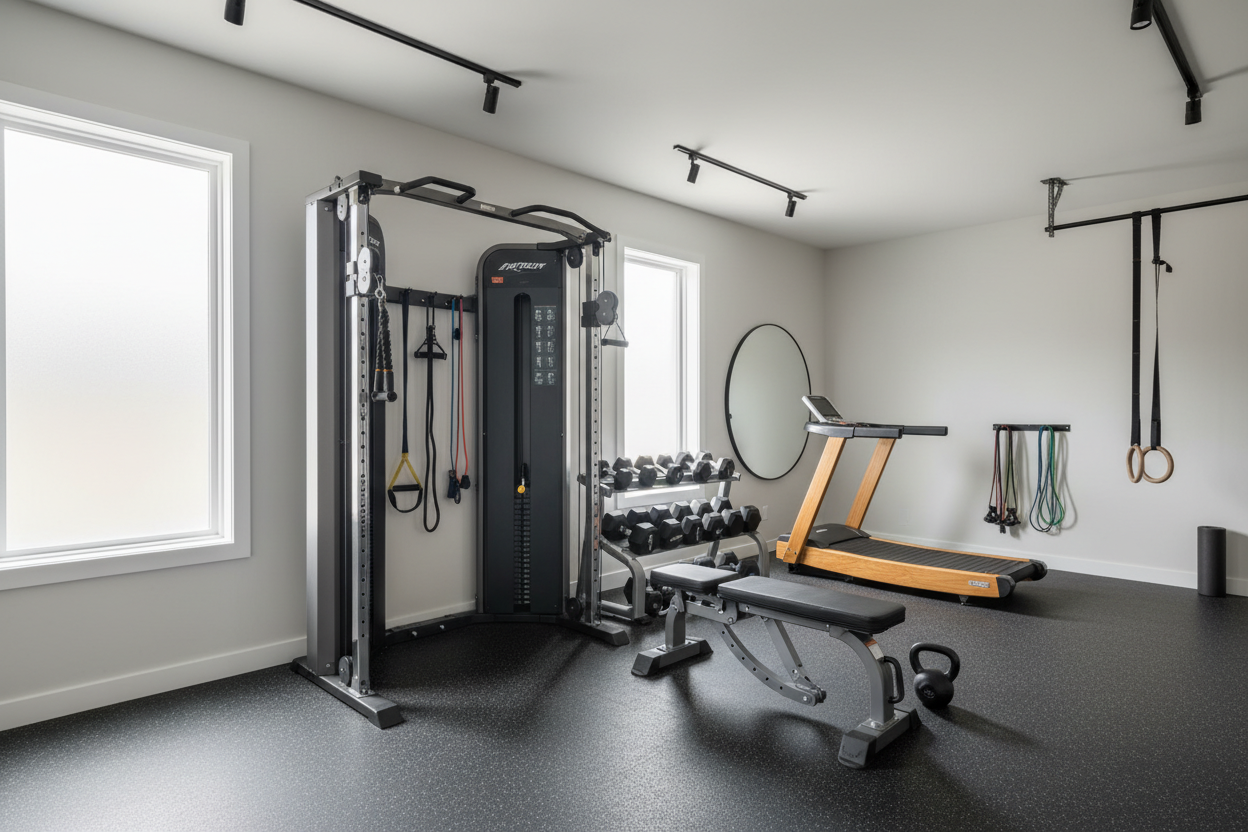
I remember staring at a $2,000 motorized treadmill in a showroom, convinced it was the ticket to a better physique. Three years later, that machine was nothing more than a very expensive place to hang my damp hoodies. If you are hunting for the best exercise machine at home, you need to think about what builds real-world strength, not just what lets you walk in place while watching Netflix.
Most people make the mistake of buying for their 'ideal' self—the version of them that loves running for 45 minutes straight. In reality, you want a machine that is hard to break, easy to use, and provides enough resistance to actually change your body composition. The best tools for the job usually involve iron, cables, and zero circuit boards.
- Durability: Non-motorized machines have fewer points of failure and last decades.
- Versatility: A single cable station can hit every muscle group from your delts to your calves.
- Resale Value: High-quality steel holds its value far better than outdated electronics.
- Footprint: Modern functional trainers fit into a 4x4 foot corner while replacing a dozen separate machines.
The Motorized Cardio Trap
We have been conditioned to think that the best indoor fitness machine must have a touchscreen and a monthly subscription fee. That is a lie sold by companies that want to lock you into a software ecosystem. Treadmills and ellipticals are the first things people buy and the first things they stop using because, frankly, they are boring and high-maintenance.
When a motor burns out or a console glitches on a cheap treadmill, you are left with a 300-pound paperweight. These machines are often built with thin-walled tubing and plastic shrouds that rattle the moment you pick up the pace. If you want a machine that survives a decade of abuse, you have to look past the 'smart' features and look at the frame construction.
Prioritizing Iron Over Electronics
Strength training is the most efficient way to change how you look and feel. Heavy-duty metal doesn't need a firmware update. When you focus on the best indoor exercise machines that rely on gravity and friction rather than electricity, you are investing in a tool that works as hard as you do. Muscle is metabolically active; the more you build, the higher your resting heart rate stays.
I shifted my focus years ago from chasing 'calories burned' on a screen to chasing weight on a pin-loaded stack. If you are serious about building a complete home gym, your centerpiece shouldn't be a bike—it should be a station that allows you to squat, press, and pull. You want 11-gauge or 14-gauge steel that doesn't shimmy when you're at the end of a heavy set.
The All-In-One Contenders That Actually Work
If I had to pick the absolute best exercise machine for home use, it is a toss-up between a high-end functional trainer and a Smith machine home gym station. These units use a pulley system that provides constant tension on the muscle, which is often safer for solo lifters than throwing around a loose barbell without a spotter.
A good Smith machine combo usually includes a pull-up bar, a landmine attachment, and integrated plate storage. You are looking at a footprint of roughly 65 inches wide by 48 inches deep. That is smaller than most high-end treadmills, yet it allows for over 50 different movements. Look for units with a 2:1 pulley ratio if you want smooth, long travel for functional movements, or a 1:1 ratio if you want the full weight of the stack for heavy rows and lat pulldowns.
What to Look for Before You Buy
Don't get distracted by shiny paint jobs. Check the specs. You want to see 'aircraft-grade cables' and 'sealed bearing pulleys.' If the manufacturer doesn't list the steel thickness, it is probably thin junk. There is a reason why the best at home exercise machine weighs over 300 pounds—mass equals stability. If you can shake the machine with one hand, it won't feel safe when you are pushing your limits.
Check the guide rods too. They should be solid steel, polished to a mirror finish. Cheap machines use hollow tubes that create a 'stuttering' feel when you pull the handle. You want that butter-smooth glide that you find in commercial gyms. If the weight stack is plastic-coated, make sure the core is still cast iron or steel, not sand-filled plastic which can crack and leak over time.
Building the Rest of Your Setup Around It
Once you have your primary station, you don't need much else. A solid adjustable bench that can handle 600+ lbs and a pair of adjustable dumbbells will fill in the gaps. This keeps your floor clear and your workouts focused. You don't need a different machine for every body part; you need one high-quality machine that does the heavy lifting.
People often ask me is there actually a single best exercise machine for home use that covers everything. While no single piece is 'perfect,' a functional trainer with a built-in Smith bar gets you about 95% of the way there. It handles the compound lifts for strength and the isolation moves for aesthetics without requiring a 2,000-square-foot commercial space.
Personal Experience: The Wobbly Power Tower Mistake
Early in my lifting days, I bought a 'bargain' power tower from a big-box retailer. It looked fine in the photos, but the moment I tried to do a dip, the whole frame twisted. I felt like I was exercising on a ladder made of toothpicks. I ended up selling it for pennies and buying a real, heavy-duty rack. My lesson? Buy once, cry once. If the equipment feels light, it is probably built light. Go for the heavy steel every time.
FAQ
Do I need a professional to assemble these machines?
If you can follow IKEA instructions and have a socket wrench set, you can do it yourself. Most functional trainers take about 3 to 5 hours to assemble. Just don't tighten all the bolts until the very end, or the frame might be slightly out of alignment.
Are cable machines better than free weights?
They aren't 'better,' but they are more versatile for a home setting. Cables provide constant tension throughout the entire range of motion and are much safer to use if you train alone without a spotter.
How much floor space do I really need?
Plan for the machine's dimensions plus at least two feet of clearance on all sides. For a standard Smith machine station, an 8x8 foot area is usually the sweet spot for comfortable movement and plate loading.
Share:
Stop Buying Bundled Benches and Weights — Build This Instead
Are Life Fitness Planet Fitness Machines Actually Watered Down?