
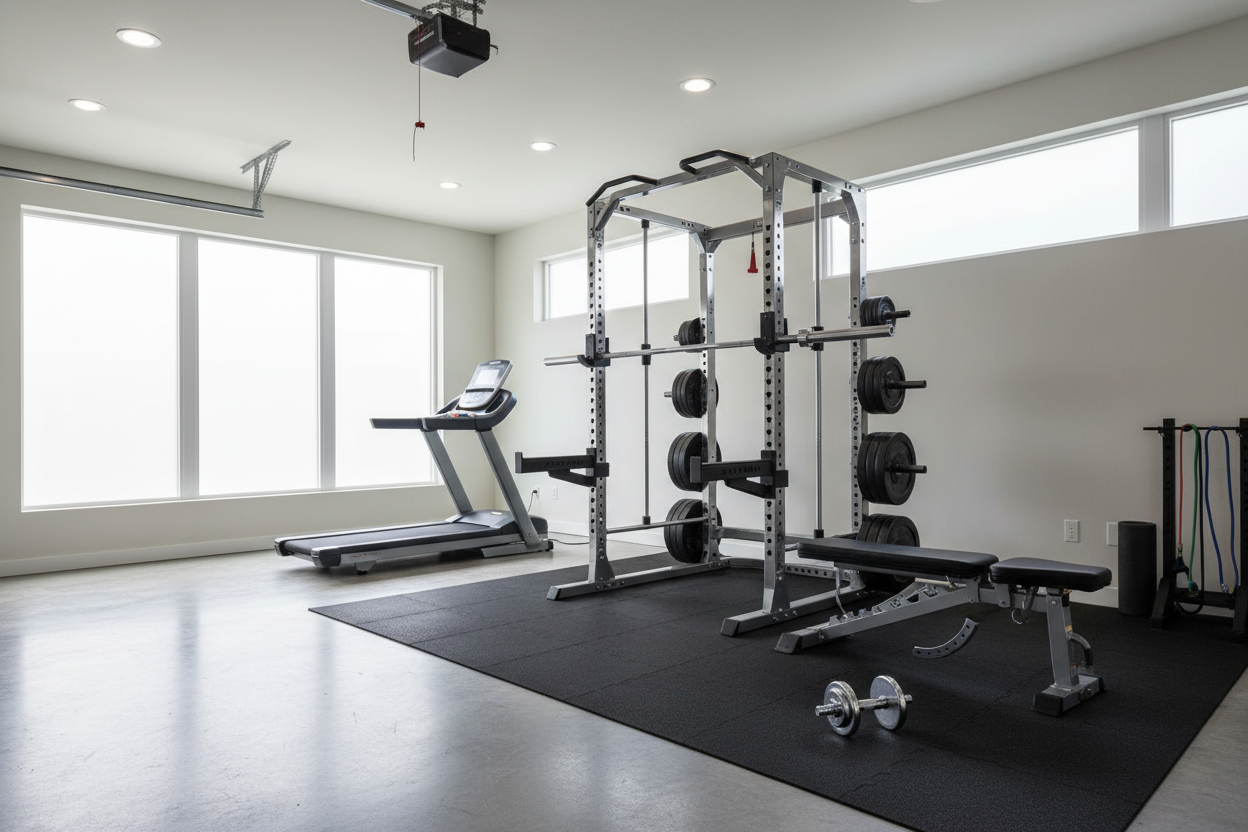
I spent over a decade being a total barbell snob. If it wasn't a 45-pound iron plate on a knurled bar, I didn't think it was 'real' training. But after years of grinding out heavy triples, I reached a point where my elbows felt like they were filled with broken glass and my lower back had a permanent grievance against me. Bringing fitness machines home wasn't a surrender; it was the smartest move I ever made to keep lifting into my 40s.
Quick Takeaways
- Commercial-grade machines provide fixed paths that save your joints from stabilizer fatigue.
- Look for 11-gauge steel; anything thinner will wobble and feel like a toy.
- Selectorized stacks are a luxury for speed, but plate-loaded saves you thousands.
- Don't buy anything that 'folds' if you plan on actually lifting heavy.
The 'Free-Weight Purist' Trap That Wrecked My Shoulders
I used to believe that machines were for people who didn't want to work hard. I followed the 'big three' dogma religiously, squatting, benching, and deadlifting four days a week. The result? Great numbers on a spreadsheet, but a body that felt 20 years older than it actually was. The constant demand on my rotator cuffs and lower back to stabilize every single rep meant I was always one 'off' day away from a month of physical therapy.
The realization hit me when I realized I was skipping accessory work because I was too beat up to hold a dumbbell. By integrating fitness equipment home setups that include dedicated machines, I could finally isolate my quads or chest without my CNS redlining just to keep the weight balanced. Machines allow you to train to absolute failure safely, which is where the real growth happens anyway.
Why I Stopped Buying Flimsy 'Compact' Junk
When I first looked into machines, I almost fell for the 'space-saver' trap. You've seen them—the machines that look like they're made of coat-hanger wire and claim to do 50 exercises in one. If a machine weighs less than the person using it, it's a liability. I've seen 'home' lat pulldowns tip forward because the base wasn't wide enough, and I've felt the terrifying flex of 14-gauge steel under a 200-pound load.
Stability is the entire point of a machine. If the frame is shaking, your nervous system will reflexively cut power to your muscles to protect you. This is why the best at home fitness machines don't fold up. A solid, welded frame with 3x3-inch uprights might take up more floor space, but it provides the rock-solid foundation you need to actually move heavy weight without thinking about the machine collapsing.
Selectorized vs. Plate-Loaded: The Footprint Math
The biggest debate in the home gym community is the weight stack versus the plate-loaded horn. A selectorized (pin-select) machine is the ultimate luxury. You can jump from a heavy set to a dropset in three seconds. However, they are heavy as hell to move into a basement and usually cost double. If you're on a budget, plate-loaded machines give you the same mechanical advantage for a fraction of the price.
Just remember the 'hidden' cost of plate-loaded gear: the footprint. You need at least two feet of clearance on either side of the machine just to slide the plates on. In a tight garage, that adds up fast. Before you go overboard, remember that the best home gym fitness equipment usually starts with a solid rack and bench; don't let a massive leg press crowd out your ability to actually move around your gym.
The Smith Machine Redemption Arc
I'll admit it: I used to make fun of the Smith machine. I called it the 'ego bar.' Then I tried to do high-volume Bulgarian split squats and incline presses alone in my garage at 6 AM. Trying to balance a shaky barbell when you're exhausted is a recipe for a trip to the ER. Swallowing my pride and installing a Smith machine home gym station changed my hypertrophy game overnight.
The fixed path allows me to focus entirely on the mind-muscle connection. I can adjust my foot placement on squats to target my quads specifically without worrying about falling over. Plus, the built-in safety catches act as a virtual spotter. I can now push to absolute failure on a bench press without the 'roll of shame' across my ribcage. If you're a solo lifter, this is the ultimate safety net.
How to Budget for Big Iron Without Going Broke
You don't need to buy a full commercial circuit at once. Start with a high-quality cable tower or a functional trainer. These use pulleys and aircraft-grade cables to give you hundreds of movement options in one footprint. Spend the money here—cheap pulleys feel gritty and ruin the experience. For things like GHDs or preacher benches, you can usually find those used on local marketplaces for pennies on the dollar.
When you're finally outfitting a real home gym, prioritize pieces that use linear bearings and 11-gauge steel. It’s better to have two machines that feel like they belong in a Gold's Gym than five machines that feel like they belong in a toy store. Your joints, and your gains, will thank you for the upgrade.
Frequently Asked Questions
Are home machines as durable as gym machines?
Only if you look at the specs. Commercial machines use 11-gauge steel and 2500-lb rated cables. If the home version matches those specs, it will likely last a lifetime in a residential setting because it isn't being used 18 hours a day by 500 different people.
What cable ratio should I look for?
A 2:1 ratio is standard for functional trainers, meaning 100 lbs on the stack feels like 50 lbs of resistance. This gives you more travel and smoother movement. A 1:1 ratio is better for heavy movements like lat pulldowns or seated rows where you want the full weight of the stack.
How do I maintain these machines?
It's simpler than you think. Keep the guide rods clean and apply a thin layer of 100% silicone spray every few months. Avoid WD-40, as it attracts dust and will make your weight stack feel 'crunchy' over time.
Share:
The Red Flags I Look for When Browsing Weight Machines for Sale
Why Most Viral Home Gym Designs Pictures Set You Up to Fail