
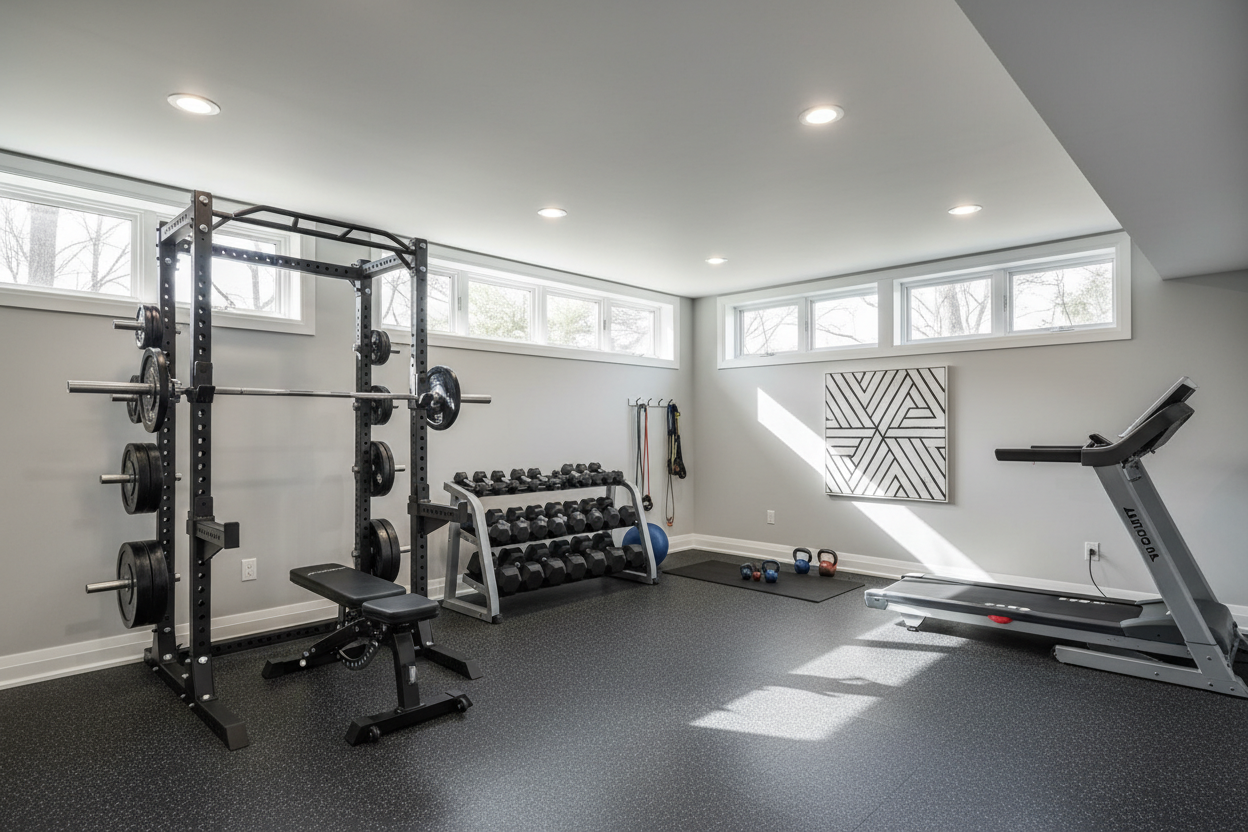
I have spent way too many late nights scrolling through social media, staring at home gym designs pictures that look more like high-end art galleries than actual places to train. You know the ones: white walls, zero dust, and a single pair of pristine dumbbells sitting on a designer rug. It looks incredible in a photo, but the second you try to grind out a heavy set of squats, the reality of a poorly planned space hits you like a misloaded barbell.
Quick Takeaways
- Aesthetics should always follow function; a pretty room is useless if you can't move.
- Wall-flush layouts often make loading plates a logistical nightmare.
- Basement photos frequently hide low-ceiling hazards with wide-angle lenses.
- Invest in heavy-duty flooring and storage before buying neon signs or decor.
The Trap of Aesthetic-First Planning
The biggest mistake I see people make is falling in love with beautiful home gym designs that weren't built for lifting. They buy a matching set of chrome kettlebells that look great on a shelf but offer terrible weight increments for a real program. When you are building a Home Gym, your first priority has to be the 'working circle'—the area around your equipment where your body actually moves.
I have seen guys spend three grand on custom paint and lighting, only to realize they don't have enough floor space to do a simple lunge. Social media thrives on minimalism, but real training is messy. You need chalk, you need space for a weight tree, and you need a floor that doesn't crack the first time you pull a deadlift. If your design doesn't account for the grit of a real workout, it is just an expensive storage unit for equipment you will eventually stop using.
Why Shoving Everything Against the Wall is a Rookie Mistake
If you look at most home gym design images, you will see racks and machines shoved tight against the drywall. It looks clean and maximizes open floor space, but it is a massive pain in the neck for plate loading. A standard Olympic bar is 7.2 feet long. If your rack is tucked into a corner, you are going to be doing a weird, awkward shuffle every time you try to slide a 45-lb plate onto the sleeve.
This is especially true if you are looking at a Smith Machine Home Gym Station or a functional trainer. These units often require side-access for maintenance or plate loading. I always recommend leaving at least 24 inches of clearance on either side of your bars. If you don't, you will eventually ding your drywall or, worse, pinch your fingers because you were trying to maneuver a plate in a cramped three-inch gap.
The Low-Ceiling Nightmare Hiding in Basement Gym Pictures
I have a love-hate relationship with basement gym pictures. On one hand, basements stay cool and offer great sound dampening. On the other hand, wide-angle lenses are the biggest liars in the fitness industry. They make an 84-inch ceiling look like a cathedral. I once helped a buddy install a high-end power rack in his cellar, only to realize he couldn't do a single pull-up without his forehead hitting a floor joist.
Before you buy that 90-inch 'monster' rack you saw online, grab a tape measure. You need to account for your height plus the height of the pull-up bar, and add another 6-10 inches for head clearance. If you are planning on doing standing overhead presses, you likely need a 9-foot ceiling or you will be stuck doing them seated for the rest of your life. Don't let a pretty photo trick you into buying gear that physically won't fit your movements.
Stop Letting Decor Ruin Your Floor Plan
There is a trend in home gym decorating ideas photos where the walls are covered in neon signs, mirrors, and motivational posters, leaving zero room for actual utility. Mirrors are great for form, but if they go all the way to the floor, one stray dumbbell bounce and you are cleaning up glass for a week. I’d much rather see a wall covered in heavy-duty pegboards for cable attachments and bands.
Instead of blowing your budget on 'vibes,' check out these At Home Gym Equipment Ideas That Won't End Up on Craigslist. Spend that extra cash on a high-quality barbell or a rack with a 3x3-inch 11-gauge steel frame. I promise you, a rack that doesn't wobble when you re-rack 300 pounds will motivate you more than a 'No Pain No Gain' neon sign ever will. Decor is the last 5% of the build; the first 95% should be iron and rubber.
Practical Layout Rules You Should Actually Copy
When looking for fitness gym design ideas, look for the 'path of the bar.' A good layout centers around the most used piece of equipment—usually the rack—and builds outward. You need a 7x8 foot dedicated space just for the barbell path and the person standing behind it. If you have a small space, consider a folding rack that mounts to the wall, but make sure your wall studs can actually handle the shear force of a heavy squat.
Ventilation is another thing those pretty pictures never show. You need airflow. A single oscillating fan is worth more than five pieces of wall art. Also, consider your flooring carefully. Those flimsy foam puzzle mats you see in 'budget' gym photos are garbage; they slide, they compress under heavy loads, and they smell like chemicals. Go to a farm supply store and get 3/4-inch horse stall mats. They are heavy, ugly, and will last longer than your house.
My Personal Lesson in Bad Planning
My first garage gym was a disaster of 'aesthetic' over function. I bought a cheap rack because it matched my color scheme and put it right under the garage door motor. I couldn't do pull-ups, I couldn't do overhead presses, and I had to move my car every time I wanted to use the barbell. I eventually had to sell everything at a loss and start over. Now, my gym isn't the prettiest on Instagram, but I can hit every lift in my program without hitting a wall or a ceiling fan. That's the real win.
Frequently Asked Questions
How much space do I need for a home gym?
At a minimum, you want an 8x8 foot area for a power rack and barbell. If you want to add a bench and some dumbbells, 10x12 is the sweet spot for a single person to train comfortably without feeling boxed in.
What is the best flooring for a home gym?
Skip the foam. Get 3/4-inch thick rubber stall mats. They protect your subfloor from dropped weights and provide a stable, non-slip surface for heavy lifting. They are the industry standard for a reason.
Do mirrors really help in a home gym?
Yes, but not for vanity. They are vital for checking your back angle during deadlifts or your depth during squats. Just make sure they are mounted at least 6-12 inches off the floor to avoid impact from rolling weights.
Share:
I Finally Brought Commercial Fitness Machines Home (Here's Why)
I Toured 3 Crazy Home Gyms (And Found Out What Actually Gets Used)