
I spent a decade convinced that if it did not involve a barbell and iron plates, it was not real training. I looked at people using a resistance exercise machine as if they were taking the easy way out. Then my elbows started feeling like they were being stabbed with ice picks every time I touched a bench press. My shoulders felt like they were filled with gravel during every overhead session.
The stubbornness finally broke when I realized I was avoiding heavy lifts just to dodge the pain. I needed a way to keep the stimulus high without the joint-crushing impact of gravity-dependent iron. I stopped scrolling through Instagram highlight reels and started looking at the science of constant tension.
- Cables provide constant tension that free weights cannot match.
- They allow for safer training near failure without a spotter.
- Modern machines have a much smaller footprint than commercial units.
- Pulley ratios (2:1 vs 1:1) change how heavy the weight actually feels.
The Day I Realized Free Weights Weren't Enough
I hit a wall hard about two years ago. My bench press stalled at 315, not because my chest was weak, but because my connective tissue was screaming. Every time I unracked the bar, my elbows flared up. I tried every sleeve, wrap, and liniment on the market, but the mechanical stress of free weights was the culprit. Gravity only pulls down, which means the hardest part of the lift is often where your joints are most vulnerable.
I realized I was hunting for the best home resistance gym because I needed a way to isolate muscles without the sheer force of a falling barbell. Adding tension gym equipment allowed me to hit my triceps and chest from angles that gravity does not allow. Within a month of switching my accessory work to cables, my joint inflammation plummeted. I was finally training the muscle, not just surviving the movement.
What Actually Makes a Resistance Exercise Machine Worth It?
If you have ever used a cheap home gym from a big-box store, you know the jerky, stuttering feeling of a bad pulley. It feels like pulling a sled through sand. A real, high-quality resistance exercise machine uses aluminum pulleys and aircraft-grade cables to create a glide that feels like butter. You want to feel the weight, not the friction of the machine itself.
When you are researching how to pick the best home resistance gym, pay attention to the pulley ratio. A 2:1 ratio means 100 lbs on the stack feels like 50 lbs in your hand, but you get twice the cable travel. This is essential for functional movements and explosive work. If you are a pure bodybuilder, you might prefer a 1:1 ratio for the raw load. Don't settle for plastic pulleys; they will flat-spot and ruin your flow within six months.
Constant Tension: The Biomechanical Cheat Code
The biggest flaw of free weights is the 'dead zone.' Think about a bicep curl: at the bottom and the top, there is almost zero tension on the muscle. Weight resistance machines fix this. Because the cable is pulling against you throughout the entire arc, your muscles are under fire from start to finish. This leads to better hypertrophy and less wasted time.
Using resistance machines in the gym allows you to manipulate the strength curve. You can set the pulley high to make the stretch the hardest part, or low to peak the contraction. This versatility is why pro bodybuilders, despite their love for heavy iron, never skip the cable aisle. It is about maximizing the 'time under tension' without the risk of a 400-lb bar crushing your windpipe if your form slips.
Types of Gym Resistance Machines You Should Actually Consider
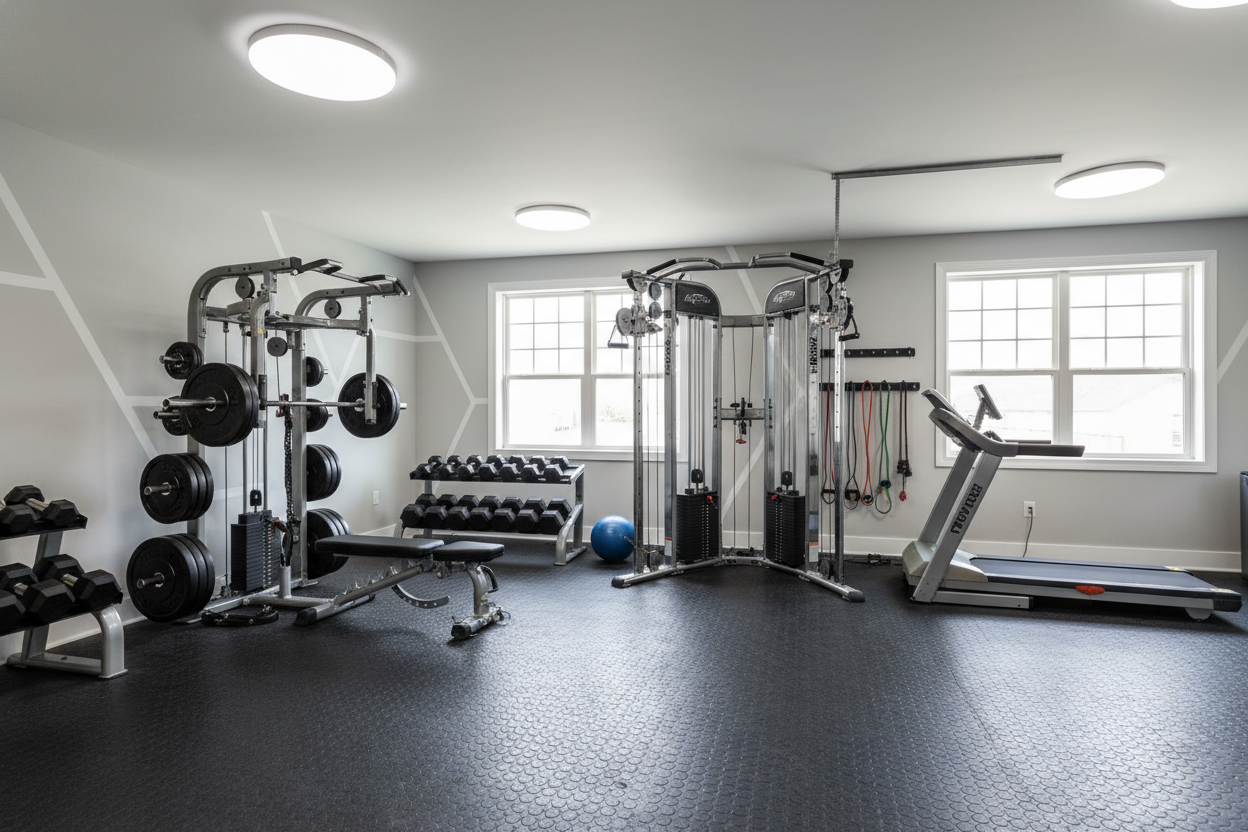
You do not need a 20-piece commercial circuit. For most garage gyms, a functional trainer is the gold standard because it offers two independent adjustable pulleys. If you are tight on space, a single wall-mounted cable tower can handle 80% of what a full trainer does. These resistance training machines are the workhorses of any serious accessory program.
If you still want that barbell feel but with a safety net, a Smith machine home gym station is a solid middle ground. It provides a guided path that allows you to push to absolute failure on squats or presses without worrying about balance or dumping the bar. For those focusing on back development, a dedicated lat pulldown with a 1:1 ratio is hard to beat for building genuine thickness.
Fitting Resistance Machines in the Gym (Without Sacrificing Space)
The biggest lie in fitness is that you need 500 square feet for a cable setup. I managed to fit a dual-stack functional trainer into a 6x8 corner of my garage. The key is looking for 'corner-optimized' designs or units that mount directly to your power rack. Many resistance gym machines now share the same uprights as your squat rack, saving you massive amounts of floor real estate.
When planning your home gym, prioritize versatility. A machine that only does leg extensions is a waste of space. A machine that allows for low rows, face pulls, cable crossovers, and belt squats is an investment. I regret buying a standalone pec deck early on; it took up too much room for a single-use tool. Stick to multi-functional cable systems and you will never run out of ways to grow.
FAQ
Do cables build as much muscle as barbells?
Yes. Your muscles don't have eyes; they only know tension and load. Cables provide more consistent tension through a full range of motion, which is often superior for hypertrophy.
Are resistance machines safer for seniors or beginners?
Absolutely. The guided path and lack of balancing requirements make them much easier to learn. Plus, you can't 'drop' a cable on yourself the way you can a dumbbell.
How much maintenance do these machines need?
Very little. Wipe the guide rods down with a silicone-based lubricant every few months and check the cables for fraying. If you buy quality, it will last a decade.
Share:
I Planned My Home Gym Setup Backward (And Paid the Price)
What Happens When You Pull the Pin: How Gym Machines Work