
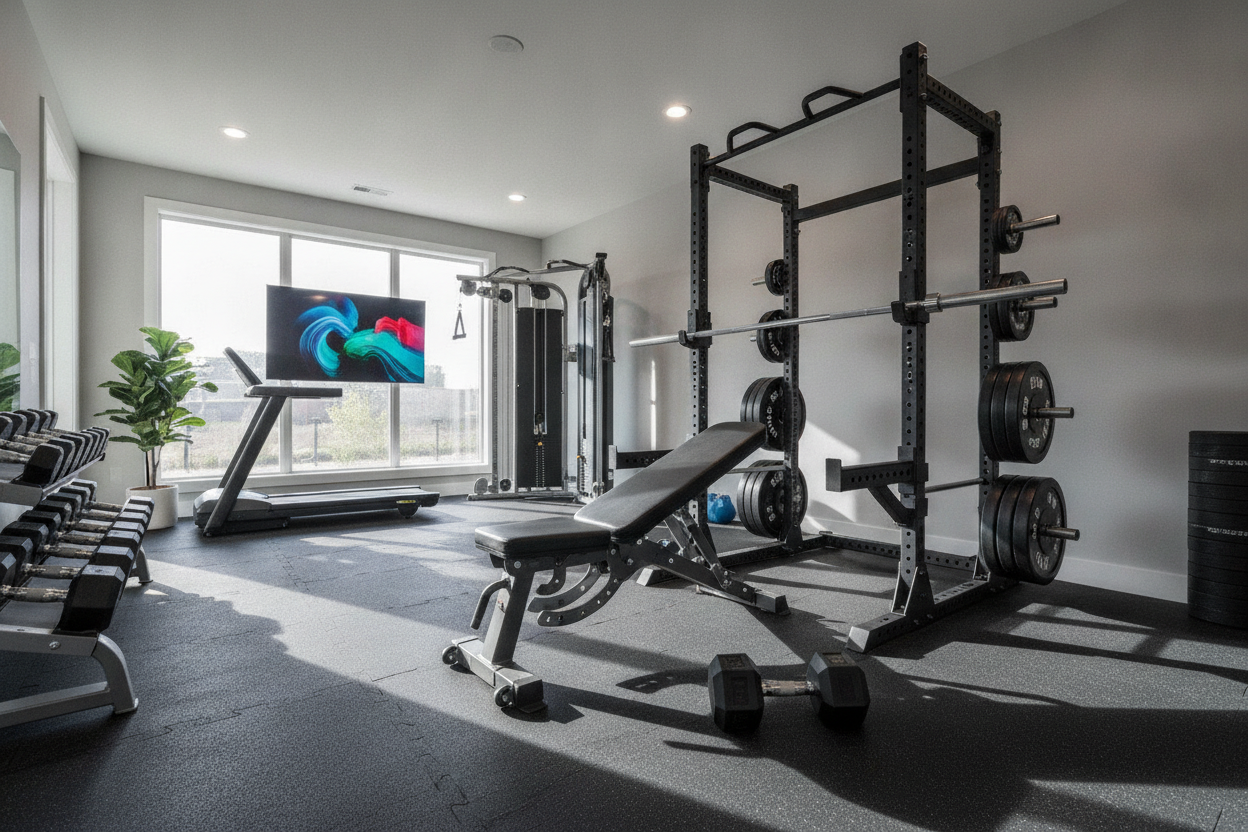
I am 6'4" with a wingspan that makes most power racks look like toys. For years, I just accepted that my head would hang off the end of every bench I owned. I spent a decade scrolling through forums and midnight Amazon listings, hoping to find something that didn't feel like a balance beam. It wasn't until I almost blacked out during a heavy incline press—straining my neck just to keep my skull from tipping back into empty space—that I realized I needed the best adjustable weight bench for tall person specs, not just whatever was on sale at the local big-box store.
- Minimum 34-inch back pad length to ensure full head support.
- 17.5 to 18-inch floor-to-pad height for optimal leg drive.
- 11-gauge steel construction to handle heavy combined weight.
- Tripod front-foot design to provide room for long legs.
The Terrifying Head Hang (Why Standard Pads Fail Us)
Most commercial benches are built for the 'average' person, which usually means someone around 5'10". When you're north of 6'2", a standard 45-inch total pad length is a biomechanical disaster. If you align your hips with the seat gap to get a good arch, your head ends up in no-man's-land. This isn't just a comfort issue; it's a total stability killer. Without your head anchored firmly against the vinyl, you cannot properly engage your upper traps or maintain a safe cervical spine position under load. I have actually had sets where my vision blurred slightly because I was using my neck muscles to hold my head level instead of focusing on the bar.
Using a sub-par weight bench for big and tall lifters leads to what I call the 'turtle effect.' You’re constantly shrugging and shifting, trying to find a spot where your shoulder blades don't feel like they are sliding off the sides. When you're moving 225-plus pounds, that half-inch of lateral wobble because your frame is too big for the equipment becomes a massive injury risk. If your bench feels like a wet noodle when you're just sitting on it, it’s going to feel like a death trap during a max effort set. You need a frame that matches your scale, or you're just asking for a rotator cuff tear.
The 3 Specs That Actually Matter for Bigger Frames
Stop looking at the 'max weight capacity' sticker for a second and look at the actual tape measure. Most companies lie with marketing math, claiming a 1,000-lb limit on a bench made of thin 14-gauge steel. For us, the geometry of the bench is just as important as the thickness of the metal. If the proportions are off, you'll never feel locked in, regardless of how much weight the frame can technically hold before collapsing.
Total Pad Length and Gap Placement
The back pad is your foundation. For a tall lifter, you need a back pad that is at least 34 inches long. This ensures that when you sit in the seat, your entire spine from the sacrum to the occipital bone is supported. I learned this the hard way after years of mid-back pain. Eventually, I traded my flat pad for an adjustable utility weight bench because I needed the versatility of incline work without sacrificing that crucial back support. Also, pay attention to the gap. A gap larger than two inches will swallow your lower back, making it impossible to maintain a tight arch during powerlifting-style presses.
Floor-to-Pad Height (The Leg Drive Lie)
The International Powerlifting Federation (IPF) says a bench should be around 17 inches tall. That's great for people with normal legs. But if you have long femurs, a 17-inch bench feels like sitting on a curb. You end up with your knees higher than your hips, which kills your ability to drive through your heels. A 17.5 to 18-inch height is the sweet spot for a weight bench for big guys. It allows you to get your feet back, tuck them under your hips, and actually use your quads to stabilize the lift without feeling like you're doing a deep squat just to sit down.
True Weight Capacity vs. Marketing Math
When searching for a weight bench for heavy guys, you have to account for 'dynamic' load. If you weigh 250 lbs and you're benching 300 lbs, that's 550 lbs of pressure. But when you rack that weight hard, the force can double momentarily. Cheap benches use 14-gauge steel (about 2mm thick). You want 11-gauge steel (3mm thick). It doesn't sound like much, but the structural rigidity is night and day. A true heavy-duty bench won't flex or creak when you shift your weight. If the manufacturer doesn't proudly state the steel gauge, assume it's thin and move on.
My Criteria for the Best Adjustable Weight Bench for Tall Person Setups
I don't just look at specs; I beat the gear up. To find the best weight bench for big guys, I perform a 'wobble test' at every incline angle. Many benches are stable at a flat 0 degrees but become shaky once you move to a 45 or 60-degree incline. I also look for a tripod base design. A wide T-bar at the front of the bench is a nightmare for tall guys because our feet need to go exactly where that bar usually sits. A single front post allows you to tuck your feet in for better drive.
During my testing, I also check the pad density. Cheap foam bottoms out. If you're a heavy lifter, you'll feel the plywood base pressing into your spine through the foam. I look for high-density, 'reconstituted' foam that keeps you elevated. When I'm browsing a weight bench collection, I'm looking for oversized bolts and massive adjustment pins. If the pin that holds the back pad looks like a toothpick, it’s not going in my gym. Stability is confidence, and confidence is what allows you to hit PRs.
Stop Compromising Your Shoulders on Tiny Equipment
Your equipment should never be the limiting factor in your progress. If you're constantly adjusting your body to fit a bench that was designed for someone six inches shorter than you, you're leaving gains on the table and risking your joints. Investing in a heavy-duty, long-pad frame is the most underrated upgrade you can make to a home gym. For my money, the Adjustable Weight Bench Owb01 is one of the few options that actually respects the dimensions of a larger lifter. Stop settling for the head hang and get a bench that actually has your back.
FAQ
What is the minimum pad length for someone 6'4"?
You want a total length (seat plus back pad) of at least 50 inches, with the back pad itself being at least 34 inches. This ensures your head doesn't hang off during incline or flat presses.
Why does steel gauge matter for big lifters?
11-gauge steel is significantly stiffer than 14-gauge. For heavy guys, this prevents the frame from twisting or bowing under a heavy load, which keeps the lifting surface predictable and safe.
Should I get a flat bench or an adjustable one?
If you're tall, an adjustable bench is usually better because they tend to have longer overall footprints and heavier frames to support the adjustment mechanism, providing better stability for your height.
Share:
Why Your Wrists Hurt After Upgrading to a Heavy Dumbbell Set
What Pinterest's Best Home Exercise Room Pictures Get Completely Wrong