
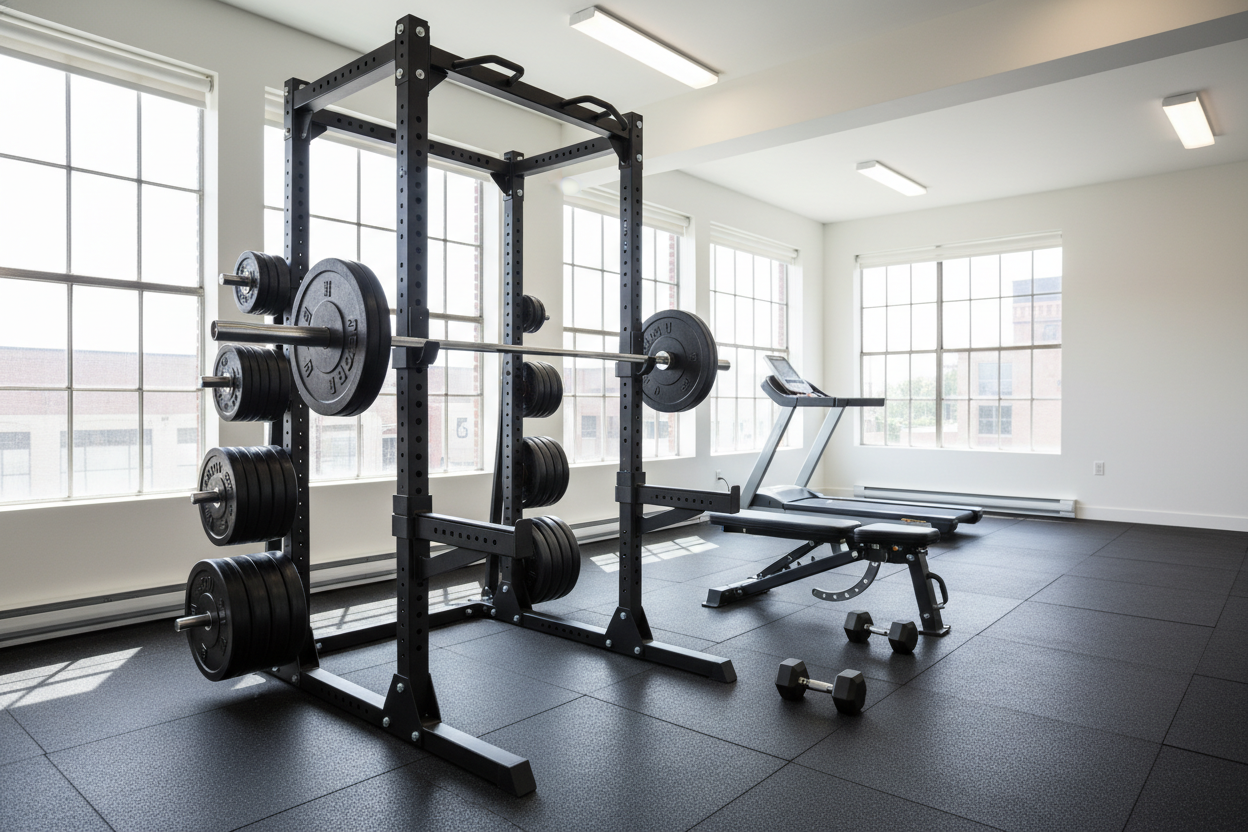
I remember staring at a $299 box at a big-box sporting goods store thinking I had hacked the system. It was a complete olympic bar and weights set with 300 pounds of iron ready to go. I hauled that heavy box home, set it up in my garage, and realized within a month that I had basically paid for a giant, metallic headache.
Quick Takeaways
- Bundled bars often have a weight capacity under 400 lbs and will bend permanently.
- Pinned sleeves on cheap bars do not rotate, which destroys your wrists during cleans or presses.
- Budget cast iron plates are notoriously inaccurate, sometimes off by 3-5 pounds per plate.
- Buying a quality bar first and adding plates later is the smartest financial move.
The Trap of the $300 All-in-One Box
Those massive boxes are designed for the 'New Year, New Me' crowd who might lift once a month. If you actually plan on training hard, that ultra-cheap olympic barbell weight set is a false economy. You are paying for a bar that is likely made of low-grade cold-rolled steel with a tensile strength that would make a structural engineer cry.
The problem is that these bundles prioritize the '300-pound' marketing claim over the quality of the components. You get a bar that feels like a wet noodle the moment you put two plates on each side, and plates that are so poorly cast they rattle like a spray paint can every time you move the bar. You'll be looking for a replacement in less than a year.
Why the Bar Is Usually Garbage
The barbell is the most important piece of gear in your gym. Bundled bars usually feature 'pinned' sleeves—meaning there is a literal bolt or pin holding the sleeve onto the shaft. These do not spin. When you move the bar, the weight wants to keep rotating, and if the sleeves don't spin, that torque goes directly into your wrists and elbows. It is a recipe for tendonitis.
Furthermore, the knurling is usually either non-existent or feels like dull plastic. You cannot get a secure grip when your hands start to sweat. Instead of settling for a bar that belongs in a dumpster, you should step up to a real 20kg bar that features proper bushings or bearings and a high tensile strength. A real bar stays straight; a bundle bar becomes a permanent 'U' after one heavy deadlift session.
Cast Iron vs. Rubber: Plate Material Matters
When you look at an olympic barbell and weights combo, the plates are usually the 'filler' to make the price look good. Cheap cast iron plates are often 'standard' sized but have massive weight variances. I have weighed '45-lb' plates from budget sets that clocked in at 41 lbs and 48 lbs. That is a 7-pound difference on one side of your body—not exactly ideal for your spine.
If you are training in a garage, you also have to consider the floor. Avoid the cheaply made vinyl or cement plates that leak sand and crack the first time you breathe on them. Proper iron or bumper plates are an investment. They don't just look better; they fit the bar tighter, reducing the noise and the 'slop' during your lifts.
Piecing It Together vs. Buying a Bundle
The secret to a great gym isn't buying everything at once. It is better to have a world-class bar and a pair of 45s than a 300-lb set of junk. You should browse quality standalone olympic bars and spend the bulk of your budget there. The bar is your primary interface with the weight; don't skimp on it.
Once you have a bar that won't bend, you can hunt for plates on the used market or wait for sales. Building your olympic barbells set piece-by-piece allows you to ensure every plate is accurate and every collar is secure. You will end up with a setup that lasts a lifetime rather than a season.
The Minimalist Setup That Actually Works
A solid olympic barbell weight sets foundation is all you really need to get strong. You don't need fancy machines or twenty different attachments. If the bar is straight and the plates are round, you can perform every major compound lift that builds real muscle. I have seen guys strip your gym down to just a barbell and see more progress than they ever did at a commercial club.
Invest in quality iron. It holds its value, it doesn't break, and it doesn't lie to you about how much you're lifting. Stop looking for the cheapest 'all-in-one' deal and start building a gym that can actually handle your progress.
My Personal Gear Mistake
I once bought a budget '300-lb' set because I wanted to save $150 for a new bench. On my very first heavy session, I dropped 315 lbs from waist height. The bar didn't just bend; the sleeve actually sheared off because the internal snap ring was actually just a cheap piece of wire. I ended up spending the $150 I 'saved' plus another $200 to replace the bar. Buy once, cry once.
FAQ
What is the standard weight of an Olympic bar?
A standard men's Olympic bar is 20kg (about 44 lbs), while a women's bar is 15kg (about 33 lbs). Cheap bundles often use 35-lb bars to save on shipping costs, which messes up your math.
Do I need bumper plates or iron plates?
If you are doing Olympic lifts (cleans, snatches) or deadlifting on a concrete floor, get bumpers. If you are strictly doing slow lifts like squats and presses, iron is fine as long as you have mats.
Will any plate fit an Olympic bar?
No. You need plates with a 2-inch center hole. 'Standard' plates have a 1-inch hole and are meant for cheap, threaded bars that you should generally avoid for heavy lifting.
Share:
Is the Best Cheap Exercise Equipment Actually Safe to Lift On?
I Tested 7 Weight Lifting Machines for Home (And Kept Just One)