
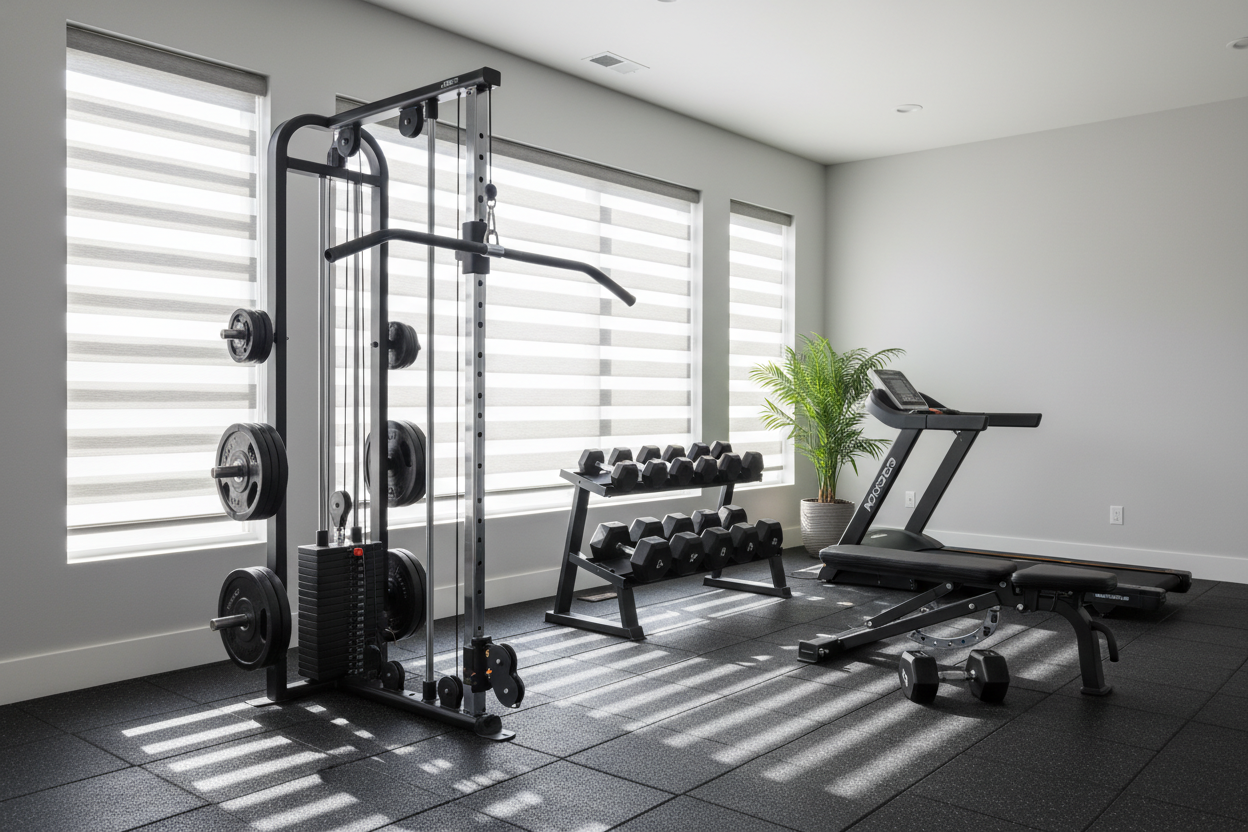
I remember the exact moment I realized my barbell row obsession was a dead end. I was midway through a heavy set of 275, and my hamstrings and lower back were shaking harder than my lats were pulling. I wasn't limited by my back strength; I was limited by my ability to hold a static hinge. That is when I finally dragged an upper back exercise machine into my garage, and my mid-back thickness has never looked better.
- Chest support eliminates lower back fatigue, letting you train to true failure.
- Converging handle paths provide a superior contraction compared to a straight bar.
- Adjustable seat heights allow you to target the traps, rhomboids, or lats specifically.
- Safety is significantly higher when pushing high-intensity techniques like drop sets.
The Dirty Secret About Heavy Barbell Rows
We are told that the barbell row is the 'king' of back movements. While it is great for overall posterior chain stability, it is a mediocre upper back workout machine. Why? Because your erector spinae and hamstrings almost always fatigue before your lats and rhomboids. If you are training for hypertrophy, your lower back is a mechanical bottleneck.
By switching to a dedicated upper back machine, you remove the stability requirement. I found that once I stopped worrying about my spine folding like a lawn chair, I could move 20% more weight through a full range of motion. You aren't 'cheating' by using a machine; you are finally isolating the muscles you actually intended to train.
Why Chest Support Changes Everything
The magic of a chest-supported mid back machine is the physical constraint. When your sternum is glued to a high-density foam pad, you cannot use momentum. You can't 'hip hinge' the weight up or use a rhythmic bounce to finish the rep. It forces the scapula to do the work.
This isolation allows for a deep, weighted stretch at the bottom of the movement that you simply cannot safely achieve with a barbell. I still believe in building a bulletproof trunk, but I prefer doing that with dedicated lower back and core training rather than exhausting my spine during a heavy row session. When you separate stability work from prime mover work, both improve.
What Makes a Pulling Machine Actually Good?
Not all upper back machines at the gym are created equal. Most commercial units are built for the average person, but for a home setup, you need to be pickier. Look for converging pulling paths—this means the handles move closer together or further apart as you pull, mimicking the natural movement of your joints.
Grip versatility is the next big factor. You want the ability to switch between a neutral grip (palms facing) and a pronated grip (palms down) to hit different segments of the trapezius. Also, pay attention to the footprint. Before committing, consider if it's the right gym machine for upper body development given your available square footage. I look for units with a 2x3-inch steel frame and at least a 300-lb weight capacity on the horns.
Programming the Perfect Heavy Pull Day
I don't suggest ditching free weights entirely. My current routine starts with something explosive or heavy, like weighted pull-ups or a deadlift variation. Once the CNS is primed, I move to the upper back gym machine for the high-volume work. This is where you can safely push past muscle failure.
While you can technically mimic this on a smith machine home gym station by doing inverted rows or bent-over rows with a fixed path, it still lacks the chest support that makes a dedicated lever machine superior. I usually aim for 3 sets of 8-12 reps, focusing on a 2-second squeeze at the peak of the contraction. My back has never felt more 'full' than it does after these controlled, supported sets.
Is It Worth the Garage Floor Space?
Floor space is the currency of the home gym owner. Adding gym equipment for upper back training is a commitment, usually taking up a 4x5 foot area. However, the trade-off is longevity. If you are over 30 and still trying to pull 3-plate barbell rows every week, your lumbar is on a countdown. This machine buys you time.
I recommend pairing it with a seated dip machine in your layout. These two pieces together create a complete push/pull station that allows for incredible intensity without the injury risk of heavy compound free weights. For me, the hypertrophy gains and the lack of Vitamin I (Ibuprofen) make it worth every square inch.
How does this compare to a lat pulldown?
A pulldown is a vertical pull, focusing mostly on the lats. An upper back machine is a horizontal pull, which targets the 'thickness' of the back—the rhomboids, mid-traps, and rear delts. You need both for a complete physique.
Can I use this for one-arm rows?
Absolutely. Most high-quality machines for upper back training have independent arms (isolateral). Training one side at a time is great for fixing imbalances and getting a slightly deeper range of motion.
What if the chest pad is uncomfortable?
This is a common complaint with cheap upper back exercise equipment. If the pad is too hard, you can't breathe. Look for 'contoured' pads or units with thick, double-stitched vinyl that distributes the pressure across your ribcage rather than digging into your sternum.
Share:
Why I Actually Hunted Down a Pair of 14 lb Dumbbells
I Sold My 5-50lb Rack: Why Huge Dumbbells Sets Are a Mistake