
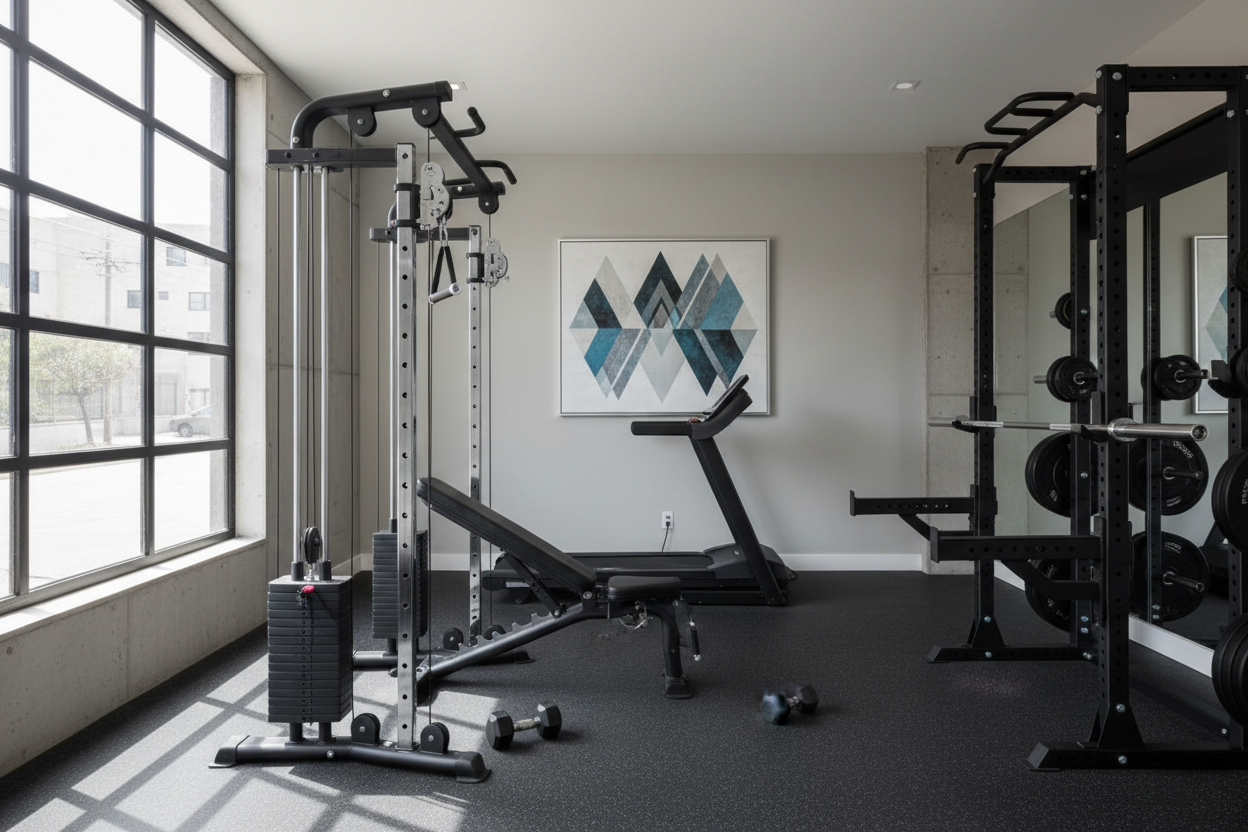
I have spent the last decade turning my two-car garage into a training sanctuary. The biggest mistake I made early on was buying a used, commercial-grade chest press machine because it looked 'hardcore' in the listing. It took up four square feet, weighed 400 pounds, and only did one thing. Choosing a gym machine for upper body isn't about mimicking a commercial health club; it is about square footage efficiency and finding gear that actually gets used more than once a week.
Quick Takeaways
- Prioritize multi-functional cable systems over single-station isolation units.
- Measure your ceiling height before buying any lat pulldown or pull-up station.
- Plate-loaded machines save money but require more manual labor between sets.
- Aluminum pulleys and 11-gauge steel are the benchmarks for durability.
The Single-Station Trap You Need to Avoid
Most home lifters see a shiny pec deck or a dedicated shoulder press and think it is the secret to a better physique. In a garage gym, that machine is a coffin for your floor space. Unless you are a competitive bodybuilder with 2,000 square feet to play with, buying a unit that only handles one movement is a rookie move. You end up with a high-priced clothes rack six months later.
I often see people debating whether dedicated upper body workout machines for home are worth the investment. For 90% of us, the answer is a hard no. You want a machine that earns its keep by facilitating at least five different upper body exercises. If it doesn't offer variety, it doesn't deserve a spot on your rubber flooring.
Why Cables Are the Undisputed Kings of the Garage
If you want the most versatile upper body gym machine, you buy a functional trainer or a high/low pulley tower. Cables provide constant tension that dumbbells simply cannot match. Think about the top of a chest fly—with dumbbells, the tension drops to zero. With a cable, your pecs are screaming the entire time.
A solid cable setup allows for an endless list of upper body exercises with machines. You can hit face pulls for rear delt health, tricep pushdowns, cable crossovers, and seated rows all in the same 3x4 foot area. It is the ultimate upper body workout with equipment because it adapts to your height and limb length perfectly. I personally use my functional trainer for 60% of my accessory work because the setup time is almost non-existent.
Plate-Loaded Systems vs. Weight Stacks
This is where the budget talk gets real. A selectorized weight stack (where you just move a pin) is fast and convenient for drop sets. However, it adds significant cost and shipping weight. Plate-loaded systems let you use the bumper plates you already own, which is a massive win for your wallet.
The trick is to find a gym machine for upper body that doesn't feel cheap. Avoid anything with plastic pulleys or thin, hollow guide rods. If the carriage chatters or hitches when you are trying to do a slow eccentric, you will hate using it. Look for 2:1 pulley ratios if you want a smoother feel for rehab and isolation work, or 1:1 if you want to move heavy weight on lat pulldowns.
Leverage Units: The Heavy Pressing Alternative
If cables feel too 'finesse' for your style, leverage arms are the answer. These bolt directly to your power rack and turn it into a heavy-duty upper body exercise machine. They mimic the feel of a hammer strength machine but take up zero extra floor space when tucked away. They provide the safety of a fixed path, which is great when you are training alone and want to push to failure on an incline press.
When you are browsing upper body strength equipment, leverage systems stand out because they handle massive loads. I have loaded 300 pounds onto leverage arms for shrugs and rows without a hint of frame flex. It is the closest you can get to that commercial 'big iron' feel in a residential setting.
The Rare Exceptions for Specialized Gear
Are there times when a single-use machine makes sense? Sure. If you are rehabbing a specific injury or you have a body part that just won't grow, a specialist machine can be a lifesaver. For example, a seated dip machine is a compact unit that hits the triceps and lower pecs with an intensity that is hard to replicate with bodyweight alone if you have cranky shoulders.
The key is the footprint-to-value ratio. If a machine takes up less than 10 square feet and solves a specific training problem you can't fix with a barbell, it might earn its place. Just be honest with yourself about whether you'll actually use it three times a week.
Final Verdict: Measure Twice, Buy Once
Before you click 'buy' on any workout equipment for upper body, get some painter's tape. Map out the actual dimensions on your floor—including the range of motion for the weights and the space you need to stand. If you have to move a mountain of gear just to use the machine, you won't use it. Prioritize versatile cable systems first, leverage arms second, and only look at specialized machines once your staples are covered.
Personal Experience: The Wobbly Lat Pulldown
A few years back, I bought a budget lat pulldown tower from a big-box retailer. It looked fine in the photos, but the first time I loaded 200 pounds, the whole frame bowed. The 'smooth' chrome guide rods were actually slightly pitted, causing the weights to jump during the rep. I ended up selling it for half what I paid two months later. Now, I look for 11-gauge steel and sealed bearing pulleys. Don't let a low price tag trick you into buying a glorified paperweight.
FAQ
What is the best gym machine for upper body?
A functional trainer or cable crossover is the best overall choice. It offers the most exercise variety per square foot and allows for both bilateral and unilateral training.
Are plate-loaded machines better than weight stacks?
Plate-loaded machines are more affordable and easier to move, but weight stacks are superior for fast-paced workouts and drop sets. It comes down to your budget and how much you value convenience.
How much space do I need for a cable machine?
Most single-tower cable machines need about a 4x4 foot area, but you also need at least 3 feet of clearance in front of the machine to perform exercises like rows or chest presses.
Share:
Why 90% of Home Workout Machines Feel Like Pulling Through Sand
Stop Guessing: How Much Is a Smith Machine Bar Adding to Your Lift?