
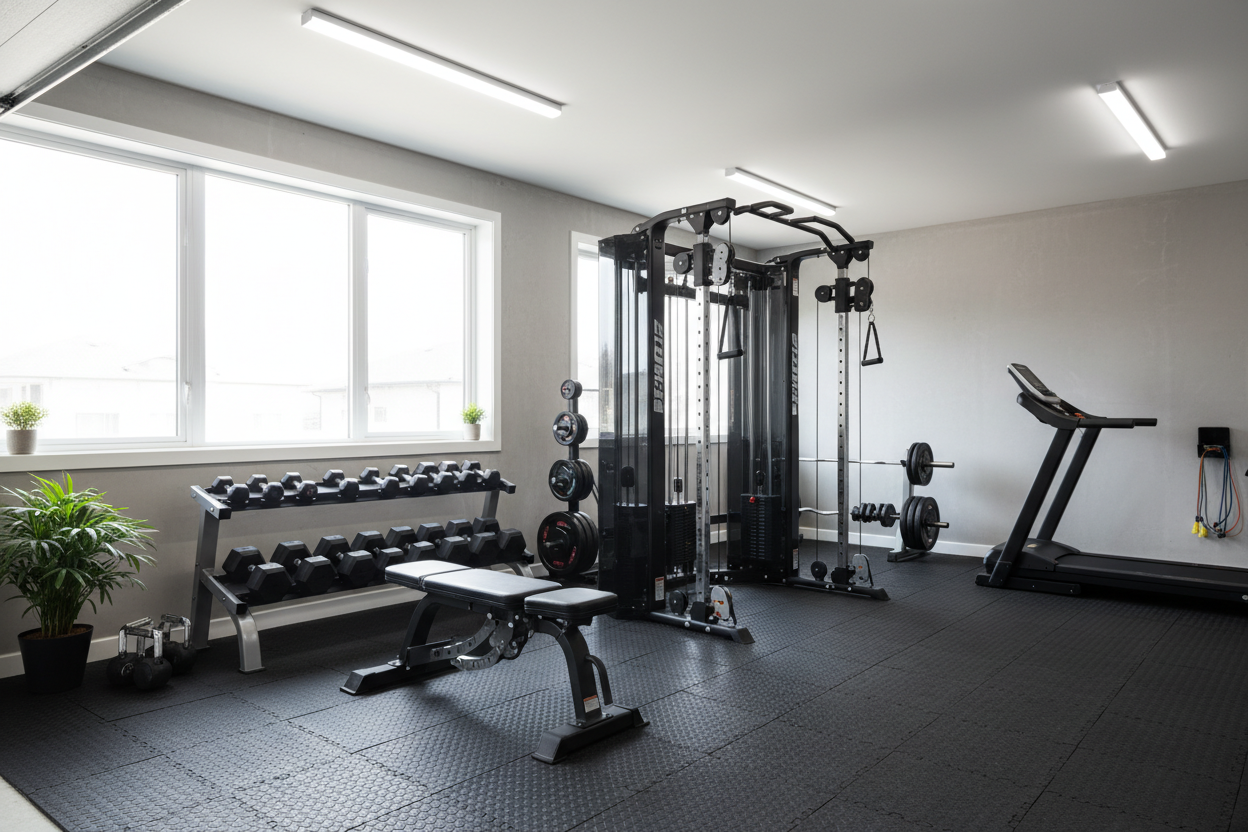
I remember the day my left shoulder decided it was done with the heavy barbell bench press. It wasn't a snap, just a dull, grinding ache that made every rep feel like I was rubbing sandpaper inside my joint. I spent years thinking a gym machine for upper body was 'cheating,' but when I couldn't press a 45-pound bar without wincing, I had to swallow my pride and look at the cables.
Building a home gym usually starts with a rack and a barbell, but the moment you want to actually isolate a muscle without your joints screaming, you need dedicated equipment. The problem is that the market is flooded with wobbly, bolt-together junk that feels like it belongs in a hotel gym from 1994.
Quick Takeaways
- Look for 11-gauge steel frames to ensure the machine doesn't tip during heavy rows.
- 2:1 pulley ratios offer smoother travel, while 1:1 is better for heavy strength work.
- Weight stacks provide speed, while plate-loaded machines save your budget.
- Prioritize machines with adjustable seats and handles to fit your specific limb length.
The Free Weight Trap (And Why My Shoulders Had Enough)
For a decade, I was a barbell purist. If it wasn't a heavy row or a bench press, I didn't want it. But eventually, I hit a plateau that no amount of 'gritting my teeth' could fix. My secondary stabilizers—those tiny muscles in the shoulder and upper back—were giving out long before my chest or lats were actually fatigued. This is the free weight trap: you think you're training chest, but you're actually just managing a shaky barbell.
Switching to upper body machine exercises changed the math. Suddenly, I could push to absolute failure without worrying about a bar crushing my windpipe. By using an upper body gym machine, I removed the stability requirement and focused entirely on mechanical tension. My joints stopped clicking, and my lats actually started growing because I could finally feel them working. Machines aren't a shortcut; they are a way to apply 100% of your effort to the target muscle.
What Actually Matters When Spec'ing Out Upper Body Equipment
If you are shopping for a gym machine for upper body, ignore the fancy digital consoles and look at the skeleton. You want 11-gauge steel. If the tubing is thin, the machine will flex when you're mid-set, which feels sketchy and ruins the mind-muscle connection. Check the cable thickness too; 3/16-inch or 1/4-inch aircraft-grade cables are the standard. If they look like clotheslines, walk away.
Pulley ratios are the 'secret sauce' of upper body fitness machines. A 1:1 ratio means 100 lbs on the stack feels like 100 lbs in your hand. A 2:1 ratio (common on functional trainers) makes that 100 lbs feel like 50 lbs but gives you more cable length. For heavy upper body machine workout sessions, I prefer a 1:1 ratio or a very heavy stack. You can see the difference in build quality when browsing a dedicated Upper Body collection, where the focus is on heavy-duty frames and smooth-tracking bearings rather than flashy stickers.
The Weight Stack vs. Plate-Loaded Debate
Weight stacks are the king of convenience. You move a pin, and you're ready for your next set. This is vital for drop sets where you want to keep the intensity high. However, they are expensive and heavy to ship. If you are on a budget, plate-loaded upper body weight machines are a fantastic alternative. You use the Olympic plates you already own, which saves you hundreds of dollars. The downside? You'll spend half your workout loading and unloading 45s.
Specialty vs. Multi-Use: Don't Buy What You Won't Use
The temptation is to buy a 'total body' machine that claims to do 50 exercises. Usually, these do 48 of them poorly. If you have the space, a specialty upper body exercise machine will always outperform a multi-gym. A machine designed for one specific arc of motion will always feel more ergonomic than a cable arm that tries to do everything. For example, the Seated Dip Machine Upper Body Workouts Dm01 is a masterclass in specialty design. It targets the triceps and lower chest with a precision that a standard cable crossover just can't match.
That said, if you're tight on space, a high-quality functional trainer is the best upper body workout machine for versatility. Just make sure the trolley moves smoothly. If there is any 'stiction' (that jerky feeling when you start a rep), you'll hate using it for high-rep hypertrophy work. Always prioritize the movement patterns you actually do. If you hate rows, don't buy a dedicated row machine just because it looks cool.
How to Program Machines Into a Garage Gym Routine
I don't advocate for ditching barbells entirely. Instead, use your gym equipment for upper body as the 'finisher' or the 'volume builder.' Start your session with a heavy compound lift like an overhead press or weighted pull-up. Then, move to your upper body workout machines to accumulate the volume your joints couldn't handle with free weights. This 'top-down' approach ensures you get the bone-density benefits of heavy lifting with the muscle-building benefits of machines.
For those who are still skeptical about the efficacy of cables, I highly recommend reading A Full-Body Matrix Machine Workout for Lifters Who Hate Machines. It breaks down how to maintain your 'hardcore' lifter status while reaping the rewards of modern biomechanics. Remember, the best upper body machine is the one that allows you to train to failure safely, week after week, without needing a bottle of ibuprofen the next morning.
FAQ
Do machines build as much muscle as free weights?
Yes, and in some cases, more. Because machines provide more stability, you can often push the target muscle closer to true failure without your form breaking down or your balance failing.
How much space do I need for a proper upper body gym machine?
Most dedicated units require about a 4x6 foot footprint. However, you need to account for 'working space'—the area where your arms or the weight arms will actually move during the exercise.
Are plate-loaded machines louder than weight stacks?
Generally, yes. The clanking of iron plates is part of the experience. If you're training in a basement while the family sleeps, a selectorized weight stack with plastic bushings will be significantly quieter.
Share:
How One Powerhouse Gym Machine Replaced Half My Garage Setup
Stop Building Wood Racks: How to Make a Homemade Gym You Can Trust