
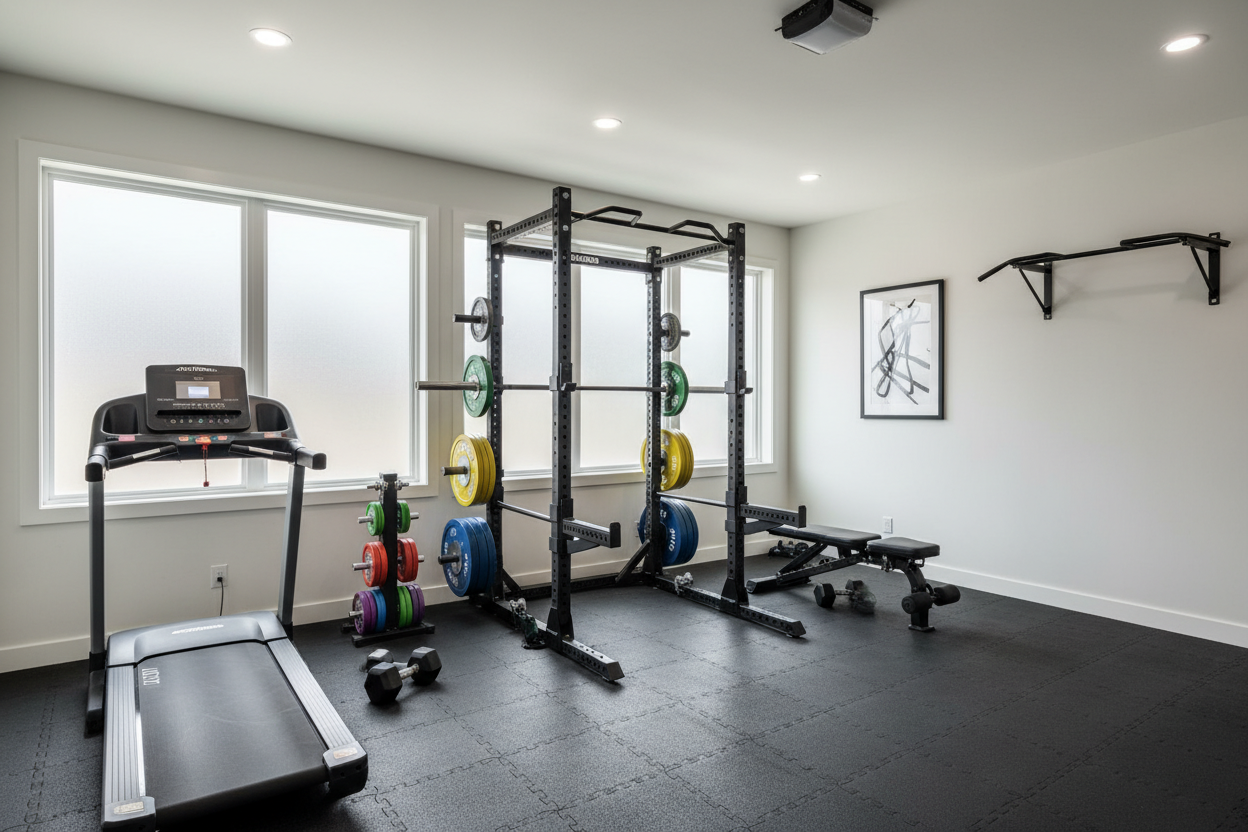
I remember the exact moment I decided to quit my commercial gym. It wasn't the broken cable machine or the guy doing curls in the squat rack—it was the third price hike in eighteen months. I went home, cleared out a 10x10 space in my garage, and started researching how to make a homemade gym. I wanted it done fast and I wanted it cheap, but after ten years of testing gear, I’ve learned that 'cheap' can sometimes be a death sentence.
Quick Takeaways
- Never build a structural squat rack out of wood; it cannot handle dynamic shock loads safely.
- Sandbags, pulling blocks, and concrete stones are the gold standard for DIY gym equipment.
- Invest in a professional steel barbell and rack—your safety is worth the extra $500.
- A hybrid gym (half DIY, half commercial steel) offers the best bang for your buck.
The Allure and Danger of the 4x4 Lumber Rack
When you first start looking at how to build your own gym, those Pinterest photos of stained 4x4 lumber racks look incredible. They look rustic, they look cheap, and they look sturdy. I get the appeal. I almost fell for it myself when I decided to build a real gym at home. But here is the reality: wood is an organic material that reacts to humidity, temperature, and time. It rots, it splits, and most importantly, it doesn't have the shear strength required to catch a 300-pound barbell when you fail a squat.
A steel rack is rated for specific weight capacities because steel doesn't have knots or grain patterns that can fail unexpectedly. When you bolt 4x4s together, you're relying on the shear strength of a few lag screws. If you drop a heavy bar on those catches, those screws can slice right through the wood grain like a hot knife through butter. I've seen the aftermath of a wooden rack failure—it’s not a 'oops, I broke it' moment; it’s a 'how am I going to pay these hospital bills' moment.
If you're serious about lifting heavy, wood is for your garden beds, not your life-support system. Structural integrity isn't just about static weight; it's about dynamic force. When you rack a bar hard, you're putting hundreds of pounds of lateral force into the frame. Steel flexes and holds; wood cracks and gives up. If you're figuring out how to make a homemade gym, skip the lumber aisle for the big stuff.
Hardware Store Projects That Actually Work
Now, just because you shouldn't build a rack out of wood doesn't mean you can't save a fortune at the hardware store. There are plenty of ways to how to make gym at home accessories that are actually better than the commercial versions. Take sandbags, for example. A high-end fitness sandbag can cost $150. You can make a better one for $20. Grab a heavy-duty duffel, fill a few contractor bags with 50 lbs of play sand each, duct tape them until they look like mummies, and stuff them in the bag. It’s the ultimate tool for odd-object carries and core stability.
Wooden pulling blocks are another legitimate DIY win. If you're learning how to make gym equipment for Olympic lifting or deadlift variations, stacking 3/4-inch plywood sheets and screwing them together creates a platform that can survive a nuclear blast. I’ve dropped 400-lb cleans on my DIY blocks for three years and they haven't budged. Just make sure you use wood glue between the layers to prevent sliding.
Concrete is your best friend for DIY strength. Buying a set of Atlas stones will cost you a fortune in shipping alone. Instead, buy a $10 bag of high-strength concrete and a $30 reusable plastic mold. You can churn out stones from 100 lbs to 250 lbs for pennies on the dollar. These aren't just 'good for the price'—they are the exact same tools used in Strongman competitions. This is where DIY truly shines: heavy, simple, and indestructible.
The Steel You Simply Cannot Fake
There are three things you should never, ever DIY: your barbell, your plates, and your rack. When you transition from DIY accessories to the foundational pieces, you need to buy reliable home gym equipment. A barbell isn't just a metal rod; it’s a precision-engineered tool with specific tensile strength (aim for 190,000 PSI or higher) and knurling designed to keep your grip secure when your hands are slick with sweat.
A cheap, hardware-store-grade pipe will bend the first time you put 200 lbs on it. A real barbell has 'whip'—it can bend and snap back to straight. If you're training alone in a garage, safety is your primary concern. This is why I always recommend safe solo lifting stations or a high-quality power rack with internal safety spotters. If you fail a bench press at 2 AM with no one around, those steel safety bars are the only thing standing between you and a very bad night.
Benches are another danger zone. I once tried to save money by using a flat bench I built from a 2x12 and some cinder blocks. During a heavy set of floor presses, the wood bowed and I felt the grain starting to give. I rolled off just in time. A commercial-grade steel bench is rated for 1,000 lbs for a reason. It won't tip, it won't wobble, and it won't snap. Buy the steel, cry once, and stay safe for the next twenty years.
Blending the Homemade With the Heavy-Duty
The most effective home gyms I’ve ever stepped into are 'hybrid' gyms. They have a shiny, 11-gauge steel power rack in the center, surrounded by gritty, DIY tools. You don't need a $500 commercial sled when you can bolt a piece of plywood to an old truck tire and drag it down the driveway. You don't need a $200 'fat bar' when you can wrap some PVC pipe or pipe insulation around a standard barbell to challenge your grip.
The key to a successful setup is organization. Use your DIY skills to build storage racks for your plates and hooks for your bands. This keeps your floor clear so you can actually exercise at home instead of spending twenty minutes moving piles of gear just to find your jump rope. A clean gym is a gym you’ll actually use.
My own gym is a mix of high-end bars and a 'slosh pipe' I made for $15 out of PVC and water. The slosh pipe provides a stability workout that no commercial machine can replicate. By blending the precision of manufactured steel with the raw utility of DIY gear, you create a space that is both safe and incredibly versatile. Don't let the lack of a massive budget stop you—just be smart about where you spend your money.
Personal Experience: My DIY Disaster
I once thought I was a genius for making a lat pulldown system using a clothesline and a plastic pulley from a hardware store. It worked for about a week. On a heavy set of tricep extensions, the plastic wheel shattered, the line snapped, and the handle caught me right in the bridge of the nose. I still have a small scar. That was the day I realized that 'saving money' on structural components is a losing game. Now, I DIY the weights and the storage, but I leave the cables and the racks to the pros.
Frequently Asked Questions
Is it cheaper to build or buy a gym?
It's cheaper to DIY your accessories like sandbags, sleds, and blocks. However, for racks and bars, buying used commercial steel is often cheaper and significantly safer than trying to build a high-quality equivalent yourself.
What is the most important piece of equipment to buy?
A high-quality barbell. It is the primary interface between you and the weight. A bad bar can cause wrist and elbow pain, and a bar that stays bent is useless.
How much space do I really need?
You can fit a full power rack, a bench, and a barbell in an 8x8 foot area. If you're doing Olympic lifts, you'll want at least an 8x10 foot space to allow for the bar's length and some 'buffer' room.
Share:
How to Pick a Gym Machine for Upper Body That Doesn't Feel Cheap
I Tested a Working Out Machine That Claims to Do the Work