
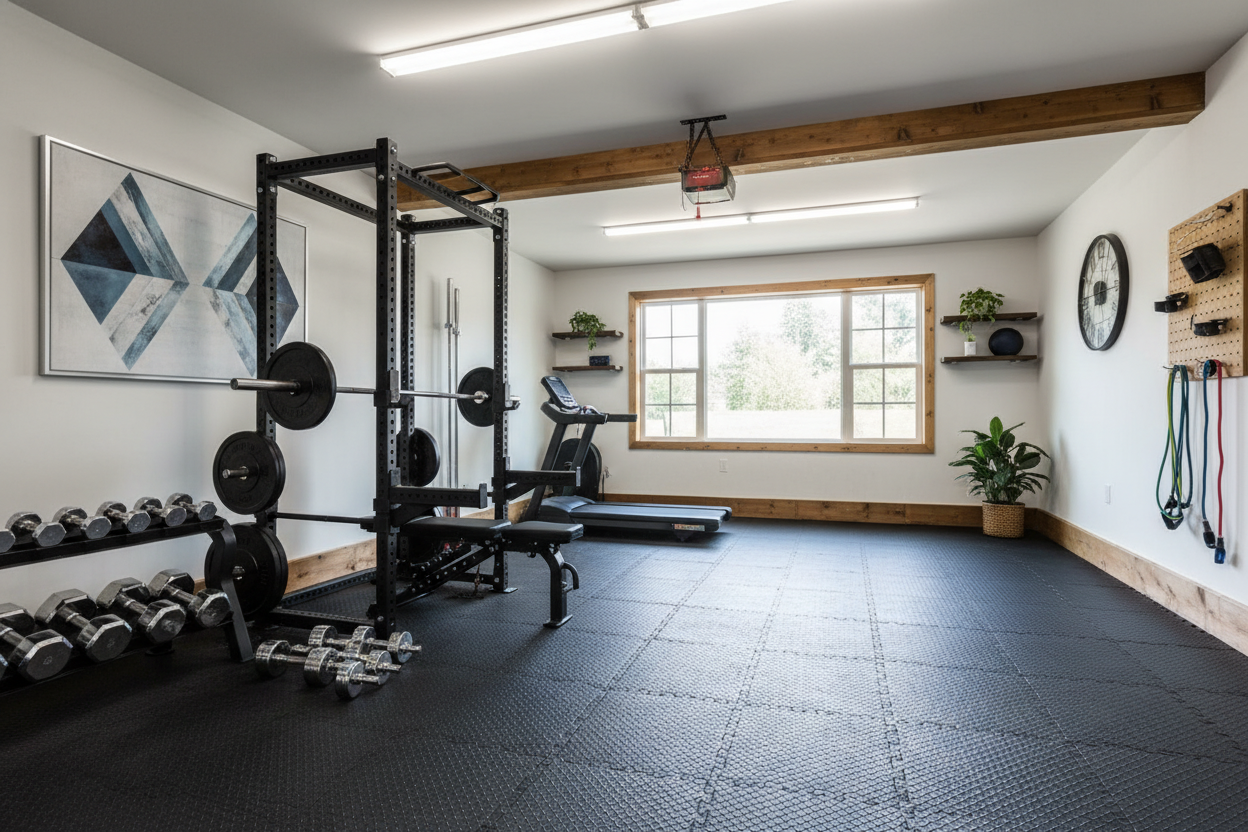
I got tired of the $80 monthly membership and the 20-minute drive through traffic just to wait for a squat rack. I wanted my own iron, but I also didn't want to scrape ice off my windshield every morning in February because my car was relegated to the driveway. Setting up a garage and gym combo is the ultimate balancing act. You are essentially playing high-stakes Tetris with 45-lb plates and a mid-sized SUV.
- Prioritize vertical storage for everything from change plates to foam rollers.
- A folding wall-mount rack is the only way to keep your parking spot.
- Measure your garage door height twice before buying any rack over 80 inches.
- Horse stall mats are better and cheaper than interlocking foam tiles.
The 'Half-and-Half' Dilemma Every Home Lifter Faces
The dream is a 1,000-square-foot dedicated warehouse, but the reality is usually a cluttered two-car garage filled with holiday bins and lawnmowers. You want a heavy-duty setup, but you still need a place to store tools and keep the car out of the elements. It forces you to be ruthless with your equipment choices.
I realized early on that I couldn't have a dedicated leg press or a massive 6-post power rack if I wanted to keep my marriage and my parking spot. You have to think in terms of 'active' space versus 'storage' space. If a piece of gear doesn't have wheels or the ability to fold flat against the wall, it probably doesn't belong in a shared garage.
First Things First: Defining Your Small Garage Gym Layout
Before you spend a dime, grab a tape measure. Most people forget to account for the slope of the garage floor. Most garage floors are pitched toward the door for drainage, which can make your rack sit unevenly. You also need to look up. Your garage door tracks and the opener motor are the natural enemies of pull-up bars and overhead presses.
Clearance is king. You need at least 3 feet of space between your parked car and your equipment just to open the doors without a 'metal-on-paint' disaster. If you're tight on width, consider a 'center-aisle' layout where the car parks in the middle and your gear is hugged against the side walls. It's tight, but it works for a focused session.
Taping Out Your Setup Before Buying Anything
Don't trust your eyes. Get a roll of blue painter's tape and map out the footprint of every major item. Tape out a 4x4-foot square for the rack and a 7-foot line for the barbell. I once thought I had plenty of room until I taped it out and realized my barbell would have smashed through my side window every time I tried to bench. Tape is cheap; windows are not.
Picking Gear That Folds, Rolls, or Disappears
In a shared space, your gear needs to be there when you need it and invisible when you don't. Folding wall-mount racks are the gold standard here. They pin into the wall and fold out in under a minute, giving you a rock-solid platform for squats and benching without eating up 20 square feet of floor permanently.
You don't need a massive commercial footprint to get high-quality accessory work done. I found that How I Fit a Real Functional Trainer for Home Gym in a 1-Car Garage is a solid blueprint for adding cable movements without losing the ability to park. Look for adjustable benches with a 'stand-up' feature and dumbbells that replace a full rack of fixed weights. If it doesn't move, it's a liability.
Flooring Hacks for a Shared Workspace
Do not cover your entire garage floor in rubber mats if you plan to park a car on them. Tires carry oil, road salt, and heat that will eventually degrade the rubber and make your gym smell like a tire fire. Instead, create a dedicated 8x8-foot lifting zone using 3/4-inch horse stall mats.
These mats are dense enough to handle 500-lb deadlifts and won't shift around like those cheap foam puzzle pieces. If you need to level out the floor slope, you can shim the mats with roofing shingles or thin plywood. It’s a DIY fix that saves your spine during heavy squats.
Dealing with the Elements
Garages are notoriously brutal on metal. Humidity will turn a cheap chrome barbell into a rusty mess in a single season. When building your home gym, prioritize equipment with powder-coated or cerakote finishes. These coatings act as a shield against the temperature swings and moisture that come with an uninsulated space.
I keep a gallon of 3-in-1 oil and a stiff nylon brush in my gym bag. Every few months, I give the knurling on my bars a quick scrub and wipe down to keep the oxidation at bay. If you live in a climate with 90% humidity, a dedicated dehumidifier is the best investment you'll ever make for the longevity of your gear.
Personal Experience: The Pull-Up Bar Mistake
I once bought a budget power tower because I didn't want to drill into my studs. I measured the ceiling height but forgot to measure the height of the garage door motor. I spent two hours building the tower only to realize that if I did a pull-up, my head would hit the motor housing. I ended up selling it on Marketplace for half what I paid. Always measure the 'working height,' not just the 'resting height' of your gear.
Garage Gym FAQ
Can I park my car on gym mats?
You can, but it's not ideal. The weight of the car can compress the mats over time, and road grime is a nightmare to clean off textured rubber. Stick to a dedicated lifting area if possible.
How do I keep my gear from rusting in the garage?
Look for stainless steel or cerakote finishes. If you have bare steel or chrome, wipe it down with a light coat of oil once a month and keep a dehumidifier running during the summer.
Is a folding rack as stable as a 4-post rack?
If you bolt it into 3 or 4 studs with a proper stringer, a folding rack is incredibly stable. It won't have the same 'zero-movement' feel as a 1,000-lb commercial rack, but for 99% of home lifters, it is more than enough.
Share:
What Actually Happened to the Vectra Fitness Home Gym?
The 12-Month Roadmap for Buying Fitness Equipment at Home