
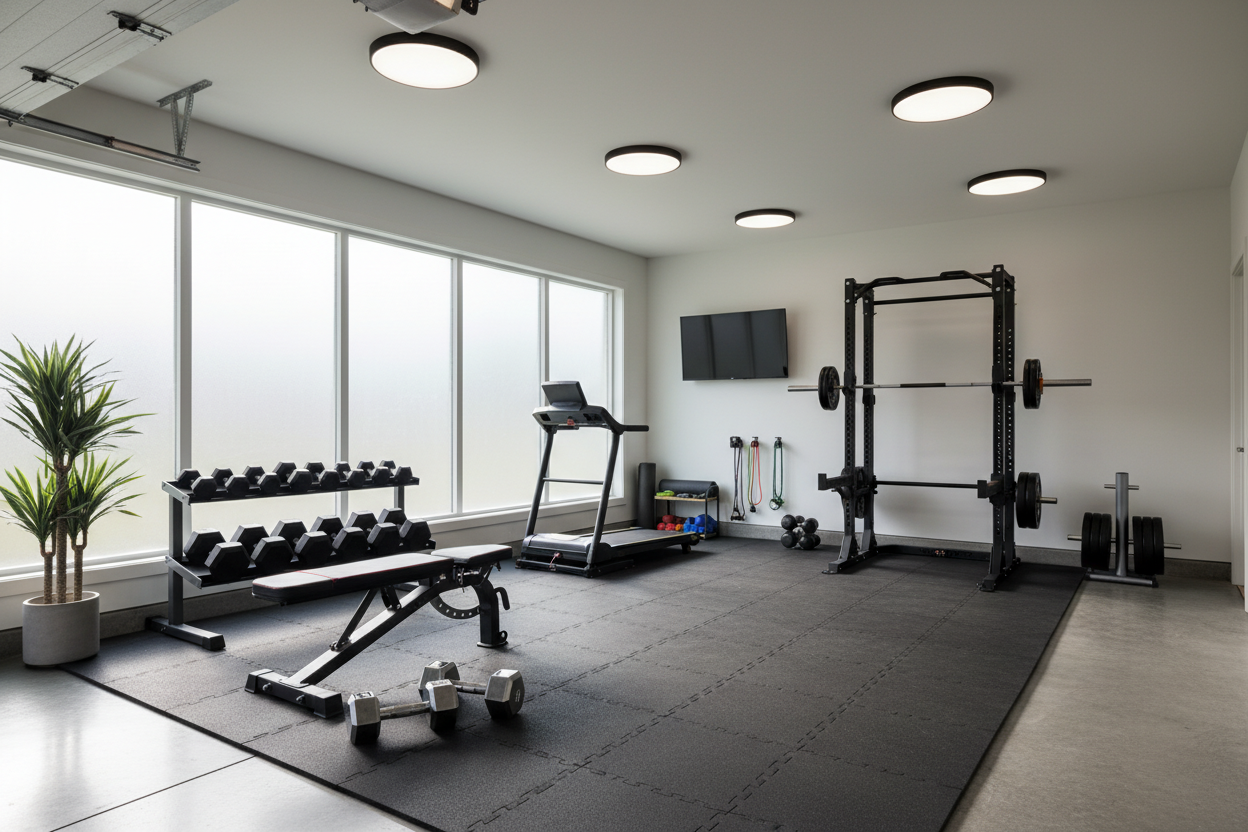
I have been there. It is 11:30 PM, you are three tabs deep into weight plate reviews, and you are about to drop two grand on a squat rack before you have even done a single pushup in your garage. I have seen more home gyms turn into expensive laundry racks than I care to admit. If you want to actually build fitness equipment at home that gets used every day, you need a plan that respects both your wallet and your actual habits.
Quick Takeaways
- Start small: Don't buy a rack until you have survived 30 days of consistent training.
- Focus on versatility: Adjustable dumbbells save more space and money than a full rack of fixed weights.
- Safety first: If you train alone, prioritize racks with spotter arms or internal safeties.
- Quality over quantity: One 11-gauge steel bench is better than three cheap ones that wobble under 200 lbs.
The Danger of the 'Day One' Buying Spree
The 'Day One' spree is a psychological trap. You think buying the gear creates the discipline, but it is actually the other way around. I have walked into countless garages where a $3,000 functional trainer is buried under Amazon boxes and old holiday decorations. You need to earn your way into a full gym. If you can't commit to a month of bodyweight movements and light bells, that power rack is just going to be a very sturdy, very expensive coat hanger.
When you buy everything at once, you also lose the chance to learn what you actually like. Maybe you think you want to be a powerlifter, but after two months, you realize you prefer kettlebell flows or high-intensity circuits. Buying slowly allows your training style to dictate your purchases, rather than letting a sales page dictate your training style. Clutter is the enemy of a good workout; a room packed with unused machines is just a storage unit with a mirror.
Phase 1: The First 30 Days (Earning Your Space)
The first month is about proof of concept. You do not need a 400-lb stack of plates yet. You need something that gets you moving. I always tell people to start with just three essential things: a set of adjustable dumbbells, a solid mat, and a doorway pull-up bar. This setup covers almost every movement pattern you need to build a base.
Adjustable dumbbells, like the ones that go from 5 to 52.5 lbs, are the gold standard here. They take up about two square feet of floor space. Compare that to a full rack of hex dumbbells that requires a 6-foot tiered stand. If you can finish a 4-week program using only these tools, you have proven that workout equipment home setups are a viable investment for your lifestyle. If the dumbbells are gathering dust by week three, you just saved yourself thousands of dollars in future mistakes.
Phase 2: The 90-Day Mark (Building the Foundation)
If you are still hitting it hard after three months, it is time to get off the floor. This is where you invest in the foundation of a real home gym: a heavy-duty adjustable bench. Do not cheap out here. A bench with a 300-lb capacity might sound fine until you realize that includes your body weight. If you weigh 200 lbs and you are benching 150, you are already over the limit. Look for 11-gauge or 12-gauge steel and a weight capacity of at least 600 lbs to ensure it doesn't wobble when you are mid-set.
At this stage, you are transitioning from 'exercising' to 'training.' You might want to add a set of resistance bands or a suspension trainer to add variety to your accessory work. The goal is to create a space that feels dedicated to the craft. A foundation of a real home gym means having gear that doesn't move when it shouldn't. Once you have a bench, your dumbbell floor presses become real bench presses, and your seated rows actually have a stable base. You are now officially a home lifter.
Phase 3: Six Months In (Heavy Iron and Racks)
Six months of consistency is the green light for the big stuff. This is when you look at a power rack or a squat stand. By now, you know if you are training for raw strength or general fitness. If you have the ceiling height—usually 90 inches or more—a full power rack is the safest bet. It allows you to fail a squat safely without destroying your floor or your spine. For those who prefer a more guided experience or train entirely solo without a spotter, investing in a smith machine can be a smart move to keep the bar on a fixed track.
This is also the time to buy your first Olympic barbell and iron plates. Don't just buy the cheapest bar on the rack. Look for one with decent knurling—the 'grip' texture on the bar. If it's too passive, the bar will slip during deadlifts; if it's too aggressive, it'll cheese-grate your shins. A good 20kg bar with a 28mm to 29mm diameter is the sweet spot. This is the most significant investment in home fitness exercise equipment you will make, so read the specs twice and buy once.
Phase 4: Year One and Beyond (Cardio & Specialty Gear)
You have made it a year. Your squat is up, your bench is stable, and your garage smells like sweat and success. Now, and only now, do you look at cardio machines. Most people buy the treadmill first and the rack last—they have it backward. Cardio can be done outside for free for the first 12 months. Once you have built your strength base, a foldable upright exercise bike is a great way to get your heart rate up without taking over the entire room.
This phase is also for the 'fun' stuff. Specialty bars like a trap bar for deadlifts or a multi-grip bar for pressing. Cable attachments, landmines, and maybe even a dedicated flooring upgrade like 3/4-inch stall mats. These are the rewards for a year of hard work. By following this roadmap, every piece of gear in your gym has a purpose and a history of being used.
My Personal Experience
I learned this the hard way. My first 'gym' was a $150 all-in-one station I bought from a local classified ad. It looked like it could do everything, but it did everything poorly. The cables were sticky, the seat was hard plastic, and the whole thing shook if I moved too fast. I hated using it, so I stopped training. It wasn't until I sold that junk and started over with one high-quality kettlebell that I actually stayed consistent. My mistake was buying the 'dream' before I had the habit. Buy for the lifter you are today, not the lifter you hope to be in six months.
FAQ
Do I need to bolt my rack to the floor?
If it is a lightweight squat stand, yes, or at least weigh it down with sandbags. If it is a heavy four-post power rack with an extended base, you can usually get away without bolting it, but bolting always provides the most stability for pull-ups and heavy racking.
Are bumper plates better than iron plates?
Bumpers are great if you plan on doing Olympic lifts or if you are worried about noise. They are made of high-density rubber. However, they are thicker, meaning you can fit fewer of them on the bar. If you are just powerlifting, iron plates are cheaper and take up less space.
How much space do I really need?
For a full barbell setup, you need at least an 8x8 foot area. A standard Olympic bar is 7 feet long, and you need a little 'elbow room' on either side to load the plates without hitting the wall.
Share:
I Split My Space Between a Garage and Gym (Here's How It Works)
I Matched Every Weird Gym Machine With Name and Purpose