
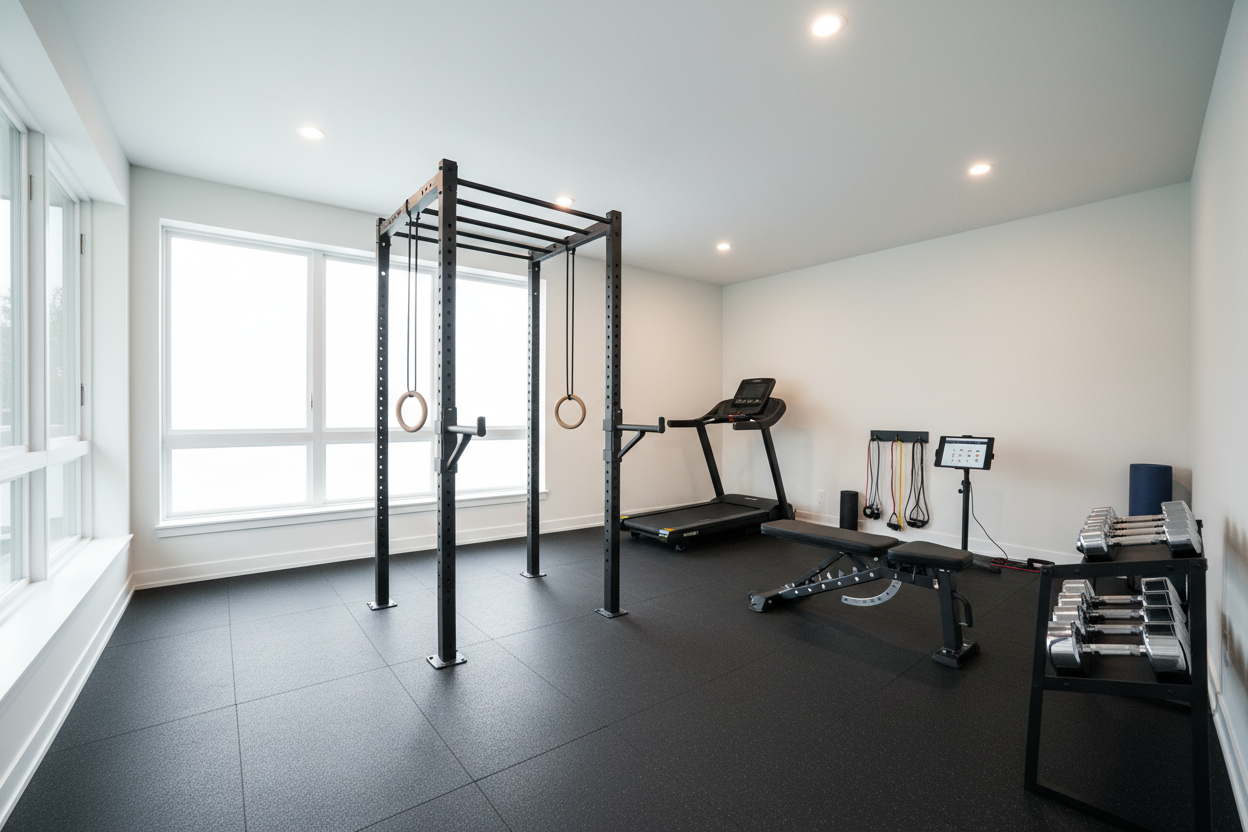
My elbows were clicking like a Geiger counter every time I unracked 315. I love the iron, but after a decade of heavy lifting, my body was asking for a divorce. I decided to shove my power rack into a corner and commit to a fit home gym experiment for 30 days to see if I could actually keep my gains without the heavy steel.
The goal wasn't just to 'stay active.' I wanted to see if a minimalist, app-driven calisthenics home gym could provide enough stimulus to maintain a 220-pound frame. I traded my plates for rings, bands, and a floor mat to see if the portable calisthenics gym hype was legitimate or just clever marketing.
Quick Takeaways
- Joint health improved significantly within the first 10 days of bodyweight-only training.
- Upper body pulling strength (lats and biceps) stayed surprisingly high due to ring work.
- Leg day is the biggest challenge; you have to embrace high-volume single-leg movements.
- App-based tracking is mandatory to ensure you are actually progressing, not just sweating.
Why I Locked Away My Power Rack for a Month
The catalyst was simple: boredom and inflammation. When your warm-up sets start feeling like a chore, your training quality nose-dives. I was curious about the macrofit home gym trend because I saw guys with incredible physiques doing nothing but dips and pull-ups. I wanted to know if that 'functional' strength translated to someone used to a 500-pound deadlift.
I also wanted my garage back. A full rack and platform take up a 6x8 foot footprint at minimum. Moving to an indoor calisthenics gym setup meant I could actually park a car in there if I wanted to. It was a test of both physical capability and spatial efficiency.
Building the Ultimate Calisthenics Home Gym Setup
You can't just do floor pushups and expect to keep your muscle. I built my fit calisthenics home gym around three pillars: a solid pull-up station, wooden gymnastic rings, and heavy-duty parallettes. The rings are the 'secret sauce'—the instability forces every stabilizer muscle in your shoulders to fire like crazy.
This setup is a massive departure from a traditional home gym packed with cast iron. Instead of 1,000 pounds of plates, I had a small box of accessories. I used fit home gym accessories like door anchors and heavy resistance bands to mimic cable movements. It felt light, which honestly made me nervous for my bench press numbers.
The Software Side: Testing the Fitapp Ecosystem
Without a coach or a heavy barbell, it is easy to sandbag your workouts. I used the joinfitapp to keep myself honest. A proper macrofit home gym review has to mention that the programming is what prevents you from plateauing. If you aren't tracking your 'time under tension' or your specific progression (like moving from a regular pushup to a pseudo-planche pushup), you are just exercising, not training.
The joinfitapp experience was intuitive enough that I didn't spend half my rest period staring at my phone. I also tinkered with the fitapp home gym settings to customize my rest intervals. Tracking progressive overload in calisthenics is about leverage and mechanics, not just adding five pounds to a bar, and the software handled that transition well.
Where the Portable Calisthenics Gym Shined (And Failed)
After 30 days, the results were mixed but mostly positive. My core stability exploded. Movements like the L-sit and tucked front levers turned my midsection into armor. My shoulders, which usually ache after heavy overhead pressing, felt buttery smooth. However, I have to be honest: finding a way to portable fit home gym actually build real muscle in the quads is a grind.
Pistol squats and sissy squats are great, but they don't provide the same systemic load as a heavy back squat. I felt my lower body power dip slightly, even if my mobility improved. If you are a pure powerlifter, a home fit gym might feel like a step back for your total, but for general hypertrophy and feeling like a human being, it’s a massive win.
The Hybrid Approach: Merging Iron with Bodyweight Gear
My final verdict? You don't have to pick a side. The 'all or nothing' mentality is why people quit. I’ve since unlocked my rack, but I kept the rings and the apps. The best way to train is to use a fit workout station for your primary movements and supplement with weight where it makes sense.
If you have limited space, adding a wall mounted cable station to your calisthenics setup is the ultimate move. It bridges the gap between bodyweight and heavy iron perfectly. It's the most efficient way to fit a real functional trainer for home gym use without sacrificing your entire floor plan. I'm keeping the rings, but I'm glad the barbells are back for leg day.
FAQ
Is a fit home gym enough to build muscle?
Yes, provided you use gymnastic rings and focus on difficult progressions. If you just do standard pushups forever, you will plateau. You need to manipulate leverage to keep the intensity high.
How much space do I actually need?
A 6x6 foot area is plenty for most calisthenics movements. The beauty of this setup is that most of the gear can be tossed in a closet when you're done.
What is the best accessory for a home fit gym?
Wooden gymnastic rings. They are cheap, durable, and offer a level of upper-body stimulus that even a $2,000 functional trainer struggles to match.
Share:
Why I Stopped Caring About the Equipment and Facilities in Gym Chains
Stop Buying Neon Signs: How to Build Incredible Home Gyms