
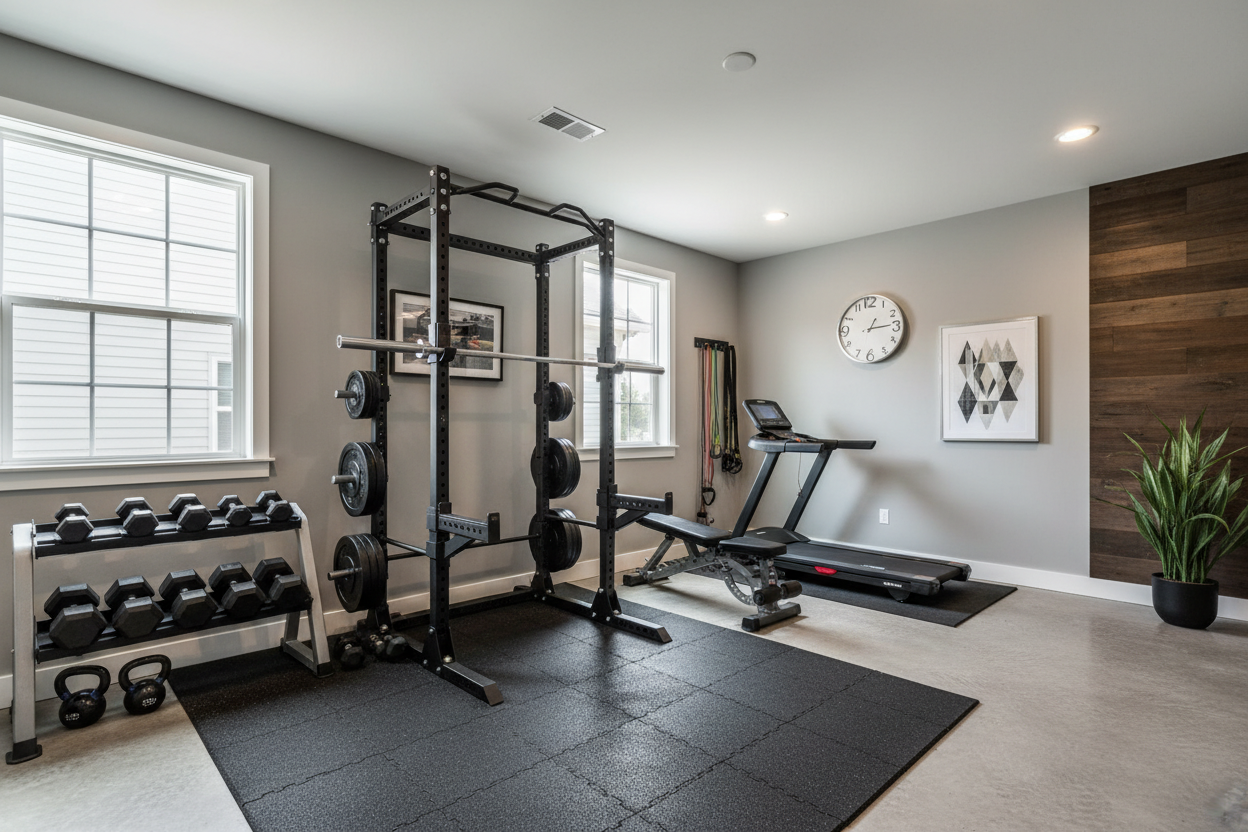
I have spent more time in garages than most mechanics, but I am usually there to squat, not change oil. I have seen it a thousand times: a guy drops five grand on a high-end rack and calibrated plates, then hangs a flashy neon sign over a floor that slopes three inches toward the driveway. You are trying to build incredible home gyms, but you are treating it like a man-cave project instead of a performance facility.
- Level your floor before you bolt anything down.
- Diffused lighting prevents blinding during bench presses.
- Prioritize airflow and humidity control to save your gear from rust.
- Invest in vertical storage to maximize your training footprint.
Why the Internet's 'Dream Gyms' Are Actually Lifting Hazards
Instagram loves a 'clean' look. We see white walls, polished wood floors, and zero dust. But real training is dirty, loud, and requires space to drop heavy things without the house shaking. A unique home gym isn't about the paint color or the cool posters; it's about whether your rack is bolted to a concrete slab that can handle a 500-lb squat without shifting.
Stop chasing the aesthetic of a boutique hotel. When you prioritize looks over utility, you end up with a space that feels fragile. You want a sanctuary where you can fail a rep safely, not a museum for equipment you're afraid to scratch.
The Ground Up: Fixing Your Sloped Garage Floor
Most garages have a 1% to 2% slope for water drainage. If you set up your rack facing the door, one foot is literally higher than the other. Over a year of heavy pulls, your hips and lower back will let you know how much they hate that uneven load. I learned the hard way that the perfect residential setup doesn't exist out of the box.
You need to build a leveling platform. A few sheets of 3/4-inch plywood and some roofing shims can fix a grade that would otherwise wreck your symmetry. If the floor isn't level, your gains won't be either. Don't just throw stall mats over a hill and hope for the best.
Lighting That Doesn't Blind You Mid-Bench Press
The secret to the best looking home gyms isn't expensive gear—it's how you light it. If you have those flickering fluorescent shop lights directly over your bench, you're going to get blinded the moment you unrack the bar. It's distracting and, frankly, a bit dangerous when you're moving heavy weight.
I switched to diffused LED panels positioned at a 45-degree angle from the bench. It highlights the knurling on the bars and the texture of the plates without burning my retinas. Good lighting makes the space feel larger and more professional, which actually makes you want to spend time in there.
Airflow and Climate Control (The Sweat Factor)
You can have the most cool home gym designs on the block, but if the room is a 95-degree humid swamp, you aren't going to use it. Humidity is also the silent killer of your barbells. I've watched a $600 zinc-coated bar turn orange with rust in a single summer because I didn't have a dehumidifier.
Get a high-velocity wall-mounted fan that actually moves air. Forget those wobbling ceiling fans. If you're in a climate with extreme seasons, a mini-split AC unit is the best investment you'll ever make. It keeps the air dry and your iron pristine.
Picking a Centerpiece That Commands the Room
Your rack is the soul of the gym. Everything else flows from that central point. If you're starting from scratch, look at heavy-duty home gym packages that pack a lot of utility into a single footprint. You want something that anchors the space and doesn't rattle when you rack a bar.
For those short on square footage, a Smith machine home gym station is a massive space-saver. It combines a rack, cable system, and pull-up station into one unit. It allows you to ditch three other machines, giving you more 'dead space' for movement and stretching.
Vertical Storage: The Unsung Hero of High-End Spaces
Clutter kills the vibe of a high-end gym. If you're tripping over 45s or stepping over dumbbells, you aren't training; you're navigating an obstacle course. Use wall-mounted plate pegs or a vertical bar hanger to get the metal off the floor.
If you're really cramped, consider consolidating your footprint with an all-in-one unit. It keeps the floor clear and makes the space feel like a professional facility instead of a junk drawer. A clean floor makes the room look bigger and keeps your focus on the lift, not the mess.
My Biggest Mistake
I once spent three days painting my garage walls a custom 'Iron Gray' only to realize I hadn't checked the electrical capacity. The first time I turned on my space heater and the treadmill at the same time, I blew the circuit and was stuck in the dark mid-sprint. It was a humbling reminder that the unsexy stuff—wiring, leveling, and airflow—matters way more than the paint job.
FAQ
Does a sloped floor really matter?
Yes. Even a 1-degree grade causes uneven spinal loading during squats and deadlifts. Over time, this leads to imbalances and potential injury. Level it out.
What is the best way to stop rust?
Keep the humidity below 50% with a dehumidifier. Also, wipe your bars down with a light coat of 3-in-1 oil every few weeks to keep the sweat from eating the finish.
Are LED panels better than bulbs?
Absolutely. They provide more even coverage and don't create the harsh shadows that single bulbs do. Plus, they don't hum like old-school shop lights.
Share:
I Swapped Barbells for a Fit Home Gym (Here's What Happened)
What Actually Happened to the Vectra Fitness Home Gym?