
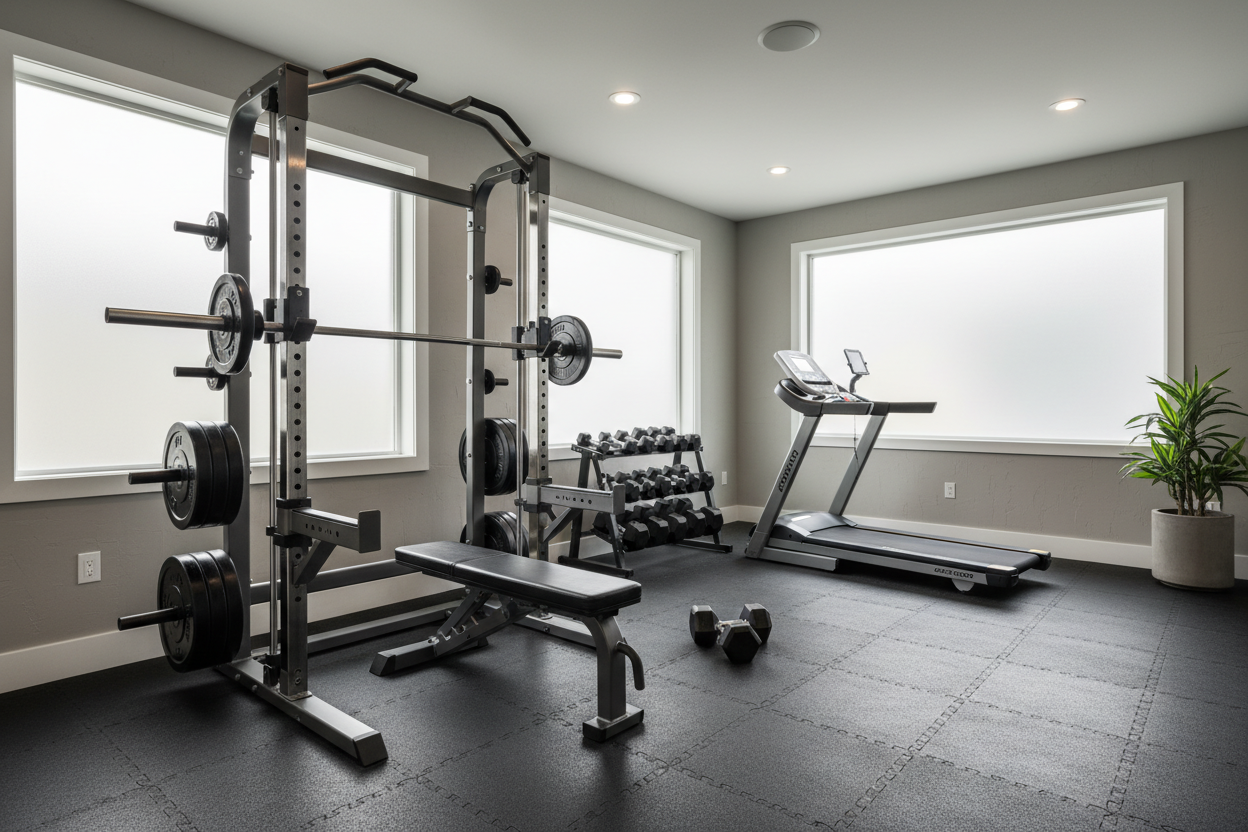
I remember the day I finally quit my big-box membership. It felt great to stop paying $40 a month for a locker I never used, but I immediately missed that one specific piece of gear: the la fitness smith machine. There's a specific friction-less glide to those commercial units that most cheap home racks just can't replicate.
If you've spent years tracking your incline press or heavy shrugs on that exact rig, moving to a standard barbell or a budget rack feels like moving from a luxury sedan to a tractor. I spent weeks hunting down the specs to see if I could actually put one in my garage without tearing out the ceiling.
Quick Takeaways
- Most LA Fitness locations use Matrix or Star Trac commercial lines.
- The bars are counterbalanced, usually weighing only 15-25 lbs despite their size.
- The tracks are set at a 7-degree angle to mimic natural human bar paths.
- Commercial units are massive, often requiring 7.5 to 8 feet of vertical clearance.
Why We Keep Chasing That Commercial Gym Feel
There is a psychological comfort in commercial equipment. When you walk up to the smith machine la fitness provides, you know exactly how it's going to slide. The linear bearings are industrial-grade, meaning they don't stutter even when you've got four plates on each side. It's a stark contrast to the clunky, peg-and-hole systems Planet Fitness makes you use in some of their older setups.
In a home gym, you usually have to compromise. You trade the buttery smoothness of a $4,000 commercial rig for something that fits between your lawnmower and your water heater. But once you've felt that lack of drag, it's hard to go back to a bar that catches on every rep.
So, Who Actually Makes the LA Fitness Smith Machine?
If you look at the frame of a newer LA Fitness rig, you'll likely see the Matrix or Star Trac logo. Matrix is the heavy hitter here. Their G7 series is the gold standard for big-box clubs. These machines aren't just vertical; they feature a 7-degree pitch. This angle is designed to follow the natural path of a bench press or squat, which isn't a perfectly straight line.
The secret sauce is the linear bearing system. We're talking about high-end steel balls encased in a housing that rolls over case-hardened shafts. Most home units use plastic bushings or cheap bearings that get gritty after six months of sweat and chalk. The Matrix units are built to survive 18 hours of daily abuse from people who don't respect the equipment.
The Counterbalance Illusion: Why the Bar Feels So Light
Ever notice how you can crush a PR on a Smith machine but struggle with the same weight on a free bar? It's not just the stability. Commercial Smith machines use a hidden pulley and weight system inside the columns. This counterweights the massive 45-lb steel bar, bringing the starting weight down to 15 or 25 lbs.
This is great for high-volume hypertrophy work, but it's a trap for your ego. If you buy a non-counterbalanced unit for your home, that '225 lbs' is going to feel about 30 lbs heavier overnight. You aren't getting weaker; you're just finally lifting the whole bar.
Can You Even Fit a Commercial Rig in Your Garage?
Before you scour Facebook Marketplace for a used Matrix rig, grab a tape measure. These things are monsters. A true commercial-grade Smith machine usually stands about 90 to 94 inches tall. If you have a standard 8-foot garage ceiling, you are cutting it dangerously close. You might not even have room to bolt the top frame together.
Then there's the footprint. These units are deep because of the angled tracks and the stabilizer feet. You're looking at a roughly 65-inch by 85-inch footprint. In a two-car garage, that’s a massive chunk of real estate just for one exercise modality. And don't get me started on the price; even used, these units often fetch $1,500 to $2,500.
Better Alternatives That Won't Require a Second Mortgage
You don't need to spend four figures to get that smooth feel. If you're tight on space, an all in one smith machine is a smarter play. It gives you the Smith track but adds cable crossovers and a pull-up station in the same footprint. It’s the Swiss Army knife approach to a home gym.
If you're purely chasing the bearing quality, I've spent a lot of time testing the Valor Fitness Smith machine. It uses a solid linear bearing system that punches way above its weight class. It doesn't have the massive commercial shroud, but the glide is surprisingly close to what you'd find at a franchise gym.
Translating Your Numbers to Your New Home Setup
When you finally set up your home rig, throw your old logbook out the window for a week. If your new machine isn't counterbalanced, start at 70% of your usual LA Fitness weight. Feel the drag, check the bar path, and make sure your feet are positioned correctly for the angle of the rails.
The goal isn't to match the numbers you hit at the club. The goal is the tension on the muscle. A home Smith machine without a counterbalance actually provides more consistent resistance throughout the lift. It's harder, but honestly, it's better for growth. Just don't let your gym buddies see the lower numbers on your plates.
My Personal Experience
I once bought a used Star Trac Smith machine from a gym liquidation sale. I thought I got a steal at $800. I didn't realize it weighed 600 lbs and wouldn't fit through my standard 32-inch basement door. I ended up having to disassemble the entire thing into about 40 pieces, losing two specialized bolts in the process. It took me three days to get it running again. Lesson learned: check the assembly manual and your door widths before you buy commercial gear.
FAQ
How much does the bar weigh on an LA Fitness Smith machine?
Usually 15 to 25 lbs. While the bar itself is heavy steel, the internal counterbalance system offsets the weight to make it more accessible for all users.
Is the Smith machine at LA Fitness straight or angled?
Almost all their modern units (Matrix/Star Trac) are set at a 7-degree angle. This is meant to mimic the natural arc of a squat or bench press.
Can I use standard 1-inch plates on these machines?
No. Commercial Smith machines are designed exclusively for 2-inch Olympic plates. Using 1-inch plates would require an adapter, but most commercial bars are too thick anyway.
Share:
Are These Actually the Best Glute Exercises on Smith Machine?
I Refused to Buy a Machine to Build Muscle (Until Leg Day Broke Me)