
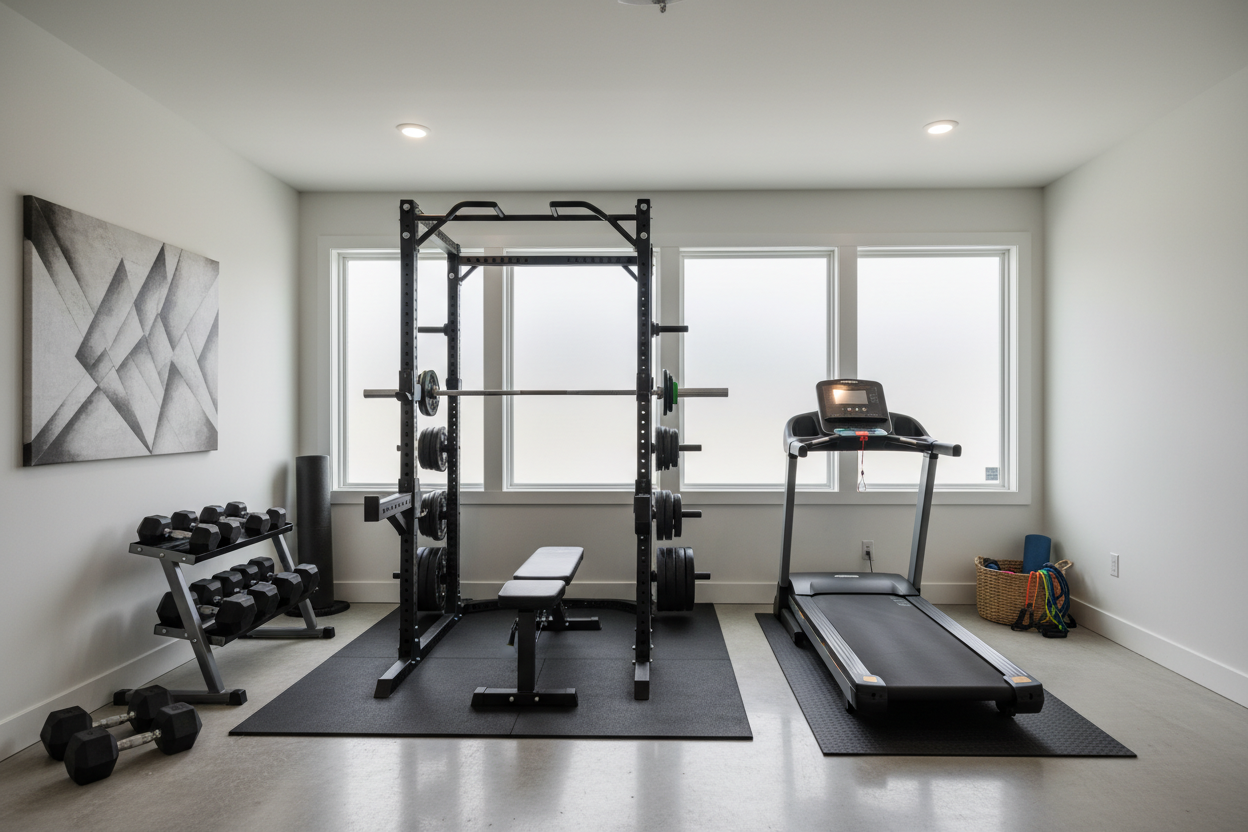
I remember standing in my garage three years ago, breath fogging up the air, staring at a barbell and feeling completely lost. I had just cancelled my commercial membership, but I was still trying to run a high-volume bodybuilding split designed for people with access to forty different machines. It didn't work. I spent more time moving plates and jury-rigging bands than I did actually lifting.
The truth is, most people fail their fitness goals because they try to force a commercial gym exercise routine for home gym environments. You don't have a dedicated leg press, three different cable towers, and a row of dumbbells up to 150 lbs. You have a rack, a bar, and hopefully enough floor space to not hit your car.
I've spent years testing every possible home gym workout, from high-intensity circuits to powerlifting peaks. This is the stripped-down, brutally effective framework that actually builds muscle without turning your garage into a cluttered mess of unused attachments.
Quick Takeaways
- Efficiency is King: If a movement takes 10 minutes to set up, skip it.
- Safety First: You likely don't have a spotter, so your equipment must have your back.
- Compound Focus: 80% of your gains come from the big four: Squat, Bench, Deadlift, and Press.
- Minimalist Gear: You can do 90% of a pro-level routine with a power rack and a solid barbell.
The Trap of Copy-Pasting Your Old Routine
Most lifters try to replicate a 6-day 'Push-Pull-Legs' split they found on Instagram. In a commercial gym, that's easy. At home, it’s a logistical nightmare. When you're training alone, the mental fatigue of constantly changing plates and adjusting J-cups for different exercises kills your momentum.
Commercial routines often rely on 'filler' volume—isolation exercises that are easy to do when you just have to sit at a machine. At home, isolation work usually means more floor clutter. If you're trying to follow an exercise program for home gym use that requires six different stations, you're going to quit by week three because the friction is too high.
My Non-Negotiable Rules for Training at Home
Before you pick up a plate, you need a strategy for solo training. Rule number one: Stop buying junk. I see people trying to save money by buying a wobbly, off-brand exercise machine home gym setup that shakes when they load more than 135 lbs. If it doesn't feel stable, you won't push yourself.
Rule number two: Minimize transitions. Your home gym training plan should flow. If your first move is a heavy squat and your second is a floor press, you’re spending five minutes moving J-cups and safety arms. Group your movements by rack height to keep your heart rate up and your workout under an hour.
Embrace Training to Failure Safely
If you're training alone, the fear of getting pinned under a bar is real. This fear often leads to 'sandbagging'—stopping three reps early because you're scared. You need heavy-duty safety pins or spotter arms. If you want to push your limits on heavy compounds without a human spotter, a Smith machine home gym station is actually a massive asset for solo garage lifters who want to reach true muscular failure safely.
The Core Exercise Routine for Home Gym Lifters
I’ve landed on a 4-day upper/lower split. It’s the sweet spot for recovery and intensity. This isn't some fancy influencer plan; it’s a gritty exercise routine for home gym enthusiasts who want to see the scale move and the PRs climb.
You’ll train Monday, Tuesday, Thursday, and Friday. This leaves your weekends open for recovery (or more likely, yard work). Every session starts with a heavy compound movement and finishes with two accessory movements that don't require a master's degree in engineering to set up.
Days 1 & 3: Heavy Lower and Core
Day 1 is about the back squat. I don't care if you use a high bar or low bar, just get deep. Follow this with Romanian Deadlifts to fry the hamstrings. Because you're in a home gym, you don't need a fancy GHD machine—just a sturdy bench and some dumbbells for Bulgarian split squats.
Day 3 shifts the focus to the conventional deadlift or a trap bar variation. Keep the core work simple: hanging leg raises from your pull-up bar or weighted planks. If you have a 4x6 foot space, you have enough room for a world-class leg day.
Days 2 & 4: Upper Body Push/Pull
Day 2 is Bench Press and Rows. Use the same bar for both. Bench in the rack, then immediately strip some weight and go into Pendlay rows. It’s efficient and builds a thick torso. On Day 4, we focus on the Overhead Press. It’s the ultimate test of upper body strength and fits perfectly in a garage gym with a standard 8-foot ceiling.
For pulling, I stick to chin-ups and single-arm dumbbell rows. You don't need a $3,000 lat pulldown machine to build a wide back. Use a doorway bar or the pull-up station on your rack. It’s harder, more effective, and costs zero extra dollars.
How to Survive Without Fancy Cable Machines
People think they can't get a good home gym fitness program done without cables. Wrong. You can replicate almost any cable movement with resistance bands or dumbbells. Instead of cable crossovers, do floor flyes or banded push-ups. Instead of leg extensions, do sissy squats or loaded step-ups.
The beauty of a basic home gym is that it forces you to master the basics. You’ll find that your stabilizing muscles grow much faster when you aren't relying on the fixed path of a machine. If you really miss the cable feel, a simple $50 pulley system hung from your rack's crossmember will handle your tricep extensions and face pulls just fine.
Stop Overthinking the Spreadsheet
I’ve seen guys spend three months building the perfect Excel spreadsheet for their home gym workout plan and only three days actually lifting. Your garage doesn't care about your pivot tables. It cares about how much weight you move and how often you show up.
Pick three big lifts, hit them hard, and get out. The best workout program home gym owners can follow is the one that removes every excuse to skip a session. Keep your chalk handy, keep your rack clear of laundry, and just start the first set. Consistency in a drafty garage beats a half-hearted effort in a luxury club every single time.
FAQ
Do I need a power rack for a home gym routine?
Strictly speaking, no, but it's the safest way to lift heavy alone. Without a rack, you're limited to weights you can safely clean to your shoulders or floor-press, which limits your leg and chest growth significantly.
How long should a home gym workout take?
If you're focused, 45 to 60 minutes. Since you don't have to wait for machines or talk to that one guy who spends 20 minutes on his phone, you can get significantly more volume done in less time than at a commercial gym.
Can I build muscle with just dumbbells at home?
Absolutely, but you'll eventually hit a ceiling on your lower body lifts. Most people can squat way more than they can comfortably hold in their hands with dumbbells. For long-term progress, a barbell is a must-have.
Share:
I Tried Replicating the Equipment at Gold's Gym in My Garage
Cables vs. Smith: Which Exercise Machine Best Fits a Garage Gym?