
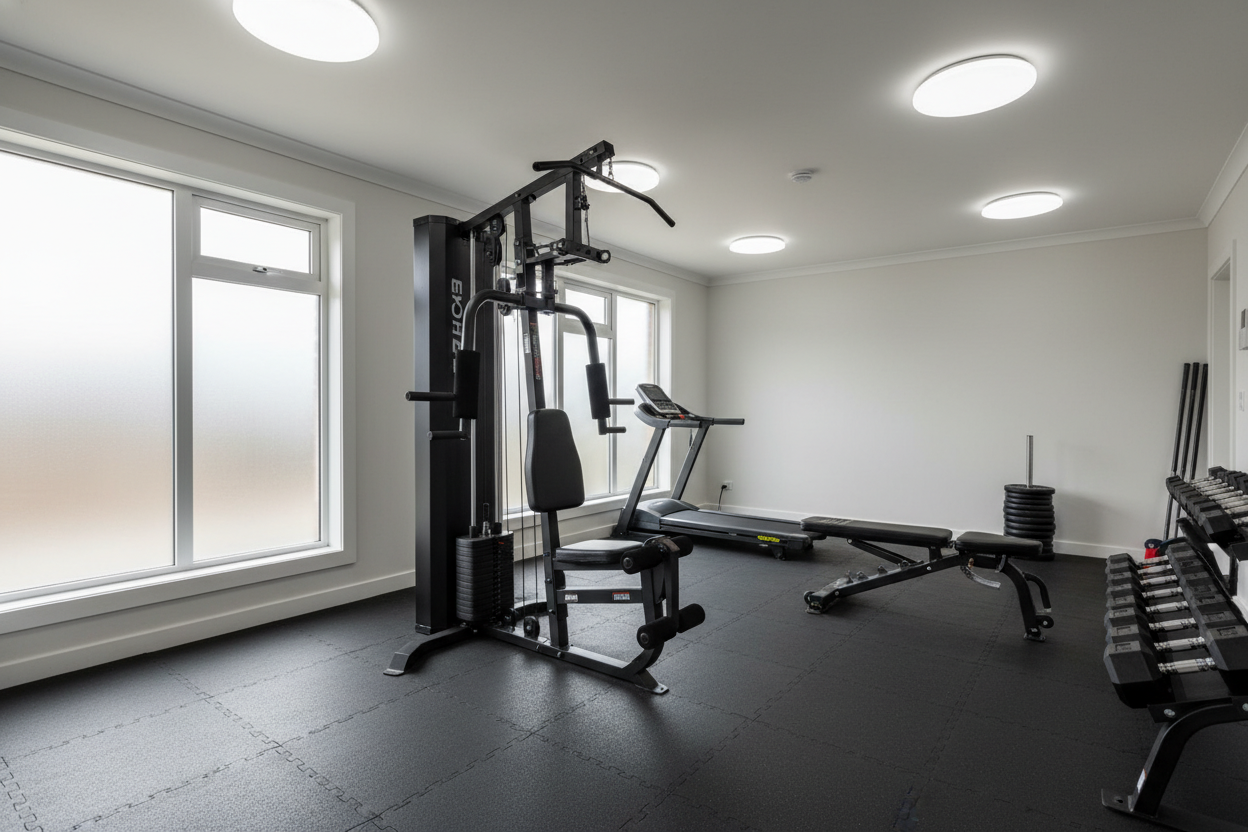
I spent three years training in a garage that leaked and a spare room that barely fit a double bed. Most 'budget' machines I tried back then felt like they were made of recycled soda cans. Finding the best home multi gym uk isn't about the flashiest ads or the highest price tag; it's about finding something that won't tip over when you're mid-set on a chest press.
You want a rig that feels like the heavy-duty stuff at your local commercial spot, but actually fits through a standard UK doorway. If the machine rattles when you're just doing bicep curls, it’s not going to survive a heavy leg day.
- Measure your ceiling height before you even look at a spec sheet.
- Look for a minimum 14-gauge steel frame for real stability.
- Pulley ratios change how heavy that weight stack actually feels.
- Avoid generic high street shops if you want gear that lasts more than a season.
Why Your British Spare Room Hates Commercial Rigs
Most commercial-grade equipment is designed for American warehouses with 12-foot ceilings. In the UK, we're usually dealing with Victorian terraces or new-builds where the 'spare room' is basically a cupboard. If you buy a rig that's too tall, you'll find yourself punching holes in the plasterboard every time you try to do a pull-up or an overhead press.
I've learned the hard way that finding gear for tall lifters in a small house is a nightmare. You need to account for the height of the machine plus the height of your own head at the top of a movement. Always leave at least a 20cm buffer between the top of the rig and your ceiling. Also, check your floor. If you're on the second floor of an older semi-detached, a 200kg machine plus your body weight is a lot of stress on those joists.
The Anatomy of the Best Multi Gym for Home UK Setups
When building a complete home gym, the multi-station is your centerpiece. It has to be rock solid. I look for steel tubing that’s at least 50mm x 50mm. Anything thinner feels like a garden chair. You also want a powder-coated finish; cheap paint flakes off the moment you accidentally clank a dumbbell against the frame, leading to rust in our lovely damp British climate.
The footprint is the next big hurdle. You want a machine that offers a 'walk-in' design. This allows you to perform squats or overhead presses inside the frame, saving you from needing a separate power rack. A good rig should pack a cable system, a bench, and a pull-up bar into a space no larger than 2m x 1.5m.
Stop Buying Gear Based on the Weight Stack Alone
Don't get blinded by a 100kg weight stack. Most home machines use a 2:1 pulley ratio, meaning that 100kg stack actually feels like 50kg of resistance. That’s fine for isolation moves, but if you're a heavy hitter, you’ll max that out on day one. Look for high-quality nylon pulleys with sealed bearings. If the cable feels 'crunchy' or hitches when you pull, the workout becomes a chore instead of a session.
Where Should You Actually Buy This Stuff?
I'm going to be blunt: stop looking at the 'fitness' section of big-box retailers. You know the ones. They sell lawnmowers and televisions alongside flat-packed gyms. Buying gear from high street shops is a recipe for disappointment. Those machines are built for light use by people who might use them once a month.
You need a specialist. You want a company that actually stocks spare cables and knows the difference between a linear bearing and a plastic bushing. If they can't tell you the gauge of the steel, walk away.
The All-In-One Rig I Actually Trust in a Small Space
If I had to pick one setup for a standard 10x10 room, I’d go with a hybrid. A Smith machine home gym station gives you the safety of a guided bar—perfect if you're training alone—without the massive footprint of a full cage. It’s the best way to hit heavy compounds without needing a spotter in your spare room.
The full body multi training station is a prime example of what I'm talking about. It combines a cable crossover, a Smith machine, and a chin-up station. It’s heavy enough to stay put when you’re doing rows, but compact enough that you aren't climbing over it to reach the door. I’ve tested plenty of these, and the ones that use proper counterweights and smooth guide rods are the only ones worth your cash.
Personal Experience: My First Big Mistake
My first 'multi gym' was a £200 special from a catalogue. I thought I was being smart. The first time I tried a heavy lat pulldown, the whole frame tilted toward me. The 'leather' on the bench cracked within three months. I ended up spending more money replacing that junk than I would have spent buying a professional-grade rig at the start. Don't be me. Buy once, cry once.
FAQ
Is a 1:1 or 2:1 pulley ratio better?
A 1:1 ratio gives you the full weight of the stack but can feel 'jumpy.' A 2:1 ratio is smoother and offers more cable travel, which is better for functional movements and shadows boxing. For most home users, 2:1 is the sweet spot.
Will a multi gym damage my laminate flooring?
Yes, eventually. Even if it has rubber feet, the vibration and weight will mark the floor. Buy high-density rubber mats (at least 15mm thick) to put underneath. It protects the floor and keeps the noise down for your neighbors.
Can I assemble a multi gym by myself?
You can, but I wouldn't recommend it. These things are heavy and awkward. Having a second person to hold the uprights while you bolt them in will save you three hours of swearing and a potential trip to A&E.
Share:
Why Most Small Home Gyms Ideas Fail (And How to Fix Yours)
Does a Dial Dumbbell Actually Save Space, or Just Kill Your Pacing?