
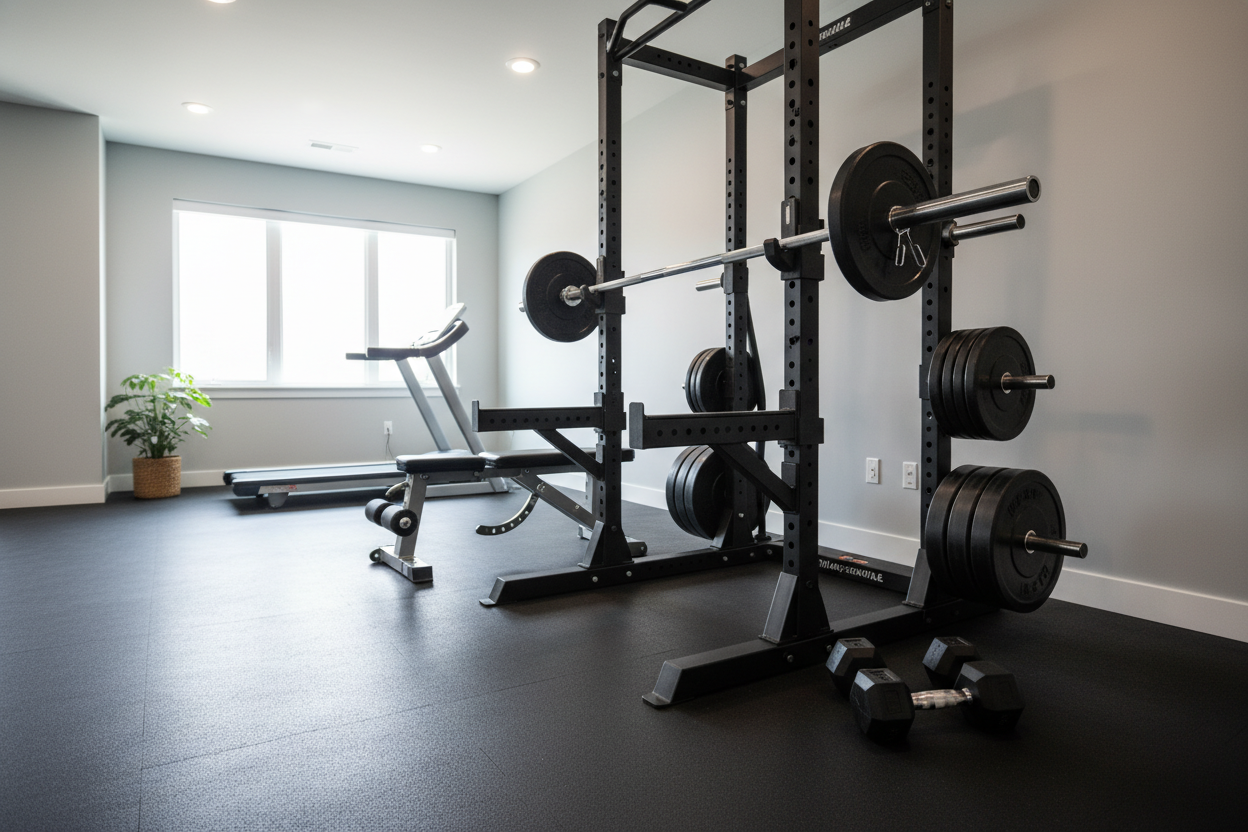
I remember scrolling through fitness forums at 1 AM, trying to justify why one piece of steel cost $99 and another cost $350. On a laptop screen, they both look like silver sticks with some cross-hatching. But after five years of training in a humid garage and testing dozens of bars, I've learned that a cheap barbell for home is usually just an expensive way to buy a future clothes rack.
- Tensile strength under 150,000 PSI is a recipe for a permanent 'U' shape.
- Bushings are more durable and cost-effective than bearings for most lifters.
- Knurling should feel like a firm handshake, not a cheese grater.
- Rust resistance is the most underrated spec for garage gym owners.
The Day My $99 Amazon Barbell Died
I was hitting a routine set of three at 315 lbs on my old 'no-name' bar I bought when I first started out. It felt fine until I racked the final rep and heard a faint, metallic 'ping' that sounded like a piano wire snapping. I didn't think much of it until I went to unload the plates and noticed they wouldn't slide off smoothly. The bar had developed a permanent, visible smile.
That bar was rated for '700 lbs,' but that's a static rating—basically, what it can hold without snapping while sitting perfectly still. It couldn't handle the dynamic force of being moved. An in home barbell needs to be durable enough for real progression. If you plan on actually getting stronger, a bar that bends at three plates is a safety hazard, not a bargain. I spent the next week deadlifting with a bar that rolled away from me because it wasn't straight anymore.
What Actually Matters When Buying an At Home Barbell
When you start looking at specs, ignore the 'max weight capacity' marketing fluff. Look for tensile strength. You want something in the 190,000 to 200,000 PSI range. This is the sweet spot where the steel is strong enough to resist bending but has enough 'whip' to not feel like a stiff rebar pipe. If the manufacturer doesn't list the PSI, it's probably because the number is embarrassingly low.
Then there's the knurling—the sandpaper-like texture on the shaft. On a cheap at home weight bar, the knurling is often pressed so shallowly that it disappears once your hands get a little sweaty. On the flip side, some 'aggressive' bars feel like they’re trying to exfoliate your soul. Outfitting a home gym means prioritizing the equipment that physically touches your hands every session. You want a medium-volcano knurl that sticks to your palms without drawing blood.
Bushings vs. Bearings (Skip the Hype)
If you aren't a competitive Olympic weightlifter doing snatches and cleans every single day, you don't need needle bearings. Bearings allow the sleeves to spin with the slightest touch, which is great for fast movements but makes the bar feel unstable during a bench press. They also require more maintenance and drive the price up significantly.
Most people building a home gym with barbell setups are better off with bronze or composite bushings. They provide a smooth, reliable spin that is more than enough for squats, presses, and deadlifts. Bushings are 'set it and forget it' components. They handle heavy loads better over the long term and keep the cost of your at home barbell reasonable without sacrificing performance.
Should You Just Buy a Beater Bar First?
The 'buy once, cry once' philosophy is a hard pill to swallow when you're looking at a $300 price tag. You might think about starting with a budget option to see if the habit sticks. If you are buying a weight bench with barbell rack combo, the included bar is fine for learning the form. It gets you moving, and that’s the most important part.
However, once you start adding 45-lb plates to each side, those 'included' at home barbells reach their limit quickly. They usually have bolted ends that loosen over time, leading to a loud, annoying clank every time the bar touches the floor. If you know you're committed to training for more than six months, skip the entry-level junk. A mid-range bar will still be straight and spinning ten years from now, whereas a beater bar will be sitting in a scrap yard.
How to Match Your Steel to Your Space
A standard Olympic bar is 7.2 feet long. That sounds manageable until you realize you need extra room on both sides to actually slide the plates on. If your spare bedroom is only 9 feet wide, you're going to be punching holes in the drywall. This is where you have to master the barbell math secret to small home gyms design before clicking buy.
Maneuvering an at home gym barbell in a tight space requires at least 1.5 to 2 feet of clearance on each side of the rack. If you're really cramped, look for a 'shorty' bar, but be warned: the sleeve space is limited, meaning you'll need thinner (and more expensive) urethane plates to get any significant weight on there. For most garage setups, a standard 20kg bar is the gold standard, provided you've measured twice.
My Final Verdict on Paying for Premium
So, is the $300 bar worth it? Absolutely. You don't need a $700 competition-grade bar unless you're chasing world records, but the jump from $100 to $300 is the biggest quality leap in the industry. That extra cash buys you better steel that won't bend, sleeves that won't fall off, and a finish like Cerakote or Stainless Steel that won't turn into a rusted mess in a garage environment.
FAQ
How long should a home barbell last?
A quality bar with 190k PSI tensile strength and bronze bushings should last a lifetime if you keep it dry and occasionally brush the chalk out of the knurling.
Can I drop my barbell on the floor?
Only if you are using bumper plates and a proper lifting platform or rubber mats. Dropping a bar with iron plates directly onto concrete will eventually damage the internal bushings and the bar's straightness.
What is the best finish for a garage gym?
If you live in a humid area, go for Stainless Steel or Cerakote. Black Zinc and Chrome look good at first but will eventually chip or rust if they aren't wiped down regularly.
Share:
Do You Actually Need All That Home Workouts Equipment?
Where Do Gyms Buy Their Equipment? (And Can You Buy Direct?)