
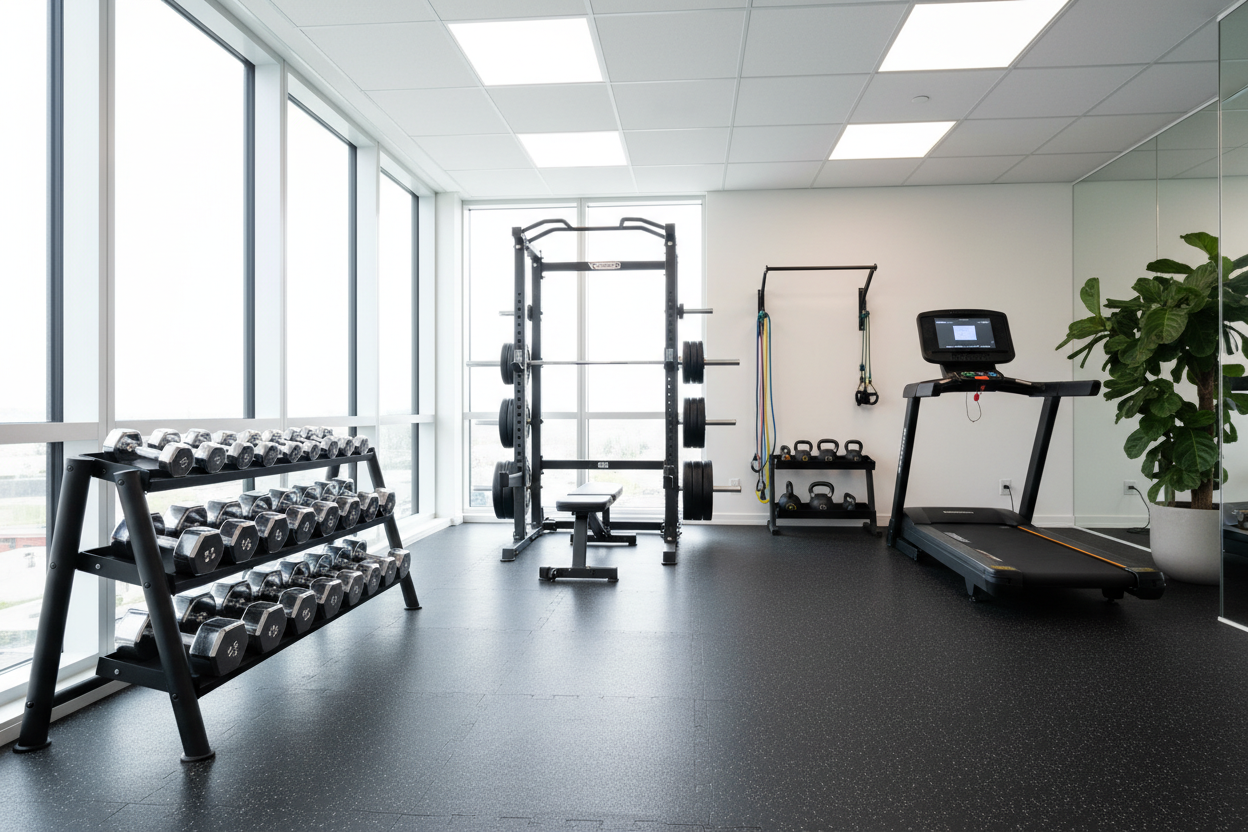
You know that feeling when you sit down at a commercial leg press and it feels like it is bolted to the center of the earth? No wobble, no friction, just smooth, heavy iron. Then you go home to your 14-gauge steel rack that rattles when you re-rack a modest 225. It makes you wonder where do gyms buy their equipment and why the stuff at your local sporting goods store feels like a toy aisle by comparison.
- Commercial gyms buy through B2B sales reps and direct manufacturer contracts.
- Residential gear is built for footprint; commercial gear is built for 24/7 abuse.
- You can buy direct, but freight costs and minimum orders are the main hurdles.
- The best way for home lifters to get commercial gear is through the secondary refurbish market.
Why Commercial Gyms Do Not Shop Where We Do
Commercial gyms have a different set of problems than you do. You care about whether a rack fits under your 8-foot ceiling. They care about liability, 500-lb user weight capacities, and warranties that cover 100 people using a machine every single day. If you put a residential treadmill in a Gold's Gym, the motor would burn out in a week and the warranty would be void before the first repairman arrived.
Commercial gear is overbuilt because it has to be. We are talking 7-gauge or 11-gauge steel, industrial-grade bearings, and upholstery that can handle a literal gallon of human sweat every month. Most retail stores sell 'light commercial' at best, which is fine for your garage but would crumble in a high-traffic club.
So, Where Do Gyms Get Their Equipment Exactly?
When a new gym opens, they do not fill a digital shopping cart. They work with B2B (business-to-business) outfitters. Brands like Life Fitness, Hammer Strength, and Matrix have dedicated sales forces. A gym owner sits down with a rep, looks at floor plans, and signs a contract for a full circuit of machines.
Many of these facilities actually lease their equipment. Instead of dropping $250,000 on a fleet of treadmills, they pay a monthly fee for three years. When the lease is up, the leasing company takes the 'old' machines back and replaces them with the newest models. This keeps the gym looking fresh and ensures they never have to deal with out-of-warranty repairs.
Can a Single Guy in a Garage Buy From These Suppliers?
Technically, yes. Most commercial manufacturers will take your money. However, the experience is nothing like buying a pair of shoes. You will likely have to deal with a sales rep, wait for a lead time of 8 to 12 weeks, and pay for 'LTL' (Less Than Truckload) freight shipping. Shipping a 600-lb functional trainer to a residential driveway with a liftgate service can easily add $500 to the price tag.
This is the main reason why many people find that their home setups lack the specific bodybuilding equipment for growth found in pro gyms. It is not that you are not allowed to buy a selectorized hack squat machine; it is just that most people do not have the $6,000 plus shipping to make it happen for a single piece of gear.
The Off-Lease Cheat Code for Home Lifters
If you want the indestructible feel of commercial iron without the B2B headache, you look for the liquidators. Remember those 3-year leases I mentioned? When those leases end, that gear goes to refurbishers. They strip the frames, powder coat them, replace the bearings, and sell them to home users for 40% of the original MSRP.
I have toured the coolest home gyms in the country, and the ones that really impressed me almost always had a few 'retired' commercial pieces. A refurbished Life Fitness cable crossover or a Precor stretch trainer adds a level of stability that you just cannot get from a box-store brand. It is the smartest way to bridge the gap between a hobbyist setup and a pro-level facility.
When Commercial Gear is Overkill (And When It is Essential)
You do not need a commercial power rack. A high-quality 3x3 residential rack from a reputable brand can hold 1,000 lbs, which is more than enough for anyone not named Brian Shaw. Buying a commercial rack is just paying for a brand name and a footprint that is likely too big for your spare bedroom.
However, anything with a cable or a pivot point is where commercial gear shines. Leg presses, functional trainers, and lat pulldowns benefit immensely from the heavier stacks and thicker cables used in commercial manufacturing. If it moves, buy commercial or high-end residential. If it just sits there (like a rack or plates), save your money.
Personal Experience: The 'Commercial' Trap
I once bought a 'commercial grade' adjustable bench from a generic online retailer. It weighed 110 lbs and looked the part. Within six months, the pop-pin for the incline started sticking and the vinyl began to crack. I eventually replaced it with a used, beat-up bench from a local gym closing sale. That old gym bench is probably 15 years old, weighs twice as much, and still feels like a rock. My mistake was trusting a marketing label over actual build quality.
FAQ
Can I buy directly from Rogue or Rep Fitness for a commercial gym?
Yes. Both brands have massive commercial divisions. They outfit everything from CrossFit boxes to D1 college weight rooms. They are actually some of the easiest 'commercial' brands to work with because their pricing is transparent on their websites.
Is used commercial equipment better than new home equipment?
Usually, yes. A 10-year-old commercial leg press from a brand like Cybex will likely outlast a brand-new 'budget' leg press. Just check the cables and bearings for wear before you commit.
Why is shipping so expensive for gym gear?
Because it is heavy, oversized, and requires a freight truck with a liftgate. You are not paying for a cardboard box; you are paying for a wooden pallet and a driver who has to navigate a semi-truck into your neighborhood.
Share:
Is a $300 Barbell for Home Actually Better Than a Cheap One?
The Spine-Pinching Reality of Cheap Adjustable Fitness Benches