
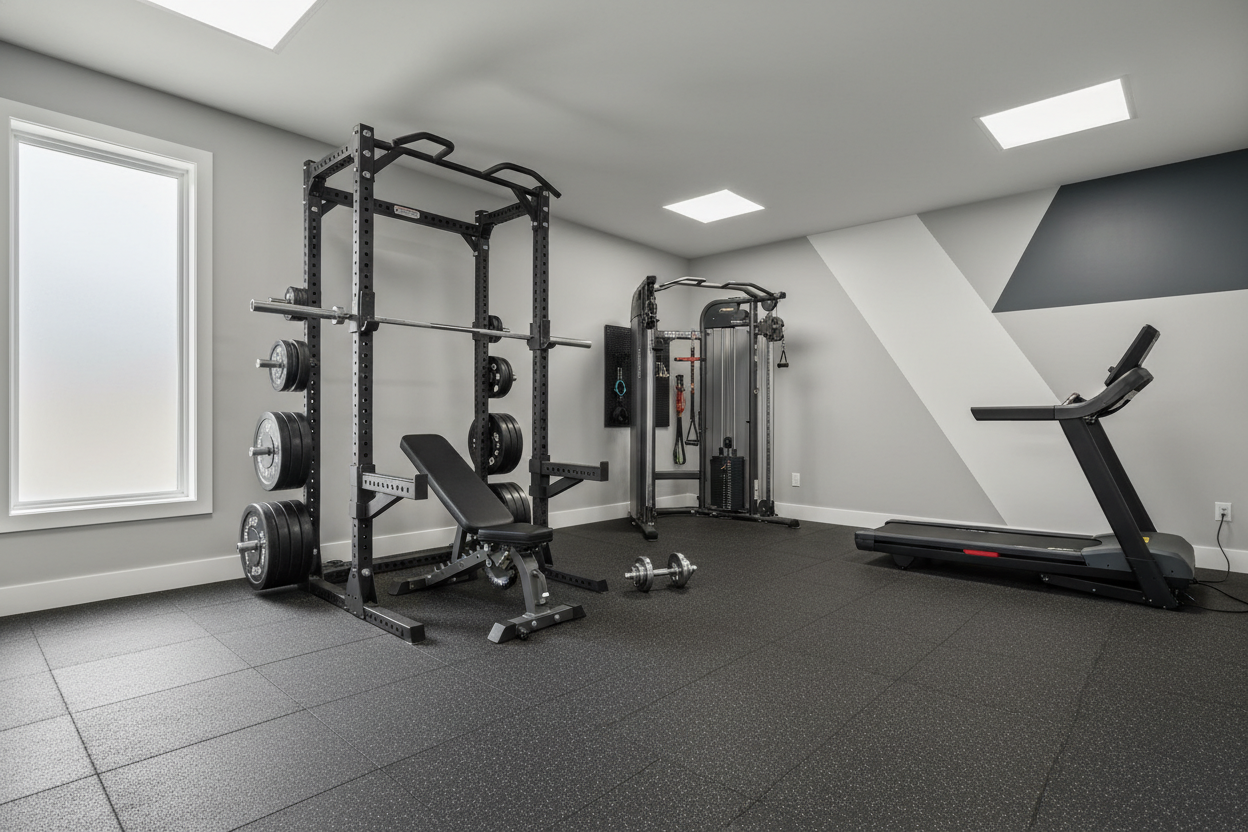
I have spent thousands of dollars turning my garage into a lifting sanctuary. I have got the Rogue rack, the calibrated plates, and a barbell that costs more than my first car. But every time I drive past the local strip mall, I see the sign for a $15-a-month membership and wonder: am I the sucker? Is the fitness 19 equipment actually good enough to justify leaving my private iron paradise?
Quick Takeaways
- Expect heavy-duty brands like Hammer Strength, Matrix, and Life Fitness.
- The cardio equipment is far superior to anything you can buy for a home gym under $5,000.
- Free weight sections are solid but suffer from 'missing plate syndrome' during peak hours.
- It is an excellent secondary gym for accessory work you cannot do at home.
The $15 Membership Stigma: What I Expected to Find
When you hear 'budget gym,' you probably picture plastic pulleys, cables that feel like they are coated in sandpaper, and benches that wobble the moment you pick up a 50-pound dumbbell. I went in expecting the worst. I figured I would see residential-grade treadmills and machines that felt more like toys than tools.
High-volume commercial gyms usually cut corners on maintenance, not just the initial purchase price. If a gym is only charging you the price of a burrito for a monthly membership, they have to make up that margin somewhere. Usually, that means the gear is old, the upholstery is cracked, and the cable machines have been 'out of order' since the late nineties.
Breaking Down the Actual Brands on the Floor
I was genuinely surprised. Walking through the doors, I did not see generic knockoffs. Most fitness 19 machines are actually commercial-grade units from industry heavyweights like Matrix, Life Fitness, and the gold standard for plate-loaded gear: Hammer Strength.
There is a massive mechanical difference between a machine you buy at a big-box sporting goods store and these units. The pivot points are smoother, the frames are welded thicker, and the weight stacks actually provide consistent resistance throughout the entire range of motion. This biomechanical precision is exactly why cheap gym machines suck—they often have 'dead spots' where the resistance vanishes. You do not get that issue with the Matrix or Hammer Strength lines found here.
The Cardio Deck: Why Commercial Always Wins
If you are a runner, this is where the membership pays for itself. You can spend $1,500 on a residential treadmill and it will still feel like it is going to vibrate through the floor when you hit 8 MPH. The commercial decks at these gyms weigh 400+ pounds. They are built to handle 20 hours of daily abuse without the motor overheating.
The ellipticals and stair climbers follow the same logic. They offer a level of stability and programming that most home users simply cannot afford. If your training involves heavy interval work or long-duration steady-state cardio, the commercial-grade suspension on these machines will save your knees in the long run.
The Free Weight Area: The Real Limiting Factor
The iron is where things get real. Most locations stock dumbbells up to 100 or 120 pounds. For 90% of the population, that is plenty. For the heavy hitters, it might feel a bit light. The racks are usually standard power cages or half-racks, which are sturdy enough for a 500-pound squat without a hint of flex.
The real issue is not the quality of the steel; it is the environment. During the 5:00 PM rush, the free weight area is a battlefield. Finding a matching pair of 45s is like a scavenger hunt, and the benches are often occupied by teenagers scrolling on their phones. The gear is great, but the availability is the trade-off for that low price point.
How It Compares to a Solid Garage Setup
If you are trying to decide between building a home gym or joining a club, look at the cables. A high-end functional trainer for your house will cost you $3,000 and likely only has 160-pound stacks. The cable crossovers at Fitness 19 usually have 200 to 300-pound stacks with buttery smooth pulleys.
It is incredibly difficult to replicate fitness 19 equipment on a garage gym budget because of the sheer variety. They have specialized pieces—seated row machines, hack squats, and leg presses—that would take up your entire garage and cost tens of thousands of dollars. For accessory movements and hypertrophy work, the commercial gym wins every time.
The Final Verdict: Worth Adding to Your Routine?
If you are a serious strength athlete, I would not give up the home barbell. There is nothing like hitting a heavy set of triples in your own space without waiting for a rack. However, for $15 a month, using Fitness 19 as a 'secondary' gym for machine-based accessory work is a no-brainer. The equipment is legitimate commercial grade, and as long as you avoid the peak-hour crowds, it is a massive asset to any training program.
FAQ
How heavy do the dumbbells go at Fitness 19?
Most locations stock dumbbells up to at least 100 lbs, with many larger locations going up to 120 lbs. They are typically rubber-coated hex or round pro-style dumbbells.
Do they have specialized powerlifting gear?
You likely won't find specialty bars like SSB or Duffalo bars. It is standard Olympic barbells and commercial power racks. It is built for general strength and bodybuilding, not niche powerlifting meets.
Is the equipment usually broken?
Surprisingly, no. Because they use major brands like Life Fitness and Matrix, parts are easy to source. Most machines are back up and running within a week if a cable snaps.
Share:
Stop Calling It 'That Cable Thing': Real Exercise Equipment and Names
I Found a Machine Similar to Elliptical That Doesn't Suck