
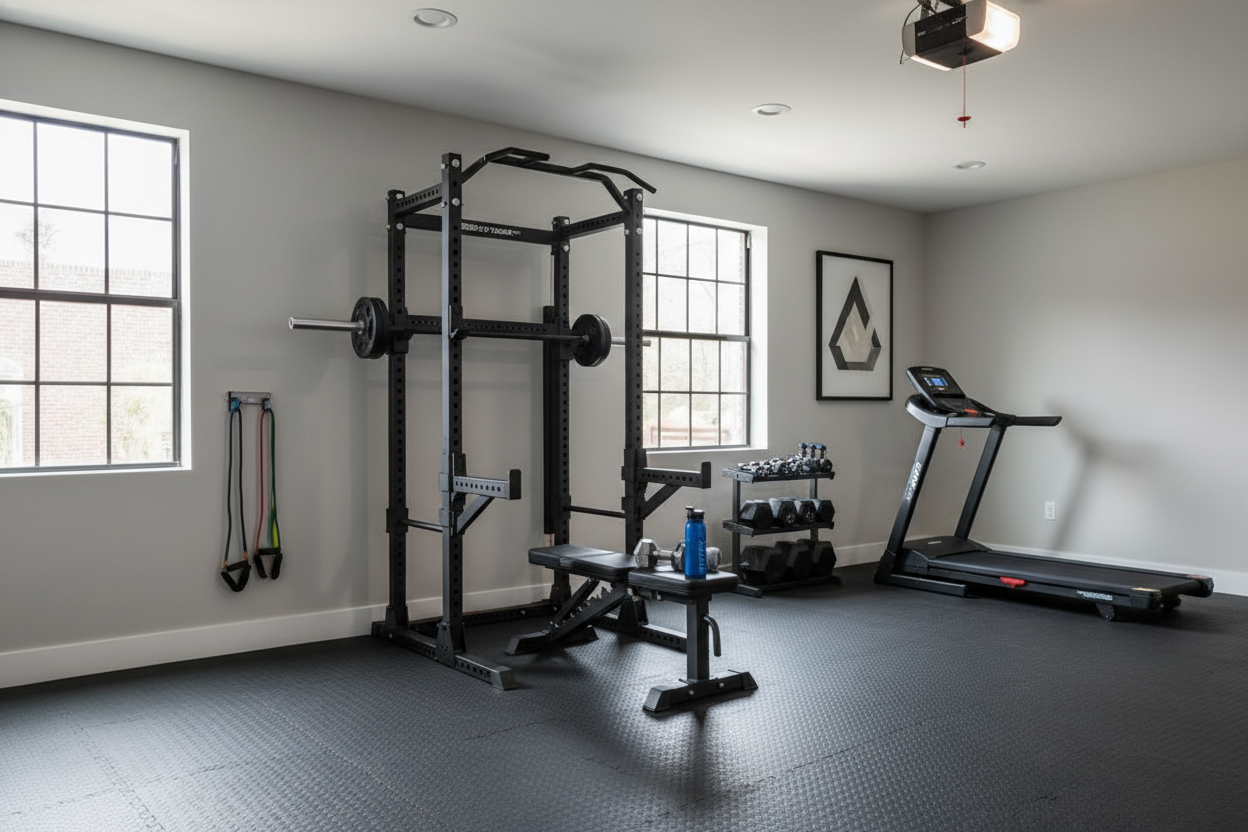
I was scrolling through marketplaces at 2 AM last Tuesday, nursing a sore shoulder and staring at my monthly gym bill. I realized I'm tired of waiting twenty minutes for a squat rack while some kid films a TikTok. But when you start looking for exercise equipment full body solutions, you quickly realize the market is a minefield of hollow tubes and plastic pulleys.
- Steel Gauge Matters: Never buy anything thinner than 11 or 12-gauge steel if you plan on lifting heavy.
- Pulley Quality: Aluminum pulleys beat plastic every single time for smoothness and longevity.
- Footprint vs. Working Area: A machine might be 4 feet wide, but you need 7 feet to actually load plates.
- Linear Bearings: If the Smith machine part doesn't have linear bearings, it will feel like dragging a sled through gravel.
The All-In-One Trap (And Why We Fall for It)
The dream is simple: one footprint, every muscle group. It sounds efficient and cost-effective. Budget manufacturers exploit this by slapping a 'total body' label on a machine made of 14-gauge steel that feels like a folding chair under a 200-lb load. They spend more on the glossy paint job than the structural integrity.
We fall for it because we want to believe that a $500 box can replace a $5,000 commercial gym. It can't. When you buy cheap full body workout machines, you aren't buying a tool; you're buying a future clothes hanger. Real training requires a frame that doesn't twist when you're mid-press.
Red Flags: What Makes a Multi-Station Absolute Junk
If the cables look like clotheslines, run. A real full body workout exercise machine needs to handle the friction of high-intensity training without melting the bearings. I've seen 'total body' setups where the cable literally jumped the track during a heavy set of chest flys because the pulley housing was made of cheap nylon instead of reinforced steel.
Another red flag is the 'one-size-fits-all' bench. If the integrated bench doesn't adjust to a true 90-degree angle or a deep decline, your exercise selection is immediately halved. You want a full body weight machine that adapts to your body, not a machine that forces you into a compromised position that'll wreck your rotator cuffs.
The 'Wobble Test' You Can Do From Your Screen
Zoom in on the bolts in the product photos. If they look like something from an IKEA nightstand, the machine will shake. Check the total shipping weight; a solid full body gym machine should weigh at least 300 to 500 lbs before you even add plates. If the entire unit is light enough for one person to carry the box, it’s not going to be stable during a heavy squat.
What Real Exercise Equipment Full Body Gear Looks Like
Real gear uses 11-gauge steel and commercial-grade linear bearings. You want a movement that feels like it's on rails, providing that buttery smooth travel. The Full Body Multi Training Station Smith Machine Dm01 is a solid example of how to build a frame that won't twist when you're pulling heavy or performing explosive movements.
Look for height-adjustable cable columns. A fixed-position cable limits you to just a few movements. A real full body workout station should have at least 15 to 20 adjustment points so you can go from low-row to high-pulldown in seconds. This versatility is what separates a serious tool from a toy.
Why the Smith Machine Hybrid is Winning the Space War
Combining a Smith machine with a functional trainer is the smartest move for a garage gym. It gives you the safety of a fixed path for heavy presses and the versatility of cables for accessory work. Browsing a Smith Machine Home Gym Station collection shows you how much utility you can pack into a 4x6 foot space without sacrificing the ability to go heavy on leg day.
Factoring in Your Actual Floor Space (Not Just the Footprint)
Manufacturers often lie about space by omission. They give you the dimensions of the base, but they don't tell you that you need three extra feet on either side to load Olympic plates. I always tell people to tape out the 'working area' on their floor first. You might find yourself asking Does The Best Full Body Workout Machine For Home Actually Exist when you realize your ceiling is too low for pull-ups or your room is too narrow for a 7-foot barbell.
Is It Finally Time to Ditch the Free Weights?
I used to be a barbell purist, but as I've gotten older, my joints have started to protest. A high-end machine offers constant tension that a barbell just can't match, especially at the top of a movement. In fact, Why I Traded Free Weights For A Full Body Workout Machine At Home covers exactly how I reclaimed my floor space and saved my joints without losing an ounce of muscle mass.
I once bought a 'complete workout machine' for $400 from a big-box store. The first time I tried a heavy lat pulldown, the top beam flexed so hard I thought it was going to snap. I sold it for $50 three months later and invested in a real rack. My advice? Buy once, cry once. Spend the money on a frame that will outlast you.
FAQ
Can I build muscle with just a full body machine?
Absolutely. Hypertrophy is about mechanical tension and progressive overload. If the machine allows you to add weight and perform movements through a full range of motion, your muscles won't know the difference between a cable and a dumbbell.
What is the most important spec to look for?
The steel gauge. If it's 14-gauge, it's for light fitness. If it's 11-gauge, it's for serious lifting. Also, check the cable's weight rating—look for 2,000-lb aircraft-grade cables.
Is a Smith machine better than a power rack for home gyms?
It depends on your goals. A Smith machine is safer for solo lifters and takes up less space because the bar is integrated. A power rack is better if you want to compete in powerlifting or want the most 'natural' movement path.
Share:
Which Types of Squat Machines Actually Deserve Your Garage Space?
Are All-In-One Home Weight Lifting Machines Actually Worth It?