
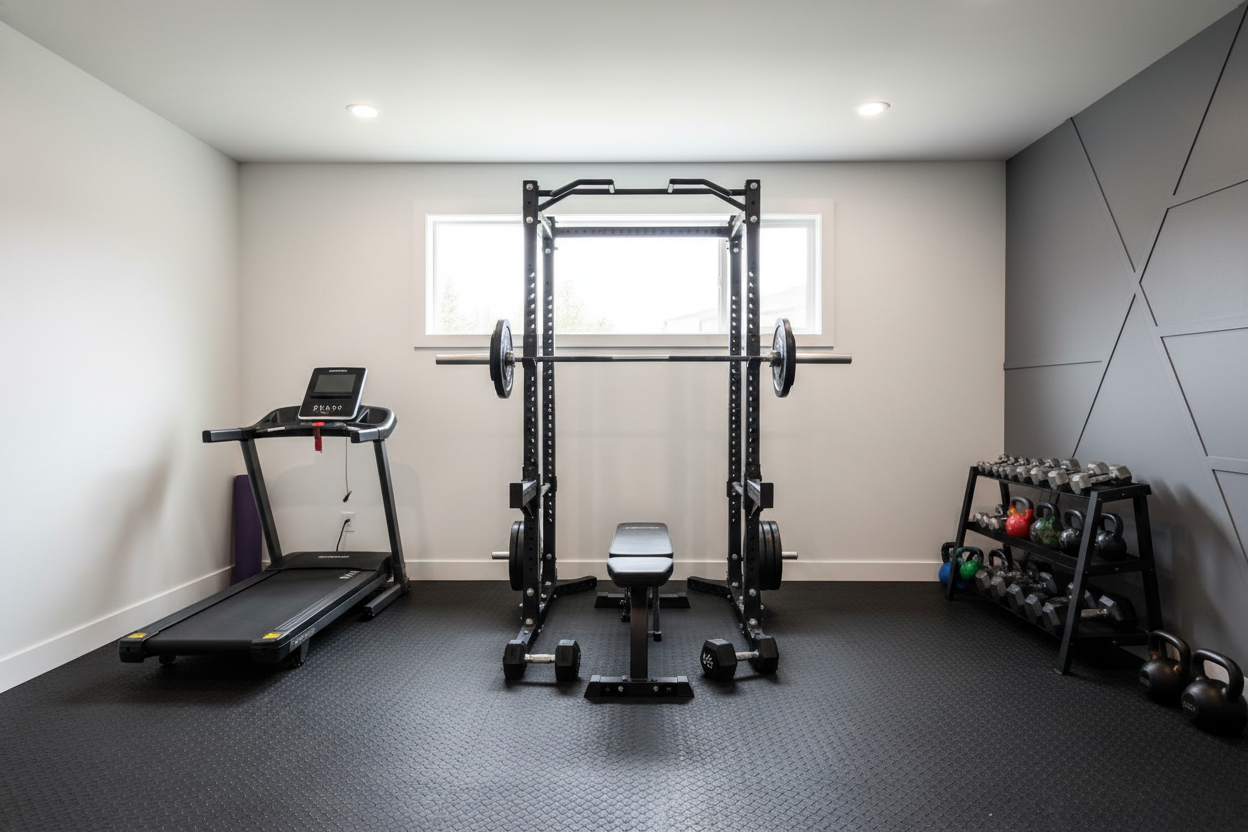
I have spent the last decade in garages, basements, and spare bedrooms testing gear that promised to turn me into a Greek god and ended up as a place to hang wet laundry. We have all seen the ads. You are tired of the crowded commercial gym, the rising membership fees, and the guy taking twenty minutes to finish one set of curls. So, you decide to buy home gym machine gear and reclaim your time.
But before you drop three grand on a multi-station that looks like it belongs in a sci-fi movie, you need a reality check. I have seen more people waste money on 'total body' solutions that do everything poorly rather than one thing well. Let’s look at how you can actually purchase home gym equipment that you will use for the next ten years instead of the next ten days.
Quick Takeaways
- Be honest: If you do not lift now, a machine in your garage won't fix your discipline.
- Footprint matters: Manufacturer specs usually ignore the space you need to actually load plates.
- Safety first: Solo lifters benefit from fixed paths when training to failure.
- Phase your buying: Start with the basics and let your gaps dictate your next purchase.
The Fantasy vs. Reality Lifter Test
The biggest mistake people make when they buy home gym machine setups is buying for the athlete they want to be, not the one they are. You might envision yourself doing heavy cable crossovers and pec deck flies every Monday. But if your current routine is 90% squats and presses, that $1,500 functional trainer is going to sit there collecting dust and spider webs.
Audit your last three months of training. If you spend most of your time with a barbell, your first investment should be a rack. If you love the pump and isolation of machines, then look at a selectorized unit. Don't buy a machine to 'force' yourself into a new style of training. It almost never works. Buy for the movements you already enjoy and do consistently.
Free Weights vs. Fixed Paths: What Does Your Body Need?
The 'hardcore' crowd will tell you that free weights are the only way to grow. They are wrong. While barbells are the gold standard for building raw strength, they are also incredibly unforgiving when you are training alone at 6 AM. If you are pushing for a PR on a bench press without a spotter, a mistake can be dangerous.
This is why the choice between a power rack or smith machine is so critical for home use. A fixed mechanical path allows you to push your muscles to absolute failure because you can re-rack the weight with a simple flick of the wrist. For hypertrophy-focused lifters who want to maximize time under tension without the risk of being pinned under a bar, a high-quality machine is often the smarter, safer play for a solo environment.
Why the Smith Machine Might Win in a Small Room
Space is the ultimate currency in a home gym. A dedicated leg press, a chest press machine, and a lat pulldown station would require a 500-square-foot commercial space. However, a modern smith machine home gym station can consolidate those movements into a single 4x6 foot footprint. By using a sliding carriage and integrated pulleys, you get the versatility of an entire gym floor in the corner of your garage. It is about density—getting the most 'exercise per square foot' possible.
The 'Working Footprint' Trap You're Probably Ignoring
When a website says a machine is 48 inches wide, do not believe that is all the space you need. This is the 'working footprint' trap. If you have a 7-foot Olympic bar on a rack, you need at least 18 to 24 inches of clearance on *each* side just to slide the plates on. If you place your rack flush against a side wall, you will be cursing every time you have to shimmy a 45-lb plate into a 4-inch gap.
Always add at least two feet to every dimension listed on the spec sheet. You also need to consider your 'step-back' distance. If you are doing squats, you aren't staying inside the uprights; you are stepping back. If your water heater or your car's bumper is three feet behind the rack, you are going to have a very cramped, very frustrating workout experience. Measure twice, buy once.
Stop Guessing: Build Your Setup in Stages
I always tell people to avoid those massive 'all-in-one' bundles on day one. It feels like you are saving money, but you end up with three attachments you hate and a bar that feels like a pool noodle. Instead, follow the exact order you should buy gym equipment to ensure your gym evolves with your strength. Start with a solid foundation—a rack or a primary machine and a good set of weights.
Train on that for three months. You will quickly realize what is missing. Maybe you find you really miss face pulls, so you add a pulley system. Maybe you realize your floor is taking a beating, so you invest in horse stall mats. Staggering your purchases prevents 'buyer's remorse' and ensures every piece of steel in your room earned its place there.
The Final Checklist Before Swiping Your Card
Before you hit that 'complete order' button, ask yourself these three things. First, can I move this by myself? If it weighs 800 lbs and comes in one crate, you need a plan. Second, what is the weight capacity? If a machine maxes out at 200 lbs and you already bench 225, you'll outgrow it in a week. Third, does it use standard 2-inch plates or those annoying 1-inch ones?
If the answer to those questions gives you confidence, then you are ready to buy gym for home setups that actually work. A home gym is an investment in your health and your time, but only if the equipment stays off the 'for sale' forums and under your hands. Make the call based on your real habits, and you will never regret the purchase.
Personal Experience: My $1,200 Mistake
Early in my lifting career, I bought a cheap 'seven-in-one' station from a big-box store. On paper, it was perfect. In reality, the cables were sticky, the bench wobbled like a Jenga tower, and the leg developer hit me in the shins at the wrong angle. I used it twice and then went back to the commercial gym for six months while it sat in my garage. I eventually sold it for $200. The lesson? Quality over quantity. One heavy-duty rack is worth ten flimsy plastic machines.
FAQ
Is a home gym machine better than a gym membership?
It depends on your commute and your focus. If you save 40 minutes of driving and never have to wait for a rack, it pays for itself in 'time-wealth' within a year. However, you lose the social atmosphere and the variety of specialized commercial machines.
How much ceiling height do I really need?
Most standard racks are 82 to 90 inches tall. However, if you plan on doing pull-ups, your head needs to clear the bar. If you have an 8-foot ceiling and a 7.5-foot rack, you are going to hit your skull on the drywall every time you go for a rep.
Do I need to bolt my machine to the floor?
If the machine has a small footprint or you are doing dynamic movements like band-resisted work or pull-ups, yes. Bolting it down prevents the unit from tipping or 'walking' across the floor during a heavy set. If you can't drill into the concrete, look for a rack with an extended 'flat foot' base.
Share:
I Cut Open a Dumbbell Set Hexagon to See Why They Break
Can the Best Home Multi Gym Actually Replace a Power Rack?