
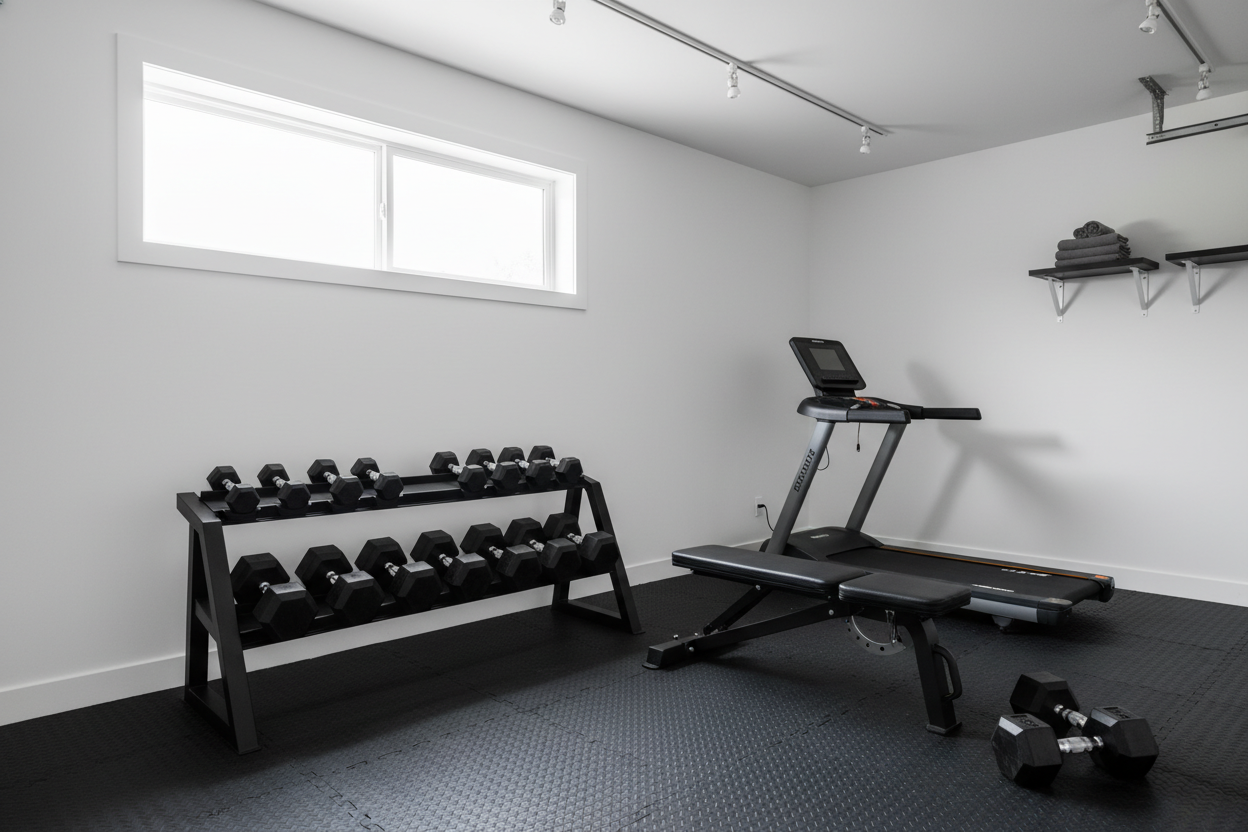
I remember staring at a $2,500 power rack online, convinced it was the missing piece to my mediocre bench press. Then I looked at my cramped one-car garage and realized I would have to park my car on the lawn for the next decade just to fit the thing. I closed the tab and bought a solid set of dumbbells exercise equipment instead.
The truth is, most of us do not need a commercial-grade cage. We need heavy things we can pick up and put down without tripping over them when we are trying to do laundry. If you are starting from zero, the humble dumbbell is the most versatile tool in the shed.
Quick Takeaways
- Dumbbells require zero dedicated floor space if you store them under a bed or in a corner.
- Unilateral training (one arm at a time) forces your core to work twice as hard to stabilize.
- High-quality rubber hex sets last a lifetime; cheap plastic sets leak sand within a month.
- You can hit every major muscle group—legs included—with just two handles and some grit.
The Trap of Buying Too Much Stuff Too Soon
Social media makes you think a home gym is not real unless you have a cable crossover and a specialized deadlift platform. It is a lie. I have seen guys with $10k setups who haven’t broken a sweat in six months because they spent all their time optimizing the layout instead of training. They get paralyzed by choice, staring at five different machines instead of just picking up a weight.
When you start with a massive multi-station setup, you are married to that footprint. If you realize you hate the biomechanics of that specific chest press machine, you are stuck with a 400-pound paperweight. Starting small lets you find your rhythm without the financial hangover or the clutter.
Why Free Weights Beat Bulky Garage Machines
Machines are great for isolation, but they dictate your movement path. Dumbbells do not care about your limb length or shoulder width; they move with you. This freedom is why free weights are superior for joint health and functional strength. You are not just moving a weight from point A to B; you are stabilizing it in three-dimensional space.
If you are worried about form, I get it. Some people prefer beginner gym workout machines because the learning curve is flatter and the path is guided. But once you master the dumbbell goblet squat or the overhead press, you have built a level of real-world stability that a seated machine just cannot replicate. Plus, a pair of 50s takes up two square feet. A leg press machine takes up half your zip code.
Adjustable vs. Fixed: Picking Your Poison
This is the big fork in the road for any home lifter. If you are training in a studio apartment or a literal closet, adjustable dumbbells are the only logical choice. Modern selectorized sets let you go from 5 lbs to over 50 lbs with the twist of a dial. They save a massive amount of space, but they are not indestructible. If you drop a selectorized dumbbell from shoulder height, there is a good chance you are buying a replacement part.
On the other hand, a rubber hex dumbbell set is built for abuse. These are the ones I keep in my garage. You can drop them, use them as handles for push-ups, and they won’t roll away when you set them down. The downside? A full rack of fixed weights is expensive and demands a dedicated wall. If you have the room and plan on training heavy, the durability of solid iron and rubber is worth the extra cash.
How Much Weight Do You Actually Need?
Do not waste money on 2lb or 3lb plastic weights unless you are using them for physical therapy. For most people starting out, a range from 10 lbs to 50 lbs covers 90% of your needs. You can do lateral raises with the 10s and heavy rows or lunges with the 50s. It is about having the right tool for the specific lift.
I always tell people to buy in increments of 5 lbs. Jumping from a 20lb dumbbell to a 30lb one is a 50% increase—that is a recipe for a shoulder injury. When you are shopping for gym equipment dumbbells, look for sets that allow for progressive overload. If you can do 12 reps easily, it is time to move up. If you do not have the next weight ready, your progress stalls out.
When to Finally Upgrade Beyond the Basics
Dumbbells are incredible, but they have a ceiling. Eventually, your grip strength might fail before your legs do on a squat, or you will find that pressing 100-lb bells into position is more dangerous than the lift itself. That is the signal to look at a barbell and a rack.
I have known lifters who eventually sold my dumbbells to switch entirely to a minimalist kettlebell or barbell setup once they hit elite strength levels. But for the first two years of training? You won't outgrow a solid set of free weights. Wait until you can bench your bodyweight for reps before you start worrying about specialized bars and power cages.
My Personal Take: The Cheap Weight Lesson
Early on, I bought a set of cement-filled plastic dumbbells because they were $40 cheaper than the cast iron ones. Big mistake. Within three months, the plastic cracked, and I had grey sand leaking onto my carpet. The handles were also weirdly thick, making it impossible to get a good grip on heavy rows. Buy once, cry once. Get cast iron or rubber-coated hex bells. They will outlive you.
FAQ
Are rubber or iron dumbbells better?
Rubber-coated hex dumbbells are better for home use. They are quieter, they won't chip your floor as easily, and they do not rust like bare cast iron does in a humid garage.
Can I build muscle with just dumbbells?
Absolutely. Your muscles do not know the difference between a $10,000 machine and a $50 dumbbell. They only respond to tension and progressive overload. If you lift heavier over time, you will grow.
Do I need a bench too?
You can do a lot on the floor—like floor presses and rows—but a basic flat bench triples your exercise options. It is the one accessory worth buying alongside your weights.
Share:
Is That Popular Inspire Dumbbell Set Actually Enough Weight?
Why I Finally Outgrew the Fitness Gear Pro Olympic Bench