
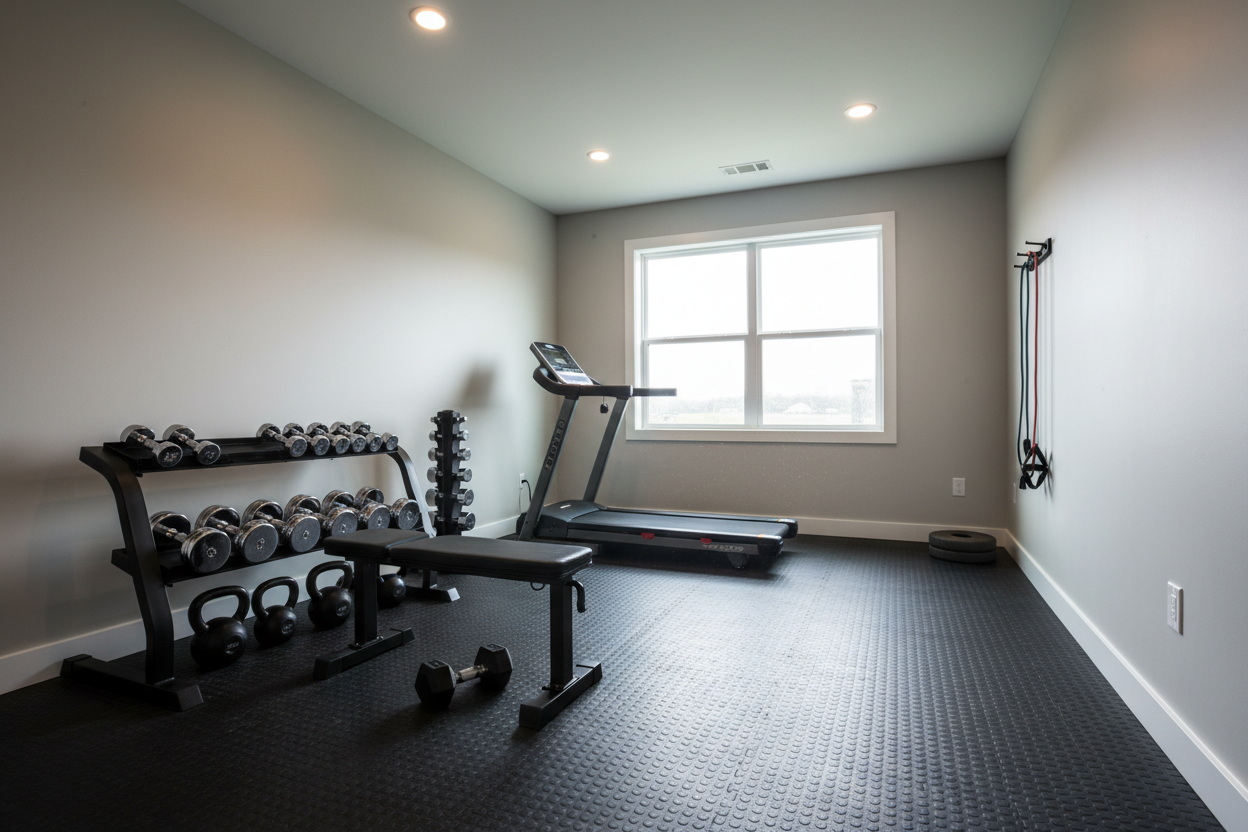
I remember the first time I tried to turn a 10x10 spare bedroom into a training space. I bought a standard power rack, a full set of dumbbells, and a weight tree. Within a week, I was shuffling sideways like a crab just to reach my pull-up bar. If you are hunting for small home gyms ideas, the biggest mistake you can make is trying to shrink a commercial gym layout into a residential room.
Quick Takeaways
- Vertical storage is the only way to keep a floor walkable.
- Folding wall-mounted racks save roughly 12 to 15 square feet of permanent floor space.
- Adjustable dumbbells replace a massive 3-tier rack with two small blocks.
- Measure your barbell sleeve-to-sleeve length before committing to a narrow room.
The Floor Space Trap: Why Your Spare Room Feels Tiny
Most people treat their spare room like a Tetris board. They buy a piece of gear, shove it against a wall, and repeat until the floor is gone. This turns your home gyms small spaces into an obstacle course where you spend more time moving plates than lifting them. You end up with a gym that is technically functional but mentally exhausting to use.
Instead of thinking about what gear you want, think about the 'dead space' gear creates. A standard 4-post rack owns its footprint 24/7, even when you are not using it. This is why you need to focus on home gym ideas small spaces actually need—gear that disappears when the set is over. If you can not walk across the room without turning your shoulders, your layout is broken.
Going Vertical: Why Wall-Mounted Gear Changes Everything
Walls are the most underutilized asset in a tiny gym. A wall-mounted folding rack is the king of the best compact at home gym setups. These units usually protrude only 4 to 6 inches from the wall when folded. You get a 3x3-inch 11-gauge steel upright that can handle a 500-lb squat, but it tucks away so you can actually use the room for yoga or just walking to the closet.
Pair a folding rack with wall-anchored pulley systems. Traditional cable crossovers are massive floor hogs. A single-stack wall-mounted pulley takes up about the same space as a coat rack but gives you access to hundreds of movements. When selecting your home gym essentials, prioritize anything that bolts to a stud rather than sitting on a pedestal.
Ditching the Dumbbell Tree: Smarter Weight Storage
A full run of dumbbells from 5 to 50 lbs requires a rack at least 4 feet wide. In a small home gym layout, that is prime real estate you just lost. I switched to adjustable dumbbells years ago, and while the clicky adjustment takes a second longer, the space savings are massive. You replace 10 pairs of weights with two handles.
For your olympic plates, get them off the floor. I once stashed 400 lbs of iron in my office by using wall-mounted plate pegs. By hanging your 45s and 25s on the wall, you clear the perimeter of the room. It makes the space feel twice as large and prevents the 'toe-stubbing' hazard that ruins a good workout flow.
Multi-Use Machines That Actually Fit in Tight Quarters
If you have the budget for one big piece, skip the single-use leg extension machine. You need a smith machine home gym station that integrates a functional trainer and a pull-up station. These all-in-one units are designed to sit flush against a wall, consolidating four or five machines into a single 4x6 footprint.
For those who refuse to skip leg day but lack the room for a massive sled, the compact leg press hack squat combo is a lifesaver. It provides the heavy quad volume you need without the 8-foot footprint of a commercial leg press. It is about choosing gear that earns its keep by performing multiple roles.
The Tape Measure Test: Do This Before Drilling Any Studs
Before you buy anything, grab a roll of blue painter's tape. Tape out the footprint of the gear on your floor. Then—and this is the part people forget—tape out the 'working area.' A barbell is 7 feet long. If your room is 9 feet wide, you only have 12 inches of clearance on either side to load plates. That is tight.
Check your ceiling height too. If you are 6 feet tall and your ceilings are 8 feet, a standard power rack might leave your head hitting the drywall during pull-ups. Always account for the 'swing radius' of folding racks and the height of your head at the top of a press. If the tape shows you will be cramped, go back to the drawing board.
How much space do I really need for a home gym?
You can build a brutal workout space in as little as 50 square feet if you use folding equipment. A standard 10x10 bedroom (100 sq ft) is actually plenty of room for a full power rack setup if you manage your storage correctly and keep the center of the floor clear.
Are wall-mounted racks safe for standard drywall?
Yes, provided you are bolting them into the wooden studs. Never use drywall anchors for gym equipment. Most folding racks use a stringer board (a horizontal piece of wood or steel) to distribute the load across multiple studs, making them incredibly secure for heavy lifting.
What is the best flooring for a small upstairs gym?
Go with 3/4-inch rubber stall mats. They are dense enough to protect the subfloor and dampen the vibration of dropped weights. If you are in an apartment, adding a layer of high-density foam underneath the rubber can help keep the neighbors from complaining during your early morning deadlift sessions.
Share:
Why I Finally Caved and Bought Atlas Gym Equipment
The Awkward but Brilliant Reality of Lifting With a Square Dumbbell