
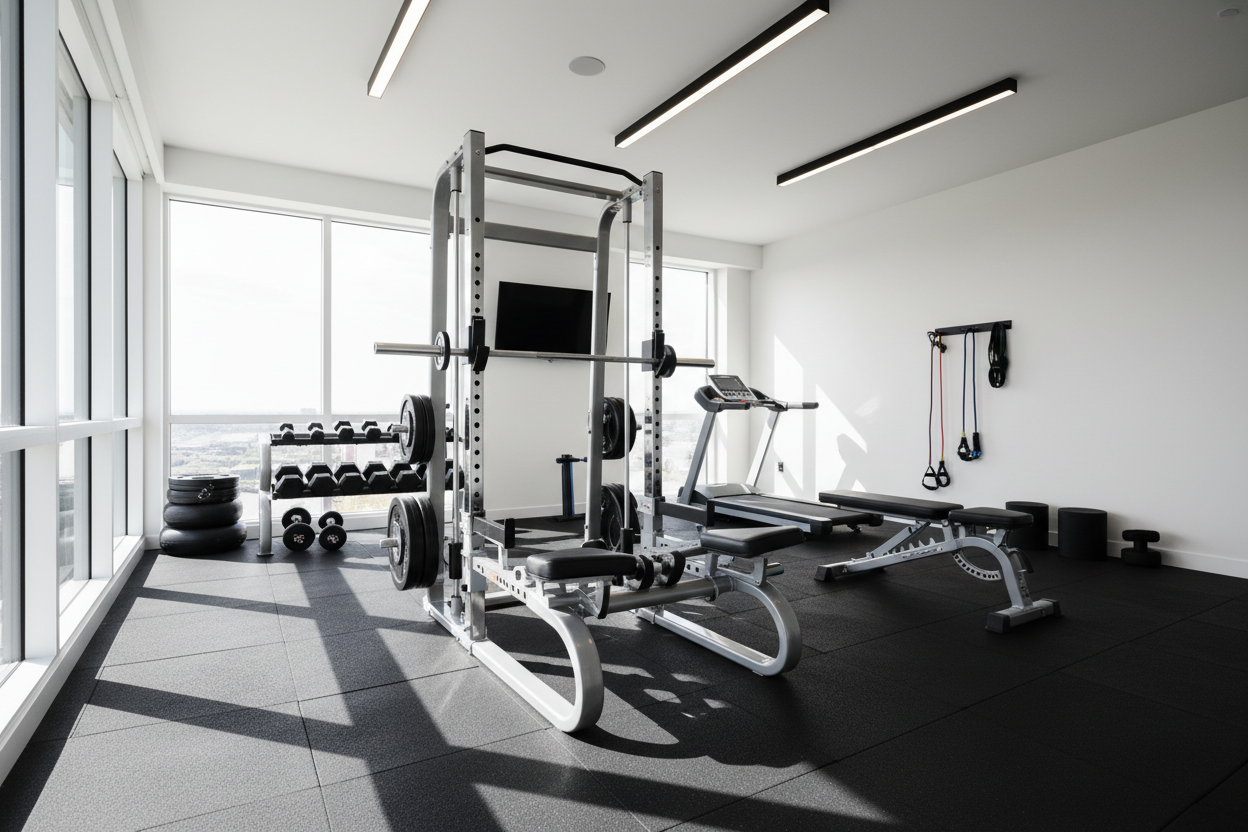
I remember the first time I hopped on a hack squat machine after a year of barbell-only snobbery. I thought it would be 'easy' because the machine handled the balance for me. Three sets later, my quads were fine, but my patellar tendons felt like they’d been hit with a ball-peen hammer. Most people don't realize that learning how to use squat machine setups requires more than just sitting down and pushing.
Quick Takeaways
- Foot placement is your primary lever for joint health; higher on the platform usually saves the knees.
- Never lock out your knees aggressively at the top of the movement.
- Keep your lower back glued to the back pad to avoid 'butt wink' and disc compression.
- Brace your core just as you would for a free-weight squat to stabilize your spine.
Why Guided Machines Still Cause So Much Knee Pain
There is a false sense of security when you lock into a machine. Because you aren't balancing a 45-lb bar on your traps, you think you can just 'press and go.' This is how people end up with chronic knee issues. When you are on a fixed track, your joints are forced to follow the machine’s path, not your natural biomechanics.
If your squat machine use isn't aligned with your hip and ankle mobility, you create massive shear forces on the patellar tendon. Unlike a barbell squat where you can shift your hips back or adjust your stance mid-rep, a machine is unforgiving. If you set up wrong, you are essentially grinding your joints against a steel rail for 12 reps. You have to align your joints with the machine's axis of rotation or track angle before you even think about adding plates.
The Setup: How to Use Squat Machine Gear Without Looking Lost
The first mistake I see in my garage gym is people rushing the setup. Step one: adjust the shoulder pads. They should be snug but not crushing your collarbones. If you're too tall or too short for the default setting, you'll end up rounding your back just to fit into the machine. That is a one-way ticket to a herniated disc.
Next, check the safety catches. Most machines have a manual handle or a twist-lock system. Before you load heavy weight, do a 'dry run' to see where the lowest safety point is. You want to be able to hit full depth without the machine bottoming out, but you also need that safety catch to be reachable if you hit failure.
Finally, the brace. Just because there is a backrest doesn't mean your core can go soft. Take a big breath, expand your diaphragm against your belt (if you're wearing one), and push your lower back into the pad. This creates a rigid pillar that allows for maximum force transfer from your legs into the sled.
Foot Placement Dictates Everything
Your feet are your steering wheel. If you place them too low on the platform, your knees will travel far past your toes. While 'knees over toes' isn't inherently evil, doing it under heavy machine load without the right ankle mobility is a recipe for disaster. Squat machine form improves instantly when you find the 'sweet spot' where your heels stay glued to the metal throughout the entire range of motion.
A high foot placement targets the glutes and hamstrings more effectively, while a lower (but safe) placement puts the focus on the quads. If you have long femurs like I do, a slightly wider stance with toes pointed out about 15 degrees usually feels the most natural. Never let your heels lift; if they do, your feet are too low or your ankles are too tight.
Hack Squat vs. Smith Machine: Tweaking Your Mechanics
A hack squat machine uses an angled sled—usually 45 degrees—which allows you to lean back into the weight. This is great for quad isolation but requires you to be very mindful of your hip position. If your butt leaves the pad at the bottom, you're putting extreme pressure on your L5-S1 vertebrae. Stay glued to the machine.
The Smith machine is a different beast because the bar path is strictly vertical. I Learned How to Properly Squat on a Smith Machine the Hard Way by trying to mimic my barbell stance, which resulted in a lot of forward leaning and lower back strain. When using a Smith Machine, you actually need to walk your feet out slightly in front of the bar to maintain an upright torso. This allows you to sit 'down' into the squat rather than 'back,' which is the whole point of using a fixed vertical track.
3 Ways You're Accidentally Sabotaging Your Machine Lifts
The biggest sin is the 'ego lockout.' We've all seen the videos of knees buckling backward on a leg press. Never, ever slam your knees into a locked position. Keep a 'soft' lockout at the top to keep the tension on the muscles and off the ligaments. Your quads should be doing the work, not your bone structure.
Second, stop doing half-reps. Because machines make it easy to load up a dozen 45-lb plates, people love to do 2-inch 'ego reps.' This builds zero muscle and maximum joint inflammation. Lower the weight, get your thighs at least parallel to the footplate, and control the eccentric phase. Squat machine how to use guides always emphasize depth for a reason—it's where the growth happens.
Third, stop guessing your progress. If you aren't tracking your sets, you're just exercising, not training. I use squats.in tools to keep my progressive overload in check. If I did 300 lbs for 10 reps last week, I’m aiming for 305 lbs or 11 reps this week. Machines make it very easy to track these metrics because the variables (like balance) are removed.
Upgrading Your Garage: When to Invest in a Combo Rig
If you're tired of waiting in line at the commercial gym or trying to rig up a sketchy leg press with a barbell and a rack, it might be time to look at a dedicated unit. For most garage gyms, space is the biggest hurdle. You don't have room for a standalone hack squat, a standalone leg press, and a calf machine.
A 3 In 1 Hack Squat Leg Press Combo Machine L2 V4 is the move for most serious home lifters. It gives you the hack squat, leg press, and calf raise in one footprint, which is essential when you're fighting for every square inch of floor space. It’s built to handle heavy loads without the frame flex you see in cheap big-box store equipment.
Personal Experience: My 'Geiger Counter' Knees
I once spent three months exclusively using a hack squat machine because of a wrist injury that prevented me from holding a barbell. I ego-lifted. I loaded six plates on each side and did half-reps. My knees started clicking like a Geiger counter within three weeks. I had to swallow my pride, drop the weight by 50%, and focus on deep, controlled reps with my feet higher on the platform. The clicking stopped, and my quads actually grew. Don't let the machine's stability trick you into being stupid.
FAQ
Where should my feet go on a squat machine?
Start with your feet in the middle of the platform, shoulder-width apart. If your knees feel pressure, move your feet higher. If you want more quad focus and have the mobility, move them lower.
Is a squat machine better than a barbell?
It’s not better; it’s different. A barbell builds more stability and core strength, while a machine allows you to push your legs to absolute failure without worrying about falling over. Use both.
Can I use a squat machine if I have back pain?
Often, yes. Because the machine supports your back (in a hack squat or leg press), it can be a great way to train legs while recovering from a back tweak, provided you keep your spine neutral and glued to the pad.
Share:
Which Popular Gym Machines Actually Deserve the 5 PM Wait Line?
Stop Paying for Logos: How to Judge a Gym Machine Price Like a Pro