
I have spent the last decade in garage gyms, basement dungeons, and high-end commercial clubs. I have seen 100-lb bells crack concrete and 5-lb adjustables shatter like glass because someone breathed on them too hard. Choosing the right dumbbell for gym use isn't about finding the prettiest weight; it is about finding the one that won't roll over your foot or slip out of your hand when you are chasing a PR.
Quick Takeaways
- Hex shapes are superior for garage floors that are rarely level.
- Knurling is the most underrated feature—if it is smooth, it is dangerous.
- Urethane is a luxury; rubber-coated iron is the workhorse.
- Adjustables save space but usually hate being dropped.
Why 'Commercial Grade' is Usually a Rip-Off for Home Lifters
You will see 'Commercial Grade' slapped on everything from 5-lb pink weights to 150-lb monsters. In the industry, this usually just means the weights are coated in CPU urethane rather than recycled rubber. Urethane is great—it is odorless and incredibly durable—but you are going to pay a 40% premium for it. For a gym that sees 50 people a day, that matters. For your garage? It is overkill.
Most people think they need a full dumbbell set for gym use with a massive three-tier rack. Unless you have a dedicated 200-square-foot room just for weights, that is a massive waste of floor real estate. You are better off buying pairs as you get stronger or investing in a heavy-duty adjustable set. Don't let the 'commercial' label trick you into overpaying for dumbbell workout equipment that performs exactly like the 'standard' version.
The Handle Test: Knurling and Grip Shape
The handle is your only interface with the weight. If the handle sucks, the workout sucks. I have used classic iron dumbbells with handles so thick they felt like soda cans, and others with 'ergonomic' curves that actually created hot spots in my palms during heavy presses. A straight, 28mm to 32mm handle is the gold standard for a reason.
Then there is the knurling. This is the cross-hatched pattern etched into the metal. Cheap dumbbell exercise equipment often has 'passive' knurling that feels like a dull file. When you are three sets into heavy rows and your hands are sweating, that weight is going to slide. You want a medium-aggressive knurl—something that bites back just enough so you don't have to white-knuckle the grip. Avoid chrome-plated handles that feel slippery; stainless steel or high-quality zinc is where the performance is at.
Rubber Hex vs. Round: The Garage Floor Reality
Round dumbbells look cool. They look like what the pros use in those Venice Beach videos. But unless your floor is laser-leveled, round dumbbells are a nightmare. I have spent half my rest periods chasing a 60-lb bell as it slowly migrated toward my lawnmower. It is annoying, and in a tight space, it is a tripping hazard.
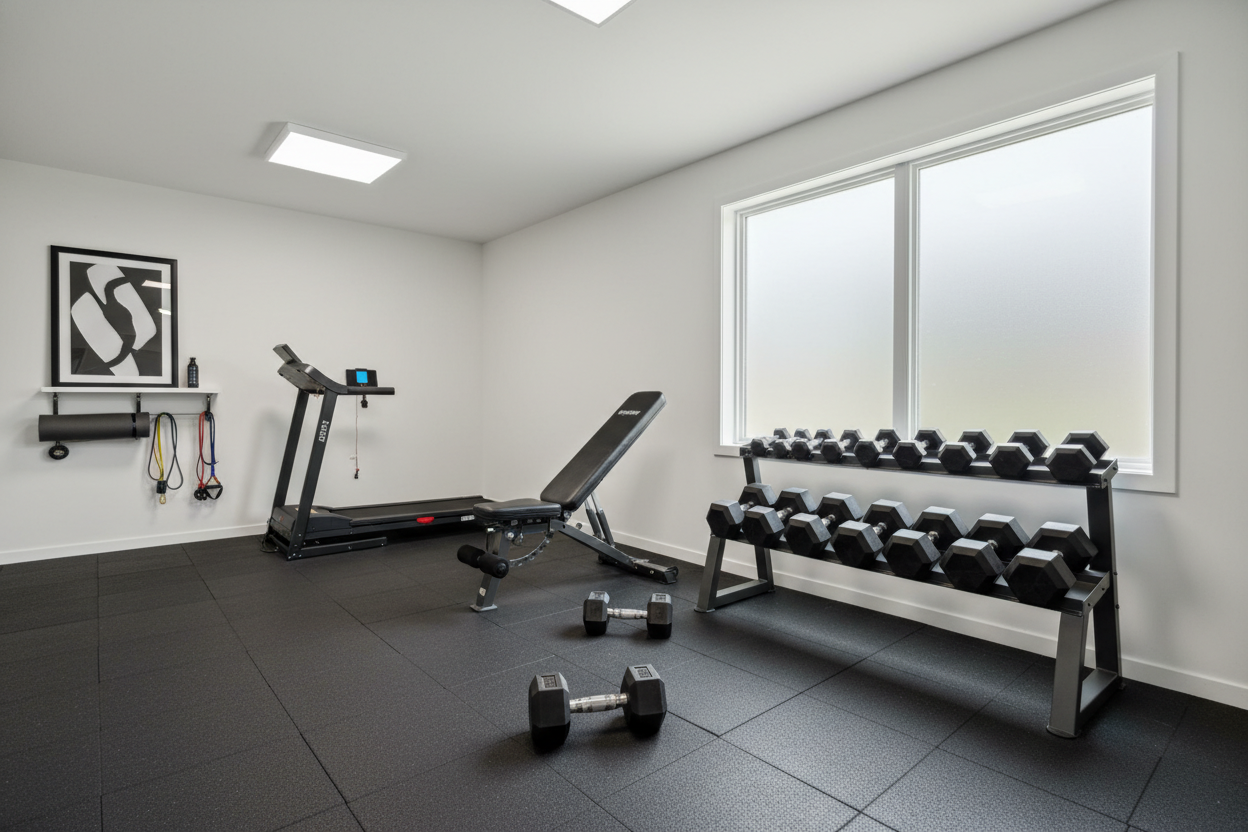
A rubber hex dumbbell set is the practical choice for 90% of lifters. The flat edges mean they stay exactly where you put them. They also double as stable platforms for 'man-makers' or weighted push-ups. When looking at gym equipments dumbbells, check the transition where the head meets the handle. It should be friction-welded or pinned so the head doesn't start spinning after six months of use. Rubber coating is also a non-negotiable if you value your floor's finish and your ears.
Adjustables vs. Fixed: What Actually Survives Heavy Lifting?
The debate usually comes down to 'I want to save space' versus 'I want to drop my weights.' If you are doing CrossFit-style METCONs where you are tossing weights around, adjustables will fail you. They have internal gears and plastic pins that don't enjoy high-velocity impacts. For that style of training, fixed rubber hex is the only way to go.
However, if you are a controlled lifter working in a spare bedroom, quality adjustable dumbbells are a godsend. You can replace an entire rack of dumbbell workout equipment with two handles. Just be honest about your habits. If you are the type of lifter who lets the weights fly at the end of a set of chest presses, you will break adjustables within a month. Fixed weights are built for the abuse; adjustables are built for the convenience.
My Final Verdict on the Best Iron for Your Space
If I were starting my gym from scratch today with a $500 budget, I would skip the fancy urethane and the massive racks. I would grab a solid set of rubber-coated hex dumbbells in the increments I use most—usually 25s, 35s, and 50s. This gives you the best dumbbell for gym performance without the 'commercial' tax.
Focus on the knurling and the head-to-handle connection. If the weight feels balanced and the grip doesn't slip, you have got everything you need. Don't overcomplicate it. At the end of the day, gravity doesn't care how much you spent on the branding; it only cares that you are moving the weight.
Personal Experience: The Rolling Hazard
I learned the hard way about round dumbbells. I used to train in a garage with a slight 2-degree slope for drainage. I finished a set of heavy overhead presses and set the 80s down. While I was grabbing water, one of them took off, rolled across the floor, and punched a hole right through the drywall of the mudroom. Since then, I have been a 'Hex-only' guy. It is not about aesthetics; it is about not having to patch your walls every time you hit a PR.
Dumbbell FAQ
Should I get metal or rubber-coated dumbbells?
Always go rubber-coated if you are training at home. Metal-on-metal noise is nostalgic, but it is loud, it rusts, and it will absolutely destroy your floor if you don't have thick horse stall mats.
What is the best weight to start with?
For most men, a pair of 25s or 35s is the sweet spot for dumbbell exercise equipment. For women, 15s or 20s. These allow for a mix of compound movements and isolation work while you build your collection.
Do I really need a rack?
You don't *need* one, but your lower back will thank you. Picking up 70-lb bells off the floor for every set is an easy way to tweak something. Even a small A-frame rack makes a huge difference in safety and organization.
Share:
The Ugly Truth About That $99 Black Friday Workout Bench
A Compact Weight Lifting Bench Doesn't Have to Feel Like a Toy