
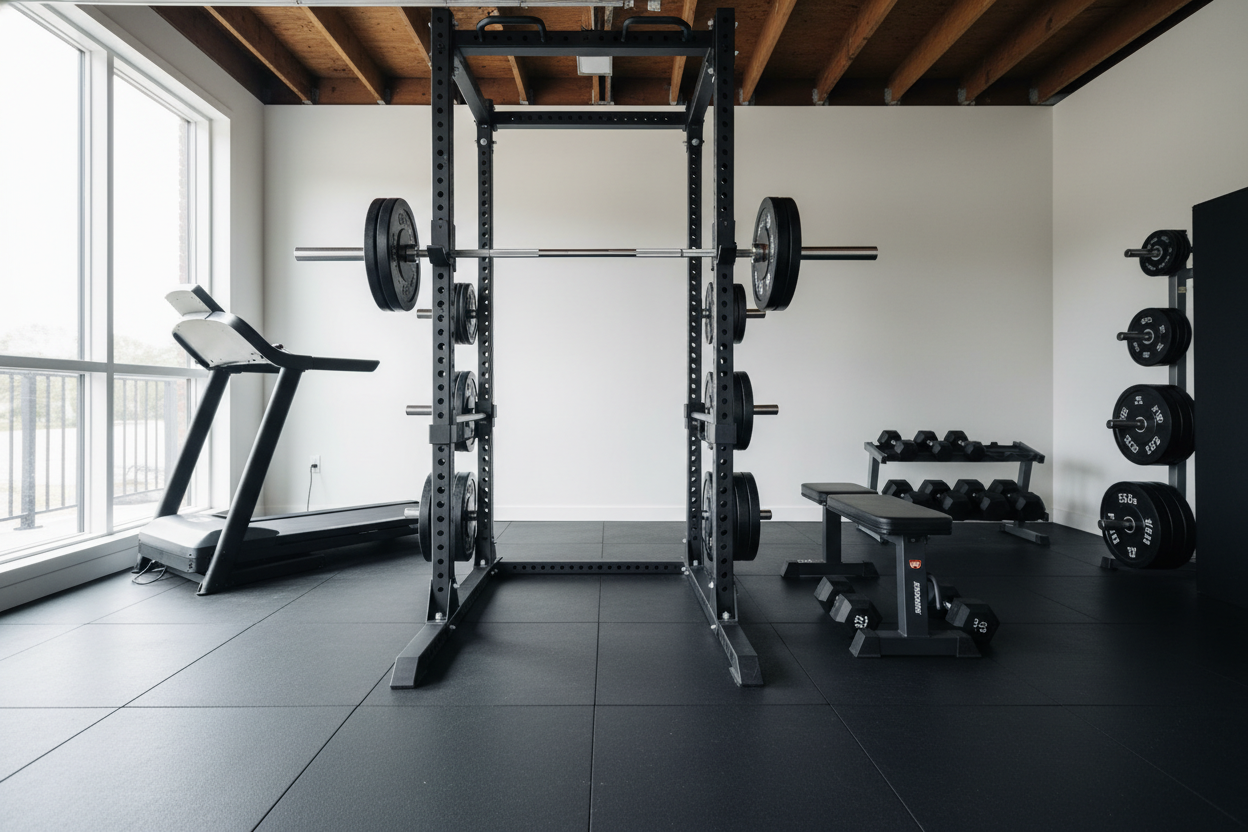
I remember the first 'deal' I ever got on a barbell. It was a no-name bar from a big-box store that promised the world and delivered a permanent bend after my third set of 315-lb deadlifts. It felt like a wet noodle, and the plates rattled so loudly my neighbors complained. Since then, I’ve tested, dropped, and measured hundreds of olympic barbells and plates to figure out what actually matters when the weight gets heavy.
Quick Takeaways
- Sleeve diameter is more important than total weight capacity for a quiet, stable lift.
- Always demand 450mm diameter plates to ensure your bar sits at the correct height for pulls.
- Check your shaft length; a bar that doesn't fit your rack is just a very expensive paperweight.
- Buy once, cry once. Quality iron lasts several lifetimes.
Why Spec Sheets Usually Lie to You
Marketing departments love to throw numbers at you that don't matter. They’ll tell you a bar has a 1,500-lb capacity or a 200,000 PSI tensile strength. Unless you’re a world-class powerlifter, those numbers are just noise. What they don't tell you is how sloppy the manufacturing tolerances are or if the chrome will start flaking off into your palms after six months.
When you're picking out weights for olympic barbell setups, you need to ignore the flashy colors and focus on the precision of the build. A bar that can hold a ton is useless if the knurling is so passive it slides out of your hands during a heavy clean. I've seen 'budget' bars with better whip than 'professional' ones twice their price. Don't buy the hype; buy the specs that actually affect your training.
Rule 1: Sleeve Tolerance Beats High Weight Capacities
The biggest indicator of a garbage bar is the 'clank' it makes when you drop it. That sound usually comes from a massive gap between the bar sleeve and the plate hub. If a bar sleeve is even a millimeter too thin, your plates will shift mid-rep. That shift changes your center of gravity and ruins your focus when you’re pushing for a PR.
I’ve learned the hard way that a cheap olympic bar and weights set usually cuts corners on these tolerances. A high-quality bar sleeve should measure as close to 50mm as possible. When you pair that with a plate that has a snug 50.4mm or 50.6mm center hole, the weight stays put. You shouldn't need to tighten your collars after every single set just to keep the iron from sliding.
Rule 2: Plate Diameter Consistency Will Save Your Back
If you're doing any work off the floor—deadlifts, cleans, or rows—plate diameter is non-negotiable. The International Weightlifting Federation (IWF) standard is 450mm. If your plates are 440mm, the bar is sitting lower than it should. If you mix and match brands that aren't consistent, one plate will hit the floor before the other, putting a nasty torsional stress on your spine.
I recommend sticking to standardized weight plates that explicitly state they meet the 450mm requirement. I once owned a set of 'bargain' bumpers where the 45s were slightly smaller than the 35s. It was a nightmare to load and even worse to lift. Save yourself the physical therapy bills and ensure your plates are uniform in height, regardless of their weight.
Rule 3: Match the Iron to Your Supporting Gear
Your barbell doesn't exist in a vacuum. It has to live in your power rack and work with your bench. I’ve seen guys buy beautiful 7-foot bars only to realize the inside shaft length is too short to reach the J-cups on their wide-profile rack. Or they buy plates so thick that they can only fit 315 lbs on the sleeve before running out of room.
Think about the footprint. If you're using a heavy-duty adjustable weight bench, you need to make sure your bar’s knurl marks align with your natural grip width while lying down. If the knurling stops too early, you'll be gripping smooth steel while trying to max out your bench press. Measure your rack's width and your own wingspan before you click 'buy' on that bar.
The Bottom Line on Sourcing Your Iron
Building a home gym is an investment in your future self, but that doesn't mean you should throw money away on features you'll never use. You don't need a competition-grade bearing bar if you only do slow powerlifts, but you absolutely do need plates that are the same size and a bar that doesn't rattle like a bucket of bolts. You should expect to spend a bit more upfront to avoid the 'upgrade cycle' later on.
If you're curious about the total damage to your wallet, I've broken down how much an olympic barbell with weights actually costs when you're looking for quality that lasts. Buy the right gear once, and you’ll be passing it down to your kids.
Personal Experience: The Chrome Disaster
A few years back, I bought a 'budget' bar that looked great in photos. Within three months, the decorative chrome started peeling off the sleeves in razor-sharp shards. I ended up with a piece of plating embedded in my thumb during a plate change. It was a painful reminder that finish quality isn't just about aesthetics—it's about safety. Now, I stick to stainless steel or cerakote whenever the budget allows.
FAQ
Do I need bumper plates or iron plates?
If you're dropping the bar from overhead (Olympic lifts) or training on a platform you want to protect, get bumpers. If you're strictly doing powerlifting and want to fit more weight on the bar, iron is the way to go.
What is the difference between a bushing and a bearing bar?
Bushings are simpler, more durable, and better for slow lifts like squats and benches. Bearings spin faster and more smoothly, which is essential for snatches and cleans so you don't wreck your wrists.
Should I get a 28mm or 29mm bar?
28mm is the standard for Olympic lifting because it's easier to grip and has more 'whip.' 29mm is the powerlifting standard—it's stiffer and feels more secure on your back during heavy squats.
Share:
Why My Knees Prefer a 45 Degree Leg Press Machine Over Free Squats
Is a Hack Squat on Leg Press Machine Rigs Actually Any Good?