
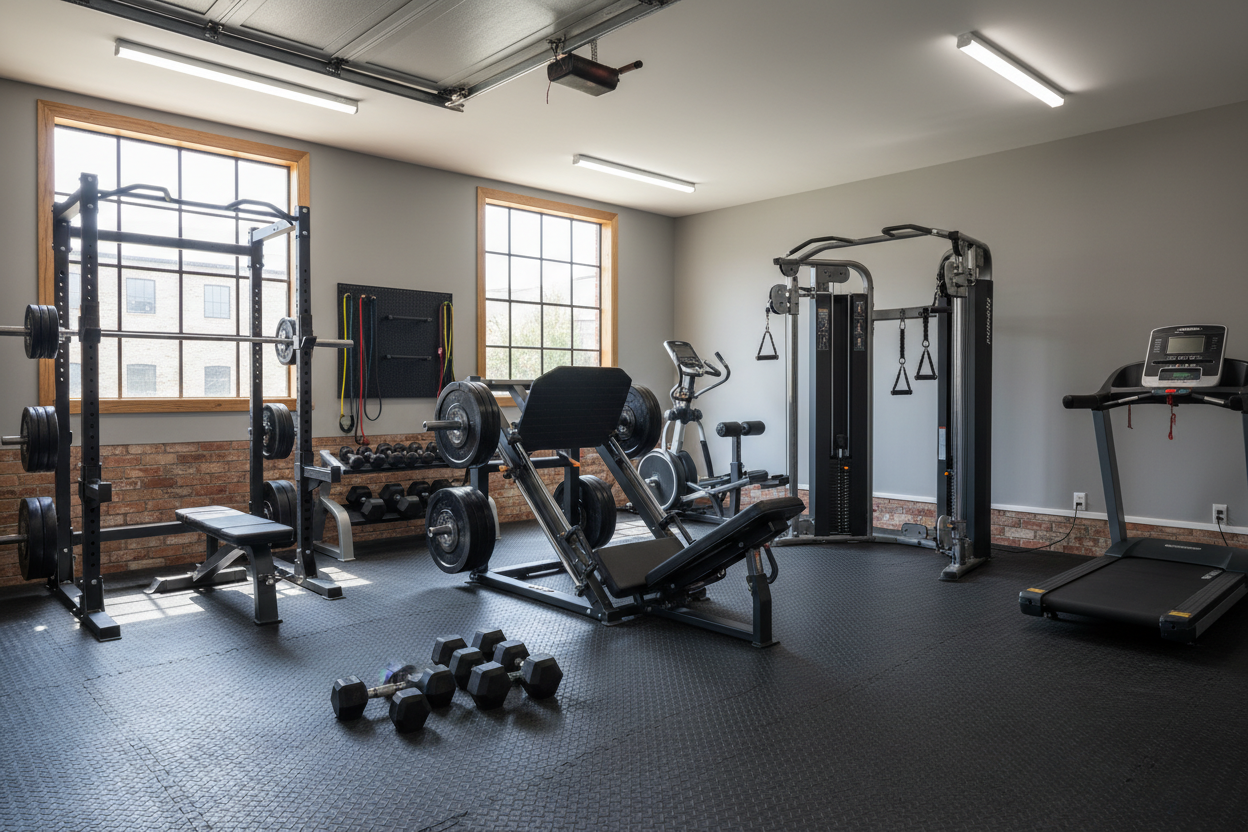
I spent my first three years of lifting convinced that if I wasn't balancing a terrifyingly heavy barbell over my throat, I wasn't actually training. I was wrong. I’ve spent a decade in commercial dungeons and garage setups, and I’ve learned that most effective machines at the gym often outperform free weights when your goal is actual muscle growth rather than just testing your balance.
Quick Takeaways
- Stability allows you to push closer to true failure without your form breaking down.
- Converging machines provide a range of motion that barbells physically cannot match.
- The Smith machine is an elite tool for hypertrophy, despite the internet memes.
- Skip the torso rotation and seated ab machines; they are low-stimulus and high-risk.
Why Free Weights Aren't Always the Answer
The 'barbells only' crowd usually has a lot of ego but not necessarily the most muscle. When you use a barbell, your central nervous system is working overtime just to keep you from falling over or dropping the weight. That’s great for athleticism, but it’s a bottleneck for hypertrophy. If your stabilizers give out before your target muscle does, you didn't actually finish the set.
Asking what machines to use at the gym is the first step toward training smarter. By removing the need to balance, machines allow you to isolate a specific muscle group and drive it into the floor. You can use 100% of your effort to move the load rather than 30% to stabilize it. This is how you build real tissue without the joint wear and tear that comes from grinding out 'functional' reps with bad form.
The Mount Rushmore of Gym Machines
Not all selectorized equipment is created equal. Some are poorly designed with weird leverage points, but these four are the absolute gold standard for any serious program.
The Converging Chest Press
A standard barbell bench press moves the weight in a straight vertical line. Your pecs, however, want to pull your arms across your body. A high-quality converging machine follows that natural arc, getting tighter as you reach the top of the rep. It gives you a deeper stretch and a peak contraction that a barbell simply can't provide. If you're training at home, an independent arm chest press can replicate this commercial feel, ensuring your dominant side doesn't do all the heavy lifting.
The Smith Machine (Yes, I Said It)
The Smith machine gets a bad rap from people who think 'functional' means standing on a Bosu ball. In reality, the fixed bar path is its greatest strength. It allows you to place your feet further forward for a hack squat that absolutely torches the quads without taxing your lower back. It's also the best tool for seated shoulder presses because you don't have to worry about the bar clipping your nose. For many, a Smith machine home gym is the most versatile anchor you can buy because it replaces a rack, a spotter, and several isolation stations in one footprint.
The Cable Functional Trainer
Cables provide something gravity-fed weights can't: constant tension. When you do a dumbbell lateral raise, there is zero tension at the bottom. With a cable, the muscle is under load through the entire range of motion. It's the best equipment to use at the gym for accessory work like face pulls and triceps pushdowns. It keeps the resistance steady, which is much kinder to your elbows and shoulders than the jerky momentum often used with dumbbells.
The Hack Squat Machine
If you have long femurs, back squatting is often a lower-back exercise rather than a leg builder. The hack squat changes the game by supporting your spine against a backpad. This lets you drive your knees forward and put the entire load onto your quads. It is arguably the most effective machine at the gym for leg development because it allows for extreme intensity without the risk of getting pinned under a heavy bar.
Common Machines at the Gym You Should Walk Right Past
Just because it has a weight stack doesn't mean it’s useful. The seated ab crunch machine is a prime example of junk equipment. It rarely fits anyone's torso length correctly and usually results in people using their hip flexors and momentum rather than their abs. Even worse is the torso rotation machine. Forcing your lumbar spine to rotate under a heavy load is a recipe for a disc issue, and the actual tension on the obliques is minimal compared to a simple cable woodchop.
How Many of These Should You Actually Use?
You shouldn't spend your entire hour hopping from one machine to the next. I usually recommend picking one or two heavy compound lifts—like a Smith machine squat or a converging press—and then filling in the gaps with cables. The goal is to avoid junk volume. If you're wondering how many machines should I use, the answer is usually 2-3 per workout. Any more than that, and you're likely just chasing a pump rather than actually stimulating new growth.
When You Get Tired of Waiting in Line
The biggest downside to the best gym machines is that everyone else knows they're the best too. There is nothing more frustrating than seeing a teenager scrolling TikTok on the hack squat machine when you've only got 45 minutes to train. I eventually hit a breaking point with my local commercial gym. I missed the weight machines at the gym so much that I started sourcing my own selectorized pieces for my garage. Having a Smith machine and a functional trainer at home changed everything—no lines, no sweat from strangers, just pure training.
My Personal Experience: The Leg Press Trap
I once spent a year avoiding the leg press because I thought it was 'cheating.' My squats had plateaued, and my knees were constantly aching from the sheer volume of bracing. I finally swallowed my pride and hopped on a high-end angled leg press. Within three months, my quad sweep was noticeably larger, and my knee pain vanished. The lesson? My body didn't care that I wasn't balancing a bar; it only cared that my quads were finally being pushed to failure. Don't let pride get in the way of your progress.
FAQ
Are machines better for beginners?
They are safer for beginners to learn movement patterns, but they are equally effective for advanced lifters who need to push high intensity without the risk of injury.
Can machines cause muscle imbalances?
Only if you use machines with a fixed, single bar. Using machines with independent arms (unilateral) actually helps fix imbalances better than a barbell can.
Why do some people hate the Smith machine?
Mostly ego and a misunderstanding of biomechanics. While it doesn't train stabilizers, that's exactly why it's so good for targeting specific muscles.
Share:
Your Logbook is Lying. Do Smith Machines Make Lifting Easier?
Read This Before Learning How to Make Gym Equipment Out of Wood