
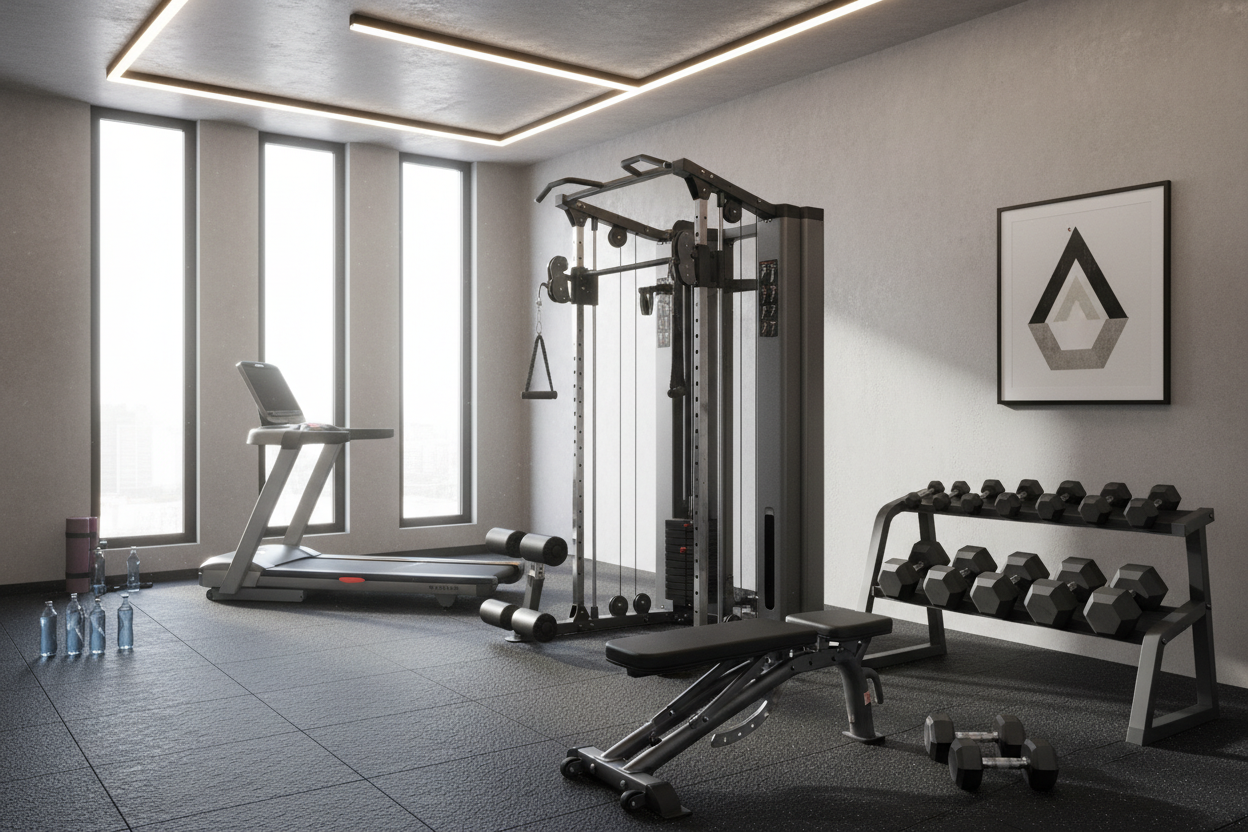
I remember the day my first multi-station arrived. I spent four hours bolting it together in a freezing garage, only to realize I was just doing the same three movements I did at the local commercial gym. If you are going to drop serious cash on a rig, you need to master home gym machine exercises that actually move the needle, not just the ones printed on the plastic shroud.
Quick Takeaways
- Stop treating your machine like a single-purpose station; it is a biomechanical multi-tool.
- Prioritize cable movements that offer constant tension throughout the entire range of motion.
- Use the fixed path of a Smith bar to push leg sets to absolute failure without a spotter.
- Invest in high-quality handles; the cheap ones included in the box usually have terrible grip.
The 'Big Three' Multi-Station Trap
Most people buy these units with the best intentions to build a complete home gym, but they end up in a rut. They do lat pulldowns, seated rows, and triceps pushdowns. That is it. They use maybe 20% of the machine's footprint while the rest of the pulleys and guide rods collect dust. It is a massive waste of square footage.
The problem is the manual. Those diagrams show you the basics because they are easy to explain. But if you want to see real hypertrophy, you have to stop thinking in terms of 'stations' and start thinking in terms of 'lines of pull.' If your machine has adjustable pulleys, you have a thousand options, not three.
Unlocking the Cables: 3 Movements You Aren't Doing
Standard 1-arm rows are fine, but cross-body lateral raises are where the real shoulder growth happens. By standing slightly off-center and pulling the cable across your torso, you get a stretch on the lateral deltoid that dumbbells simply cannot match. If you have a heavy multi-station gym machine, you can lean into the movement without the whole rig shifting on your floor mats.
Another staple in my 1 home gym machine workouts is the kneeling cable pullover. Instead of standing, get on your knees about three feet back from the high pulley. Use a straight bar and pull to your hips. This isolates the lats and eliminates the momentum you usually see with standing versions. Finally, try single-arm cable crossovers for chest. Most home units are too narrow for double-arm flyes, so doing them one side at a time allows for a much better squeeze across the midline.
Maximizing the Guided Bar for Brutal Leg Days
The Smith bar gets a lot of hate from barbell purists, but for hypertrophy, it is king. I use my Smith machine home gym station for Bulgarian split squats almost exclusively. Doing these with a barbell is a balance nightmare; doing them on a guided track lets you load up 100+ lbs and focus entirely on the quad and glute stretch.
I also swear by deep-stretch Romanian deadlifts on the fixed bar. You can set the safety catches at your exact 'point of no return' for your hamstrings. This prevents you from rounding your back at the bottom of the rep. Since the bar path is vertical, you can lean back slightly into your heels to put even more tension on the posterior chain than a standard free-weight RDL allows.
How to Actually Program All In One Gym Machine Workouts
Efficiency is the difference between a 45-minute session and a two-hour slog. When I run 1 all in one gym machine workouts, I group exercises by the attachment and pulley height. I do all my 'high pulley' work—pulldowns, face pulls, and overhead extensions—in one block. This saves you from constantly moving the pins and swapping carabiners.
If I am using an all-in-one Smith machine system, I finish all my heavy bar work first. Once the legs are toasted, I move to the cables for isolation work. It sounds simple, but I see guys spending half their workout time just fiddling with the machine. Your heart rate should stay up, and your focus should stay on the muscle, not the hardware.
The Only 2 Attachments Worth Buying Extra
The attachments that come with most machines are, frankly, garbage. They are usually hollow steel with cheap foam that rips after a month. After years of testing different rack setups, I have narrowed it down to two essentials: a single, rotating D-handle with a knurled grip and a padded ankle strap.
The D-handle allows for natural wrist rotation during rows and presses, which saves your elbows. The ankle strap is the secret to unlocking glute kickbacks and standing leg curls. Everything else—the fancy ropes and multi-grip bars—is usually just clutter. Stick to the basics that let you move the most weight with the best form.
My Personal Setup Mistake
I once bought a budget-tier machine because it had a 1:1 cable ratio and I thought I was 'saving money.' Big mistake. The 1:1 ratio meant the weight felt incredibly heavy, but the cable travel was so short that I couldn't finish a full rep of overhead triceps extensions without the weight stack slamming into the top. Now, I always look for a 2:1 ratio for cables—it makes the movement smoother and gives you the cable length needed for real exercises.
FAQ
Do machines build as much muscle as free weights?
For hypertrophy, yes. Machines provide constant tension and allow you to train closer to failure safely. Free weights are better for 'functional' stability, but machines are better for pure size.
How do I stop my machine from sliding?
Rubber horse stall mats are the standard. If it still moves, check if your unit has bolt-down holes. Most heavy-duty rigs are designed to be anchored if you are doing heavy cable work.
Is a 200-lb stack enough?
For most cable exercises, yes. For seated rows or lat pulldowns, a strong lifter will outgrow a 200-lb stack quickly. Look for machines that allow for plate-loading or have 300-lb stacks if you plan on going heavy.
Share:
I Survived on Water Jugs Before Buying Real Household Fitness Equipment
Exactly When You Should (and Shouldn't) Buy Budget Gym Equipment