
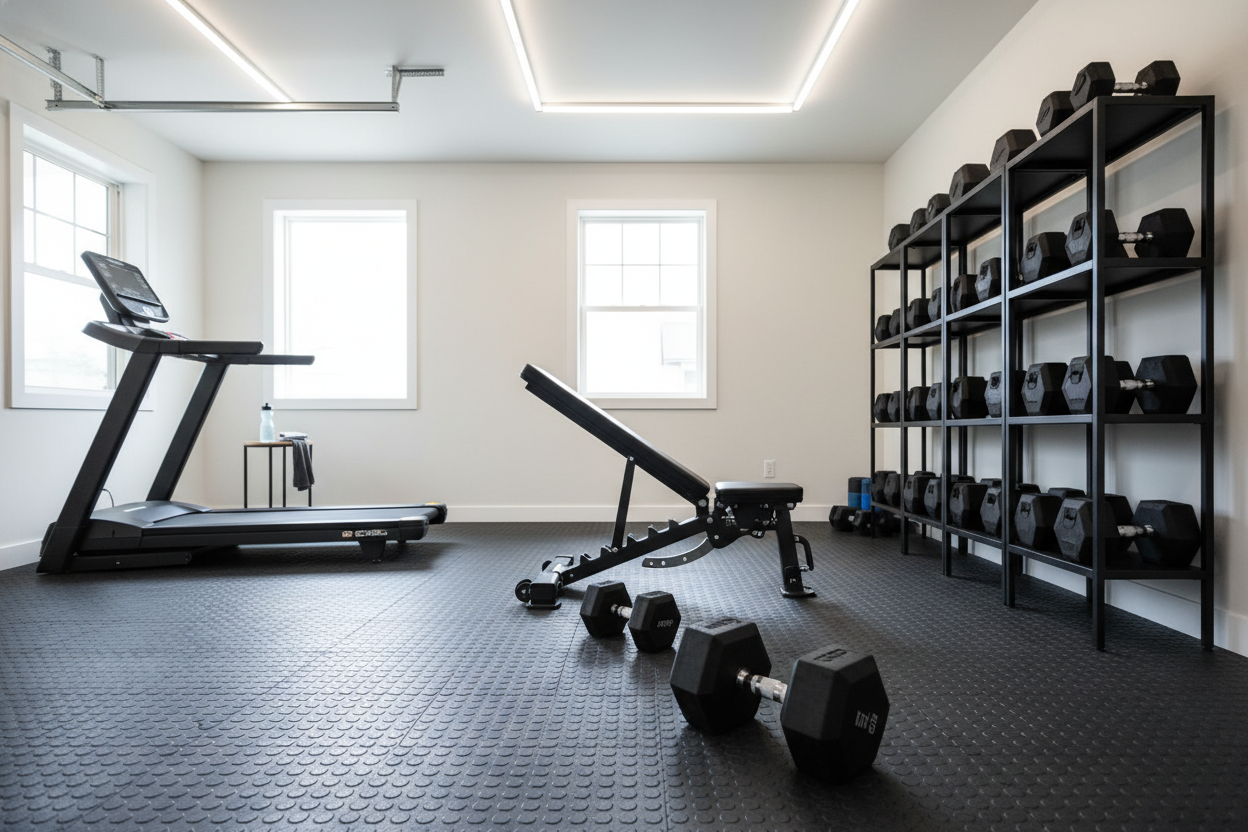
I remember the first time I saw a square dumbbell in a buddy's garage. It looked like he had stolen some bricks from a construction site and somehow welded handles to them. After years of using round iron that rolled into my shins every time I set it down to change my music, the blocky shape felt like a joke—until I actually picked it up and started pressing.
Quick Takeaways
- Zero Roll: They stay exactly where you drop them, even on sloped garage floors.
- Compact Storage: Square edges allow for flush stacking against walls and in corners.
- Unique Balance: The weight distribution often feels more centered than traditional long-handle bells.
- Stability: The flat surface makes them the most stable platform for dumbbell push-ups or renegade rows.
Wait, Why Are We Lifting Blocks Now?
Traditional round or hex shapes are the standard because that is what we grew up seeing in commercial gyms. But in a cramped 10x10 spare bedroom or a crowded garage, round weights are a liability. Stepping away from the classic silhouette feels jarring at first, but small square weights solve specific geometric problems that round iron just ignores.
When you are working with limited floor real estate, every inch matters. A square design allows the manufacturer to pack more mass into a shorter overall length. This means the weight stays closer to your center of gravity, which I found immediately helpful during high-rep shoulder presses where traditional long dumbbells start to feel unwieldy and 'tippy.'
The Wrist Clearance Issue: Do They Actually Hurt?
The biggest hurdle for most lifters is the 'cage' design found on many square weights. If you are looking at a PowerBlock Personal Trainer adjustable dumbbell set, you will notice you are literally reaching your hand into a box. The common fear is that those square edges will dig into your forearms during overhead presses or heavy cleans.
In my experience, this is mostly a mental barrier. Unless you have massive, world-record-holding forearms, your wrists will clear the side rails just fine. In fact, the 'cage' often acts as a built-in wrist stabilizer. During heavy bench sessions, having those side supports nearby actually helped me maintain a more vertical forearm position. It is a different tactile experience, but it is far from painful once you find your grip.
The Sloped Garage Floor Test
If you train in a garage, you know the struggle of the 'walking' dumbbell. Most garage slabs are poured with a slight grade for water drainage. If I drop a round 90-lb bell, it is a race to catch it before it crashes into the drywall or rolls under my car. Even a standard rubber hex dumbbell set can occasionally 'walk' if it lands on a point and gains momentum.
The square dumbbell is the only design that acts like it has a built-in parking brake. You drop it, and it dead-stops. This is a massive functional benefit when you are doing supersets or AMRAP sets where you are gasping for air and don't want to spend your rest period chasing your equipment across the concrete. It keeps the workout focused and the shins bruise-free.
Footprint vs. Function: The Storage Advantage
Space is the ultimate currency for the home lifter. A square dumbbell set is objectively more efficient to store than anything else on the market. Because the edges are perfectly flush, you can slide space-saving adjustable dumbbells into a tight corner or even under a flat bench, and they won't budge.
Most adjustable dumbbells square off their ends for a reason: it allows the internal plates to stack without any wasted air gaps. When you compare a 50-lb square unit to a 50-lb round adjustable, the square version is almost always 2-3 inches shorter. That might not sound like much, but on a heavy chest press, that extra clearance prevents the dumbbells from clanking together at the top of the movement.
The Final Verdict: Form or Function?
If you have a massive commercial-style rack and a perfectly level floor, you might not need the blocky life. But for the minimalist who needs 50-100 lbs of resistance in a tiny footprint, the square design is king. It is a tool for the pragmatist. If you absolutely cannot get past the 'blocky' look and want that old-school aesthetic, you are probably better off browsing standard dumbbells instead.
My Honest Mistake
I once bought a set of cheap, off-brand square weights that had very sharp, 90-degree corners. During a set of walking lunges, I clipped my trailing leg and the corner of the weight sliced right through my sweatpants and caught my shin. It was a bloody reminder that quality matters. If you go square, make sure the edges are chamfered or rounded off. High-quality brands do this; the cheap 'bricks' do not.
Square Weight FAQ
Are square dumbbells balanced?
Yes. The weight is distributed evenly around the handle axis. It actually feels more stable because the weight doesn't 'swing' as far from your hand as a long, traditional dumbbell would.
Can you do push-ups on them?
They are actually better for push-ups than hex dumbbells. The flat top and bottom provide a much wider, more stable base that won't tip over while you are mid-rep.
Do they feel weird during goblet squats?
Surprisingly, no. The flat face of a square weight actually sits more comfortably against your chest/palms than the rounded edge of a standard plate or hex bell.
Share:
Stop Stepping Over Your Gear: Better Small Home Gyms Ideas
Stop Asking What Is Best Home Gym Equipment (Ask This Instead)