
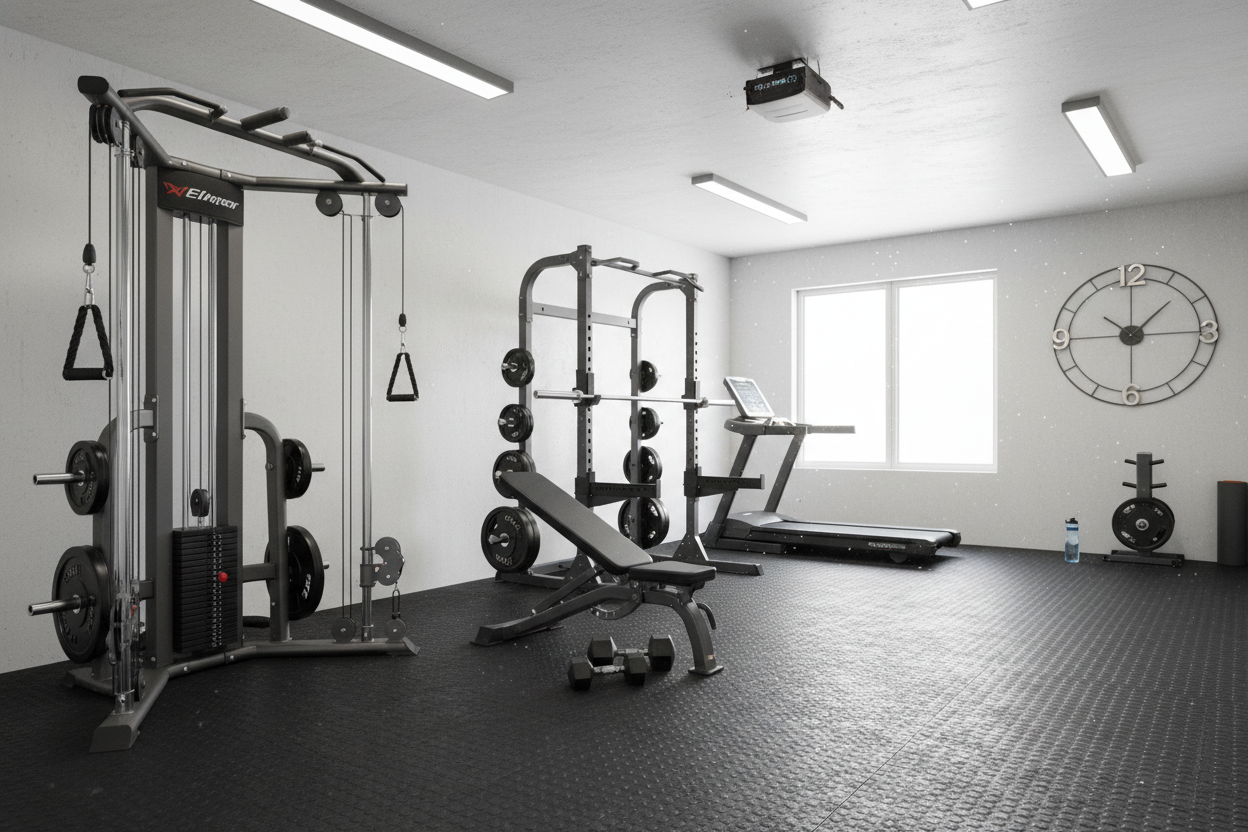
I remember standing in the middle of a commercial gym at 5:30 PM, staring at a row of occupied cable machines like a hawk. I had a complex circuit planned, but between the guy scrolling on his phone on the lat pulldown and the group of teenagers hovering near the leg press, my 'efficient' session was dead on arrival. It is a common trap: we try to piece together the best full body machine workout by claiming six different pieces of gear at once, only to realize we have become the person everyone else in the gym hates.
You do not need to run a marathon between stations to get a high-quality session. After years of testing everything from high-end commercial stacks to rickety Amazon specials that wobbled at 150 pounds, I have learned that the most effective routines are the ones that let you park your butt in one spot and work. No sprinting, no hogging gear, and no wasted time.
Quick Takeaways
- Efficiency is king: Focus on 4-5 big movements instead of 12 isolation exercises.
- Safety first: Machines allow you to push to failure without needing a spotter.
- Footprint matters: If you are training at home, a single multi-station beats a room full of individual machines.
- Progressive overload: Slow down your eccentric movements to make the weight feel twice as heavy.
Why I Stopped Running Laps Around the Gym Floor
Traditional total body workout machine routines are often designed by people who have never stepped foot in a gym during peak hours. They tell you to jump from a chest press to a leg curl to a seated row, which works great if you own the gym, but it is impossible in the real world. You spend more time guarding your equipment with a sweaty towel than you do actually moving weight.
I eventually got fed up with the chaos. I wanted a routine that hit every major muscle group without requiring a GPS to navigate the floor. While some people swear by a full body Matrix machine workout because of the high-end feel of those specific units, you can get the same results on any solid piece of iron if you structure the movements correctly. The goal is to move heavy weight, recover, and get out.
The Anatomy of a Proper Total Body Workout With Machines
To make a full-body machine workout plan actually work, you have to stop thinking like a bodybuilder chasing a pump and start thinking like a strength athlete. Most people waste time on the adductor machine or doing endless cable kickbacks. If you want to see a real hypertrophic response, you need to prioritize total body machine exercises that use multiple joints at once.
A proper total body workout with machines should revolve around four pillars: a horizontal push, a horizontal pull, a knee-dominant leg movement, and a hip-dominant or vertical movement. By sticking to these big patterns, you trigger more muscle fibers and keep your heart rate up without having to do a single burpee. If the machine doesn't let you load enough weight to make 8 reps feel like a struggle, it is a coat rack, not a training tool.
The Best Full Body Machine Workout (My Go-To Routine)
This is the exact full body gym machine workout I use when I am short on time but want to feel like I actually did something. Perform this 3 times a week with at least one day of rest in between. Focus on a 3-second lowering phase for every single rep.
- Machine Hack Squat or Leg Press: 3 sets of 8-10 reps. Go deep. If your lower back is rounding, you are going too low.
- Chest Press Machine: 3 sets of 6-8 reps. Keep your shoulder blades pinned back against the pad.
- Seated Cable Row or Chest-Supported Row: 3 sets of 10-12 reps. Focus on pulling with your elbows, not your hands.
- Lat Pulldown: 3 sets of 10-12 reps. Use a grip just wider than your shoulders.
- Machine Overhead Press: 2 sets of 10 reps. Great for capping off the shoulders without the instability of dumbbells.
This routine hits the quads, hamstrings, chest, back, and shoulders in under 45 minutes. You are only using 3 or 4 stations total, making it much easier to manage in a crowded environment.
Pulling This Off in a Home Garage
If you are tired of the commercial gym circus, you can easily move this entire full body equipment workout into a garage. The problem most of us face is space. You cannot fit five commercial-grade machines into a standard 2-car garage alongside your lawnmower and Christmas decorations. This is where consolidation becomes your best friend.
I have found that the best full body home workout machine is actually a Smith rig because it combines a barbell path with integrated cables. Instead of five machines, you have one station that handles your full body gym equipment workout plan. Specifically, something like the Full Body Multi Training Station Smith Machine DM01 is a beast for this. It has the Smith bar for your heavy presses and squats, plus dual cable pulleys for your rows and pulldowns. It fits in a 6x8 foot area, which is about the same size as a large area rug.
How to Force Progress Without Adding More Stations
The biggest mistake people make with full body machine workouts is staying at the same weight for months. Just because you aren't using a barbell doesn't mean you can slack off. You need to apply progressive overload religiously. If you did 10 reps at 150 pounds last week, you better try for 11 this week or bump it to 155.
If you find yourself maxing out the stack, do not just go to a different machine. Slow down the tempo. A 5-second eccentric (lowering) phase will make even a moderate weight feel like a ton of bricks. As you get stronger, you might eventually need to upgrade your Smith machine home gym station to something with a higher weight capacity or a 2:1 pulley ratio that allows for heavier increments. The key is to keep the intensity high and the rest periods short—about 60 to 90 seconds between sets.
Personal Experience: The Wobbly Machine Mistake
A few years ago, I bought a cheap, 'all-in-one' home gym from a big-box retailer because it was on sale for $300. The first time I tried to do a heavy lat pulldown, the entire frame lifted off the ground. The cables felt like they were rubbing against sandpaper. It was a lesson learned: biomechanics and build quality matter. If the machine feels jerky or unstable, you won't push yourself to failure because you'll be too worried about the thing snapping. Now, I look for 11-gauge steel and sealed bearing pulleys. It costs more upfront, but it is the difference between a workout you look forward to and one you avoid.
FAQ
Can I build as much muscle with machines as with free weights?
Absolutely. Your muscles don't know if you are holding a dumbbell or pushing a machine lever; they only know tension. Machines actually allow you to isolate muscles better and push closer to absolute failure because you don't have to worry about balancing the weight.
How many days a week should I do a full body machine workout?
Three days a week is the sweet spot. This gives your central nervous system and your joints 48 hours to recover between sessions. If you are really advanced, you can push it to four, but keep an eye on your recovery levels.
Do I need to do cardio if I am doing this routine?
If you keep your rest periods under 60 seconds, this routine will get your heart rate up significantly. However, adding 20 minutes of low-intensity walking on your off days is always a good idea for heart health and recovery.
Share:
How to Build a Life Fitness Training Plan That Doesn't Suck
I Built the Best Home Gym Setup Under 1000 (Without Buying Junk)