
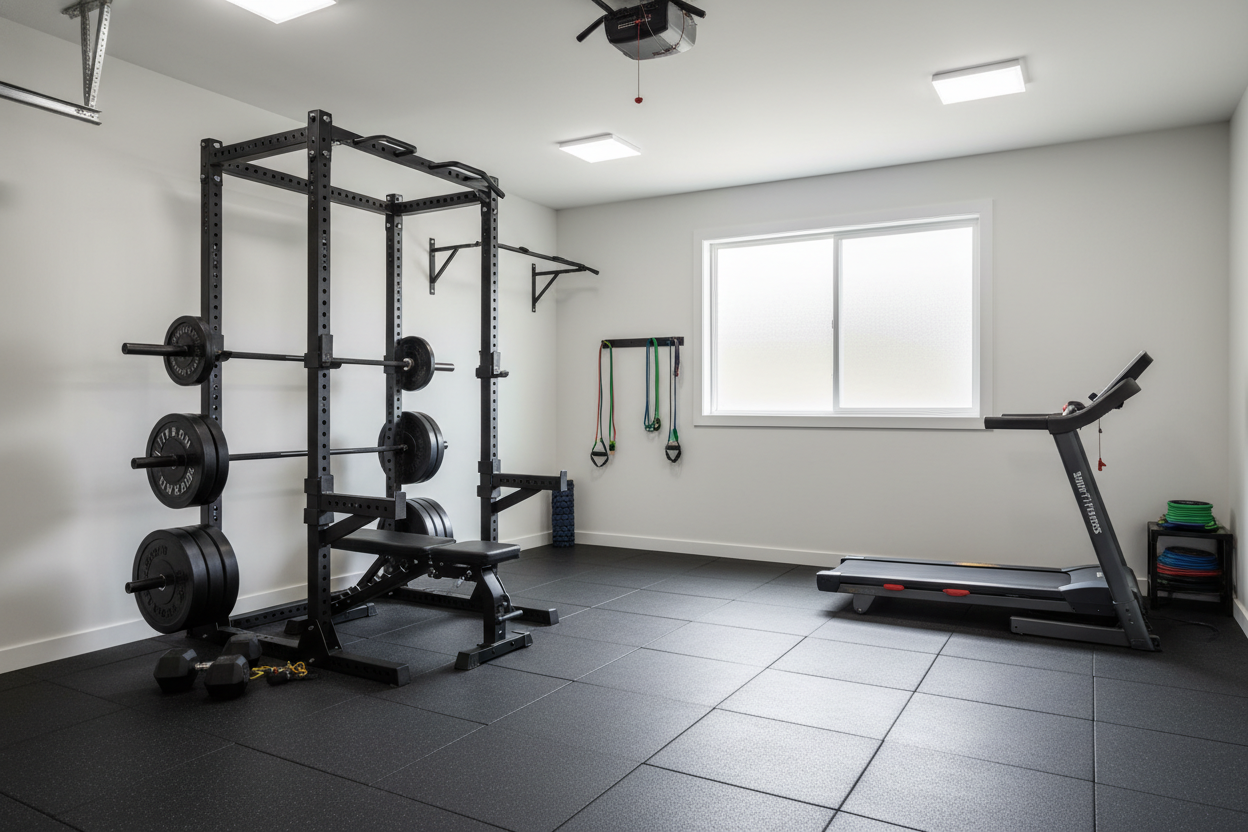
I remember the first time I realized I was trapped. I had just dropped two grand on a beefy power rack, only to find out that a simple set of sandwich J-cups from a different fitness equipment brand would not fit because my rack’s holes were exactly 1 millimeter off. It felt like buying a smartphone and realizing I could only use one specific, overpriced charger for the rest of my life.
This is not an accident. It is a business model. Every major gym equipment brand wants to own your entire garage gym. They want to ensure that once you buy their uprights, you are locked into their ecosystem for every dip bar, spotter arm, and weight peg you ever buy.
Quick Takeaways
- 3x3 tubing is not universal; metric vs. imperial dimensions can ruin your day.
- Pin sizes (5/8-inch vs. 1-inch) are the primary gatekeepers of compatibility.
- Proprietary hole spacing prevents you from using cheaper, high-quality third-party accessories.
- A digital caliper is the most important tool you can own when cross-shopping.
The 'Apple Ecosystem' of Lifting Weights
When you buy a rack, you are not just buying steel; you are buying a platform. Companies use proprietary rack dimensions and unique hole sizing to ensure you stay loyal. If a company builds a rack with 21mm holes instead of the standard 1-inch (25.4mm), they have effectively blocked you from using any competitor's attachments. It is a walled garden made of 11-gauge steel.
I have seen guys buy beautiful stainless steel lat bars only to realize the carabiner hole on their cable machine is too small to accept the clip. This forced compatibility is how a fitness equipment brand ensures that your secondary and tertiary purchases—the high-margin stuff—always come from them.
When Loyalty to a Gym Equipment Brand Costs You
The real sting happens six months after you buy the rack. You decide you want a lever arm or a specialized row attachment. Because you are locked in, that gym equipment brand can charge $200 for a piece of steel that a competitor sells for $90. They know you cannot go anywhere else without selling your entire rack and starting over.
This adds up fast when building out a home gym. I once calculated that I spent $600 extra over two years just because I was stuck in a proprietary ecosystem. If I had started with a rack that used universal 5/8-inch pins and true 3x3-inch tubing, I could have saved enough to buy a high-end barbell.
The 3x3 Upright and 5/8-Inch Hole Trap
The industry standard for heavy-duty racks is 3x3-inch tubing with 5/8-inch or 1-inch holes. But here is the catch: many '3x3' racks are actually 75mm x 75mm. That 1.2mm difference sounds tiny until you try to slide a tight-tolerance attachment over the steel. It will either rattle like a spray paint can or scratch your powder coat to hell as you force it on.
Can You Frankenstein Commercial Machines?
It is tempting to try and piece together a professional-grade setup. You see a deal on a selectorized stack and think you can swap the pulleys or cables. Usually, you can't. Most commercial-grade pieces use specific cable lengths and bolt patterns that make mixing parts a nightmare. If you are trying to replicate Fitness 19 equipment, you are better off sticking to standalone pieces rather than trying to bridge two different brands.
This is especially true for complex units like a smith machine home gym station. These are closed-loop systems. The guide rods, the bearings, and the safety catches are all engineered to work together. Trying to use a different brand’s bar in another brand’s Smith machine is a recipe for a hospital visit.
How to Cross-Shop Fitness Brands Equipment Without Dying
If you want to break free and mix fitness brands equipment, you need to be precise. Do not trust the marketing copy. Get a digital caliper and measure the outside diameter of your uprights. Is it exactly 3 inches, or is it 2.95 inches (75mm)?
Check your hole spacing. Most racks use 2-inch on-center spacing, but some use the 'Westside' 1-inch spacing in the bench zone. If your rack uses a weird 3-inch gap, almost no third-party attachments will line up correctly. Before you buy that shiny new attachment from a competitor, ask for the pin diameter. A 5/8-inch pin fits in a 1-inch hole, but it will sag and feel unstable. A 1-inch pin obviously won't fit in a 5/8-inch hole.
You Probably Don't Need All Those Attachments Anyway
The easiest way to avoid the ecosystem trap is to stop buying so many gadgets. I have a graveyard of 'innovative' attachments in the corner of my garage that I haven't touched in a year. The best home gym fitness equipment usually boils down to a solid rack, a good bar, and enough plates to make you sweat.
Focus on the fundamentals. If you buy a rack that uses standard dimensions, you have the freedom to grow. If you buy into a proprietary trap, you are just a subscriber to a brand’s monthly catalog. I learned that the hard way after buying a rack with 2x3-inch uprights that turned out to be an oddball metric size—I ended up having to weld my own dip station because nobody else made one that fit.
FAQ
Will Rogue attachments fit Titan racks?
Generally, yes, if both are 3x3 inches with 1-inch holes. However, because Rogue uses imperial steel and Titan often uses metric, the fit might be slightly loose or very tight depending on the powder coating thickness.
What is the most common rack hole size?
The most common sizes are 5/8-inch (found on most mid-range and home racks) and 1-inch (found on heavy-duty commercial and powerlifting racks). Always measure before buying.
Can I drill new holes in my rack to make attachments fit?
You can, but I don't recommend it. Drilling through 11-gauge steel is a pain, and you'll likely ruin the structural integrity or the finish, leading to rust. It's better to sell the attachment and find one that actually fits.
Share:
Why Most Workout Equipment for Home Ends Up on Marketplace
The Only 3 Types of Weights Benches That Matter