
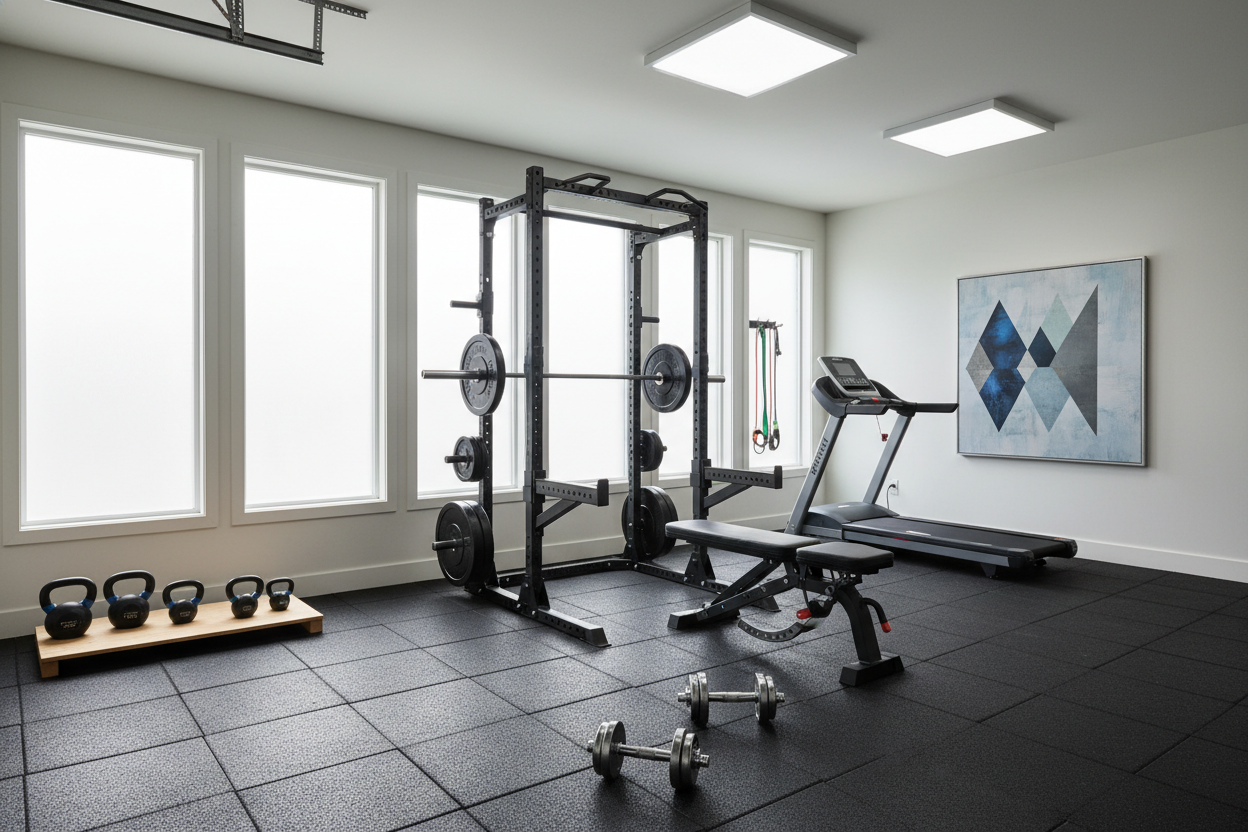
I have spent more time than I care to admit scrolling through local listings at 2 AM, looking at rows of dusty treadmills and abandoned weight benches. It is a sad sight. Most workout equipment for home starts with a burst of genuine motivation and ends as an expensive coat rack in a spare bedroom. I’ve been there—I once bought a ‘total body’ slider that looked great on TV but felt like a wet noodle the second I tried to use it.
Quick Takeaways
- Steel gauge is the only spec that doesn't lie; look for 11 or 14-gauge steel for safety.
- Versatility beats complexity every time—if a machine only does one thing, it shouldn't be in your house.
- Buy for the person you are today, not the elite athlete you think you’ll become next month.
- Stability is non-negotiable; if it wobbles during a test, it’s a liability, not an asset.
The Facebook Marketplace Graveyard
Walk into any garage in suburbia and you’ll find the graveyard. It’s filled with fitness equipment for home gym use that was bought on a whim. The lifecycle is predictable: you feel motivated, you search for a gym instrument for home, you buy something shiny and cheap, and within three weeks, you realize it’s too clunky or uncomfortable to actually use.
Good intentions cannot fix a poorly designed gym equipment home workout setup. Most people fail because they buy gear that is a chore to set up or feels fundamentally unsafe. If you have to spend 20 minutes moving boxes just to access your fitness equipment home gym, you aren't going to train. Period.
Stop Buying Single-Use Gimmicks
If you are looking at exercise equipment for home gym spaces, avoid anything that claims to 'target' just one muscle group. Those massive, single-path isolation machines you see at commercial gyms have no business in your house. They take up eight square feet of floor space and only let you do one movement. That is a terrible ROI for your square footage.
You need gym equipment fitness tools that adapt to you. The only exception to the 'multi-use' rule is cardio gear that actually fits your lifestyle. For instance, a foldable upright exercise bike is a smart play because it provides a high-quality sweat without permanently claiming half of your living room. Most home gym exercise machines fail because they are too rigid; you want gear that allows for natural movement patterns.
The 'Will I Actually Load the Bar?' Test
Before you hit a home gym store or browse at home gym systems, you need to be honest about your psychology. Are you the type of person who enjoys the ritual of loading plates, or do you just want to sit down and move? If you hate the friction of setting up a barbell, don't buy a power rack yet. You need to understand the exact order you should buy gym equipment for your home to ensure your money follows your habits.
A workout machine home gym should reduce the friction between you and your workout. If you find yourself constantly searching for home gym machines for sale because your current gear is 'boring,' the problem isn't the gear—it's that you haven't matched the equipment to your actual training style. Buy home gym tools that you genuinely look forward to using.
How to Spot Flimsy Gear Before You Swipe Your Card
Online photos are incredibly deceptive. Everything looks like industrial-grade steel when it's professionally lit. When you shop home workout equipment, you have to look at the shipping weight and the steel gauge. If a 'heavy-duty' rack weighs 60 pounds, it isn't heavy-duty—it’s a lawn ornament. You want a workout frame that uses at least 2x2 inch steel tubing.
Cheap workout gym equipment for home often uses 16-gauge or 18-gauge steel, which is basically a soda can. Look for 11-gauge if you’re moving serious weight, or 14-gauge for general fitness. Also, pay attention to the weight capacity. If a bench is only rated for 300 pounds and you weigh 200, you only have 100 pounds of 'overhead' for your weights before that bench reaches its mechanical limit. That is a recipe for a trip to the ER.
The 3 Base Pieces You'll Never Regret Buying
You don't need a 20-piece circuit to get strong. In fact, most of the successful home lifters I know started with just heavy-duty home gym essentials. These are the pieces that survive the 'Marketplace Purge' because they actually work. They are the foundation of any serious home gym resistance equipment collection.
A Rock-Solid Rack or Smith Machine
The rack is the heart of the gym. If you train alone, safety is your biggest hurdle. This is why a Smith machine home gym station has become so popular lately. It gives you the stability of a fixed track and built-in safety catches, which is a massive confidence booster when you're going for a personal best without a spotter. Whether it's a traditional cage or a Smith unit, this is where you should spend the bulk of your budget.
Adjustable Dumbbells That Don't Rattle
Space is the enemy of the home lifter. You could buy a full rack of fixed dumbbells, but you'll lose an entire wall to them. High-quality adjustable dumbbells are the better move. Look for sets that use metal locking mechanisms rather than plastic. If they rattle when you pick them up, they’ll likely break the first time you set them down a little too hard after a heavy set of shoulder presses.
A Bench That Weighs More Than Your Dog
I cannot stress this enough: do not buy a cheap bench. A flimsy bench is the most dangerous piece of in home gym machines. You want something with a wide tripod base or a heavy-duty crossbar. Look for high-density foam padding that doesn't bottom out when you sit on it. If you can feel the plywood base through the pad with your thumb, your back is going to hate it during a chest press.
My Personal Lesson in Cheap Steel
Years ago, I bought a $120 'all-in-one' workout machine home gym from a big-box retailer. On paper, it did everything. In reality, the cables were sticky, the frame flexed when I did pull-ups, and the bench wobbled so much I was afraid to press more than 135 pounds. I ended up giving it away for free just to get the space back. I learned the hard way that one high-quality barbell is worth ten cheap exercise machines for home gym use.
FAQ
How much space do I really need for a home gym?
You can do a lot with an 8x8 foot area. That is enough space for a compact rack, a bench, and a set of dumbbells. If you are adding home gym workout machines for cardio, you might need an extra 4 feet of length.
Is 14-gauge steel strong enough?
For most people, yes. It is plenty for a user lifting up to 300-400 pounds. However, if you are a competitive powerlifter or plan on dropping heavy loaded bars, 11-gauge is the standard for a reason.
Why are home gym machines so much more expensive than they used to be?
Raw steel prices and shipping costs for heavy items have skyrocketed. If you see a deal that looks too good to be true, it’s probably because the manufacturer cut corners on the thickness of the metal or the quality of the welds.
Share:
Stop Buying Cheap Treadmills: The Best Cardio Machine for Home
The Ecosystem Trap Every Fitness Equipment Brand Wants You In