
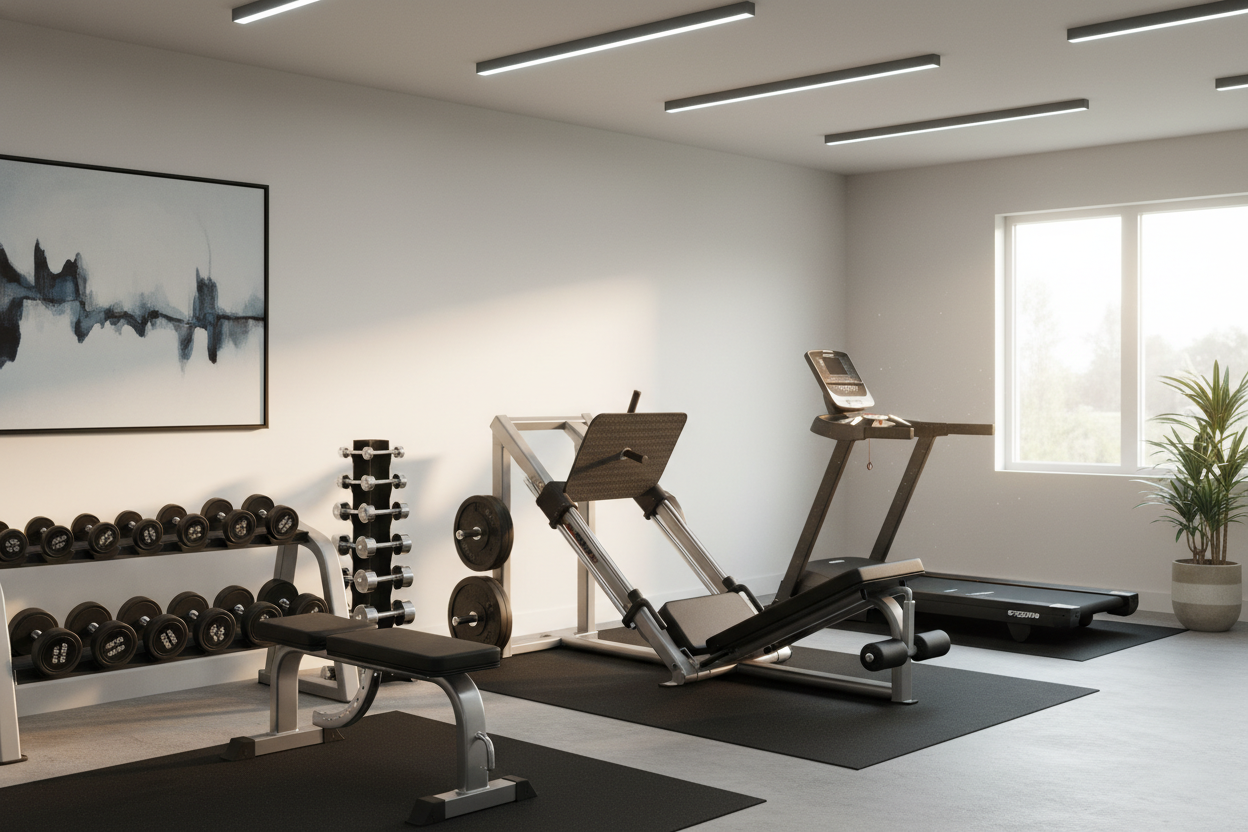
I remember staring at my first 45-degree sled in a dim garage, feeling like I was about to pilot a spaceship I had zero training for. I eventually bought a cheap unit that rattled so loud my neighbors probably thought I was running a woodchipper. Finding a leg press machine for beginners shouldn't feel like a high-stakes gamble with your lower back or your wallet.
- Safety catches are more important than 1,000-lb capacity ratings.
- Compact angles (like 30-degree slopes) are friendlier for people with tight hips.
- Sled weight matters; you need to know what you're pushing before you even add plates.
- Avoid DIY Smith machine setups—they are a recipe for a disc injury.
Why the Sled Terrifies Everyone (At First)
The leg press for beginners can be intimidating because it looks like a lot of heavy iron hanging directly over your face. Most commercial gym sleds weigh 75 to 100 pounds before you even put a single plate on the horns. That 'empty' weight can feel like a ton if you aren't used to the movement or the bracing required.
I’ve seen guys load up six plates on each side just to move the sled three inches. That’s not training; that’s an ego trip. A good beginner setup allows you to focus on a deep, controlled range of motion without the constant fear of getting pinned under a steel carriage.
Stop Staring at Weight Capacities (Look at This Instead)
Marketing teams love to brag about '2,000-lb weight capacities.' Unless you're an elite powerlifter or trying to press a subcompact car, you don't care. What you actually need is a smooth track and reliable safety stops. If the bearings feel like they're rolling over gravel, you'll hate using the machine within a week.
When you're buying a machine for leg press at home, check the starting weight of the sled. A 30-lb sled is much more approachable for a novice than a 110-lb commercial monster. You want a machine that grows with you, not one that crushes your confidence on day one because the starting weight is too high.
Linear vs. 45-Degree vs. Compact: Decoding the Angles
Standard 45-degree sleds are the gold standard, but they take up a massive 8-foot footprint. If you're working in a tight garage or a spare bedroom, a compact 30 degree leg press is usually the smarter play. The shallower angle puts less shear force on your knees while still torching your quads and glutes.
Linear presses move in a straight line, often horizontally. These are great for rehab, but for most home gym owners, a compact combo unit provides the best balance of space and resistance. I personally prefer the 30-to-45 degree range because gravity provides a more natural resistance curve than horizontal cable-based machines.
Foot Placement 101: How Not to Wreck Your Knees
Where you put your feet changes everything. High on the platform hits the glutes and hamstrings; low on the platform targets the quads. As a beginner, aim for shoulder-width in the middle of the deck. This gives you the most stable base of support while you learn how your hips and ankles react to the load.
A 3 in 1 hack squat leg press is a lifter's best friend here. It lets you switch between different movement patterns so you can find the exact foot placement that doesn't make your kneecaps scream. I spent months pushing too low on the deck before realizing my ankles just didn't have the mobility for it yet—don't make that mistake.
The 'Smith Machine Hack' You Should Probably Avoid
You’ve seen it on social media: someone lying on the floor, pushing a Smith machine bar upward with their feet. Don't do it. A leg press Smith machine setup is inherently unstable because the bar isn't fixed to a guided sled with proper footplates. If your feet slip, that bar is coming down on your hips or chest with zero safety catches to save you.
Real leg presses have dual safety handles that you can flick closed in a millisecond. The Smith machine 'hack' has one lock point—usually way too high for a floor-based press. It’s a shortcut that isn't worth the potential ER visit.
My Final Verdict on Your First Lower Body Rig
If I were starting over, I wouldn't buy the cheapest thing on the market just to save a few bucks. I'd look for a unit that offers versatility. You want something that can handle leg presses, but maybe also helps with other movements like calf raises or even hip thrusts. Take a look at this leg press hip thrust machinie collection to see what a multi-functional station looks like.
Focus on the footprint and the smoothness of the travel. A machine you enjoy using because it feels 'pro' is the only one that will actually stay in your routine long enough to build real leg mass.
Is the leg press better than squats for beginners?
It's not better, just different. The leg press removes the balance and core stability requirement, letting you focus entirely on pushing weight with your legs. It's a great way to build base strength before moving to heavy barbell squats.
How much weight should a beginner start with?
Start with the empty sled. Seriously. Learn the range of motion and where to set the safety catches before you ever touch a plate. Once you can do 15 clean reps with the sled, add a 25-lb plate to each side.
Does the leg press hurt your lower back?
Only if you let your butt lift off the seat. Keep your lower back pressed firmly into the pad at all times. If your hips start to curl upward at the bottom of the movement, you're going too deep or the weight is too heavy for your current mobility.
Share:
Building a Home Gym? Buy These 3 Things First (And Skip the Rest)
I Ruined Two Garage Home Gyms Before Getting It Right