
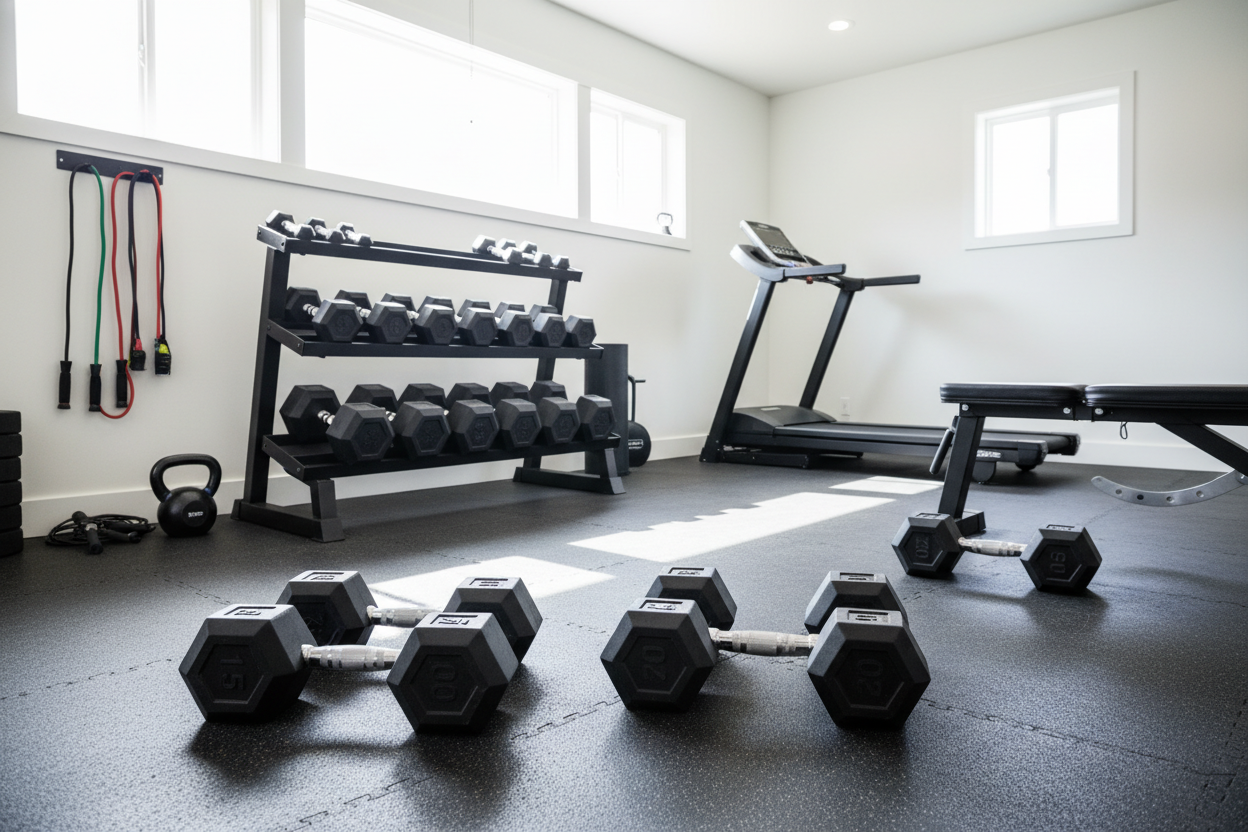
I remember staring at my rack last winter, realizing I had a massive gap in my programming. I had the heavy iron for benching and the tiny 5-pounders my wife uses for yoga, but nothing for the actual 'meat and potatoes' work that builds a physique. I was trying to do lateral raises with 30s, and my form looked like a bird with a broken wing. That is when I realized a 15 20 25 lb dumbbell set is the most underrated purchase for a garage gym.
Quick Takeaways
- Fills the 'dead zone' between rehab weights and heavy pressing weights.
- 5lb increments in this range allow for 25-33% jumps in intensity.
- Fixed hex dumbbells are vastly superior to adjustables for fast-paced drop sets.
- Compact enough to fit in a 2-foot corner without a massive rack.
The 'Missing Link' in Most Garage Gyms
Most of us start our home gym with a barbell or a pair of heavy 'ego' weights. We want to bench 225, so we buy the big stuff. But then three months in, your shoulders start clicking and your rear delts are non-existent. You realize you need isolation work, but you can't exactly do 12 strict reps of a face pull with a 45-lb plate.
Lifters often skip this mid-range cluster because they think they'll 'outgrow' it. They look for a perfect starter rack that goes from 5 to 50, but then they realize they spend 80% of their accessory time using the 15s, 20s, and 25s. If you're doing curls, extensions, or any kind of delt work, this 15 20 25 dumbbell set is where the real hypertrophy happens.
Why This Specific Trio Works So Well for Hypertrophy
In the world of progressive overload, we focus too much on adding plates to the bar. But for small muscle groups, a 5-pound jump is a massive leap. Moving from 15lb to 20lb is a 33% increase in load. That is the difference between a clean set of 15 reps and hitting a wall at rep 6.
I prefer rubber hex construction for this specific range. When you are pushing for that 12th rep on a set of skull crushers, you want to be able to set the weights down—or drop them—without shattering your floor or waking up the kids. The rubber coating dampens the noise and saves your concrete from the inevitable 'oops' moment when your triceps give out.
Fixed Weights vs. Adjustables for Accessory Work
I own high-quality adjustable dumbbells and I use them for my heavy rows and presses. They are great for saving space. But let's be honest: they are clunky. Trying to run a drop set where you move from 25s to 20s to 15s is a nightmare with a dial system. You lose your pump while you're fiddling with the locking mechanism.
Fixed dumbbells are 'grab and go.' There are no moving parts to break and no plates to rattle. When your biceps are on fire and you need to drop 5 pounds to keep the set alive, you just reach down and grab the next pair. It keeps the intensity high and the rest periods short.
Space and Budget: Is It Worth the Floor Real Estate?
You don't need a commercial-grade, three-tier rack that takes up half your parking spot. These three pairs can live on a tiny A-frame rack or even tucked under a bench. Because you're only buying three specific pairs, you aren't paying for the 5s, 8s, 10s, and 12s that often sit and collect dust in larger sets.
Curating dedicated free weights based on your actual lifting stats is a smarter way to build a gym. If you find you're consistently reaching for the 20s, why pay for a whole rack of weights you won't touch? This trio is the most cost-effective way to get the weights you'll actually use every single workout.
My Go-To Drop Set Routine for This Exact Setup
If you want to test why this set is essential, try this shoulder finisher. Grab the 25s and do 10 strict lateral raises. No swinging. Immediately drop them and grab the 20s for 12 reps. Finish by grabbing the 15s and going to absolute failure. Your side delts will feel like they're being inflated with a bike pump.
I do the same for hammer curls. Start heavy with the 25s, then 'run the rack' down to the 15s. This kind of volume is what builds the mind-muscle connection that heavy barbell work often misses. It’s about quality of contraction, not just moving the weight from point A to point B.
Personal Experience: The Plate-Loaded Mistake
I spent two years trying to use plate-loaded dumbbell handles for my accessory work. It was a disaster. The handles were 18 inches long, meaning I couldn't do curls without hitting my thighs. The collars would always loosen mid-set, and I once had a 5lb plate slide off and nearly crush my big toe. Switching to a fixed hex set was the best thing I ever did for my training consistency. Sometimes, 'simple' is just better.
FAQ
Is 25 lbs too light for a 'heavy' set?
For bench press? Yes. For a strict, slow-tempo rear delt fly or a concentration curl? For most people, 25 lbs is plenty. It’s about the tension, not the ego.
Should I get iron or rubber?
Get rubber. In a garage gym, iron rusts and it's loud. Rubber hex dumbbells stay put when you set them down and they don't clank like a 1920s factory.
Do I need a rack for just three pairs?
You don't 'need' one, but a small vertical rack keeps them off the floor and prevents you from tripping over them in the dark during a 5 AM session.
Share:
Why I Traded My Barbell for Dumbbells for Resistance Training
Is a Weider Weight Bench and Weights Actually Worth Buying Today?