
I remember the day I realized my 7-foot Olympic bar was basically a $300 clothes rack. I was chasing a 405-lb squat in a cramped garage, dodging the lawnmower, and wondering why my rotator cuffs felt like they were full of crushed glass. Using dumbbells for resistance training wasn't a 'downgrade'—it was a tactical retreat that actually led to better gains and fewer Ibuprofen bottles.
Quick Takeaways
- Safety First: No more getting pinned under a heavy bar when training solo without a rack.
- Joint Health: Natural range of motion beats the fixed, rigid path of a barbell every time.
- Space Efficiency: You can get a pro-level workout in a 4x4 area instead of needing a massive power cage.
- Better Symmetry: Independent weights force your weak side to pull its own weight, literally.
The Garage Gym Ego Trap
We've all been there. You see the guys on social media moving six plates, and you think your home gym isn't legitimate unless you have a massive power rack taking up half the floor. I fell for it. I spent years grinding out bench presses with a straight bar, ignoring the sharp twinges in my wrists and shoulders because I thought 'real lifting' required a barbell. It is an ego trap that usually ends in a physical therapist's office.
When you're training alone at 6 AM in a cold garage, that barbell isn't your friend; it's a liability. One failed rep on a bench press without a spotter can turn a workout into a 911 call. I eventually realized that my ego was the only thing growing, while my joints were screaming for a break. Stepping away from the rack was the smartest move I ever made for my long-term health.
Why Free Weights Beat the Barbell for Solo Lifters
The biggest shift you'll notice is the freedom of movement. A barbell locks your hands into a fixed position. If your anatomy doesn't perfectly align with that straight steel rod, your elbows and shoulders pay the price. Transitioning to quality weightlifting dumbbells allows your wrists to rotate naturally as you move. This 'freedom of path' is why my shoulder pain vanished within three weeks of making the switch.
Biometrically, weightlifting dumbbells are superior for muscle activation. If you're doing a chest press, you can bring the weights closer together at the top of the movement for a peak contraction you just can't get with a bar. Plus, there is the obvious safety factor. If you hit failure with a pair of 100s, you just toss them to the side. You can't do that when you're pinned under a 225-lb barbell.
Fixing Asymmetries and Bulletproofing Shoulders
Barbells are great at hiding weaknesses. Your dominant side will almost always take over to finish a heavy lift. I didn't realize my left lat was practically decorative until I started doing heavy one-arm rows. Using weightlifting dumbbells forces each side to work independently, exposing those hidden imbalances before they turn into actual injuries.
This unilateral work builds a more balanced physique and 'bulletproofs' the smaller stabilizer muscles that barbells tend to ignore. When you have to stabilize two separate weights, your core and rotator cuffs have to work double time. It’s a more functional way to build dumbbells for strength that actually translates to real-world movement.
But Are They Heavy Enough to Actually Build Mass?
There is a persistent myth that dumbbells are only for 'toning' or high-rep accessory work. That’s nonsense. Hypertrophy is driven by mechanical tension and metabolic stress, not the specific shape of the iron you're holding. If you take a pair of 80s and perform a slow, four-second eccentric with a deep stretch at the bottom, your chest will grow more than it ever did with sloppy, bounced barbell reps.
You don't need 150-lb monsters to get big; you need to focus on the quality of the movement. I've found that using dumbbells for resistance training allows for a much deeper stretch on movements like RDLs and chest presses. That extra range of motion is a massive driver for muscle growth that most barbell lifters miss out on because the plates hit the floor or the bar hits their chest too early.
Rethinking How We Use Dumbbells for Strength
To make weight lifting dumbbells feel heavy, you have to get creative with your programming. I'm a huge fan of pre-exhaustion. Try doing three sets of dumbbell flies immediately followed by a set of presses. Your chest will be screaming even with 'lighter' weights. Paused reps are another brutal tool. Hold the bottom of a goblet squat for three full seconds. That 50-lb weight will suddenly feel like a mountain.
I also utilize 'mechanical drop sets.' Start with a difficult exercise like a standing overhead press, and once you hit failure, immediately switch to a seated version or a push press. This keeps the tension on the muscle far longer than a standard barbell set ever could. It’s about working smarter, not just piling on plates.
The Exact Setup I Recommend for Small Spaces
If you're tight on space, don't even look at a rack. I personally recommend a reliable adjustable dumbbell system. They replace a whole wall of weights and can slide right under a bed or into a closet. I used a set of PowerBlocks for three years in a one-bedroom apartment and never felt like I was missing out on a 'real' gym experience.
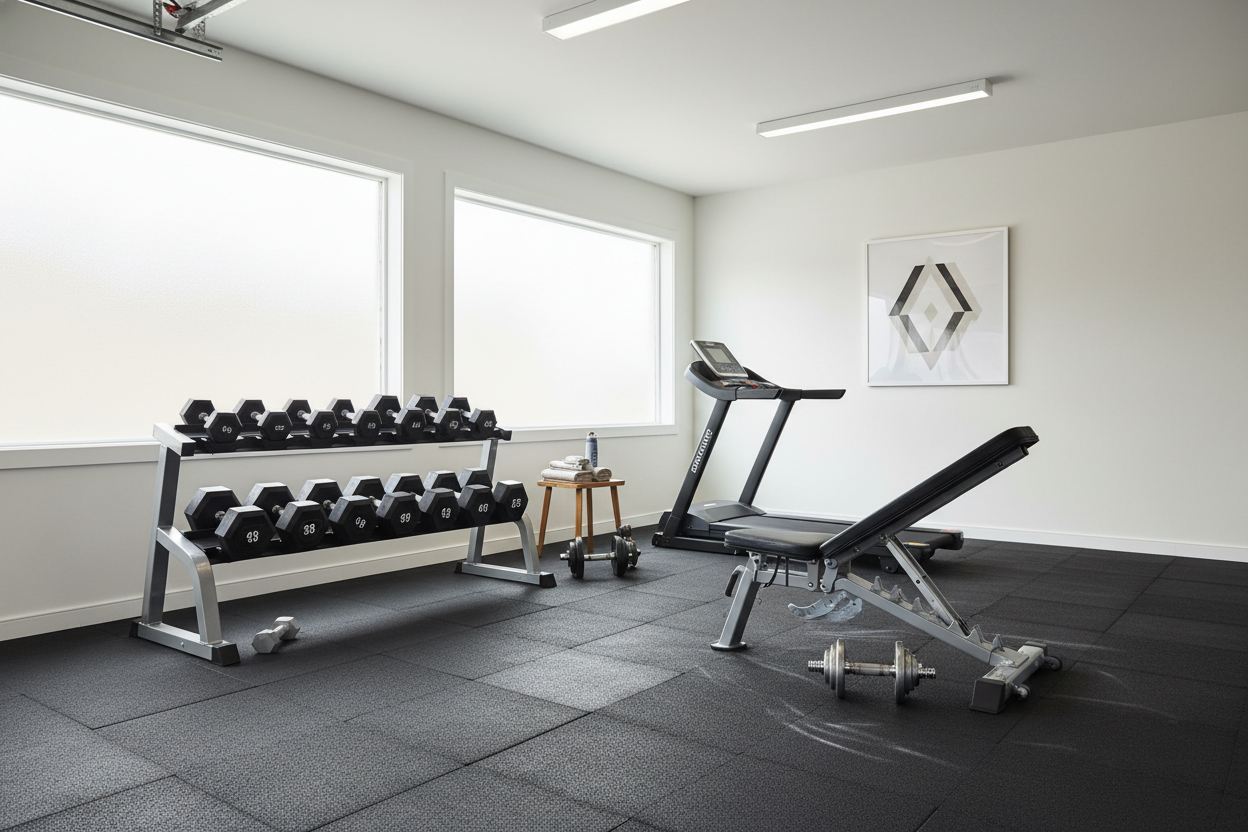
However, if you have a dedicated garage spot and don't mind the footprint, nothing beats a dedicated rubber hex dumbbell set. They are virtually indestructible, they don't roll away between sets, and the knurling usually feels better in the hand. You don't need a massive rack of 50 pairs to see results. A solid run from 5 to 50 lbs, with maybe a pair of 75s for heavy days, covers 90% of what most home lifters will ever need.
Dumbbell Training FAQ
Can I really build a big chest with just dumbbells?
Yes. In fact, many pro bodybuilders prefer dumbbells because of the increased range of motion and the ability to squeeze the muscles harder at the top of the rep. You'll likely see better inner-chest development than you would with a barbell.
Are adjustable dumbbells durable enough for heavy use?
The high-end ones are built like tanks. Just avoid dropping them from overhead. If you're someone who likes to 'slam' weights after a set, stick with the rubber hex variety.
What's the biggest downside to dumbbell-only training?
The hardest part is getting heavy weights into position for movements like shoulder presses or bench presses. You'll need to master the 'kick-up' technique using your knees to pop the weights into place. It takes a little practice but becomes second nature quickly.
Share:
How to Find an Adjustable Lifting Bench That Doesn't Wobble
The Unsung Hero of My Garage: A 15 20 25 lb Dumbbell Set