
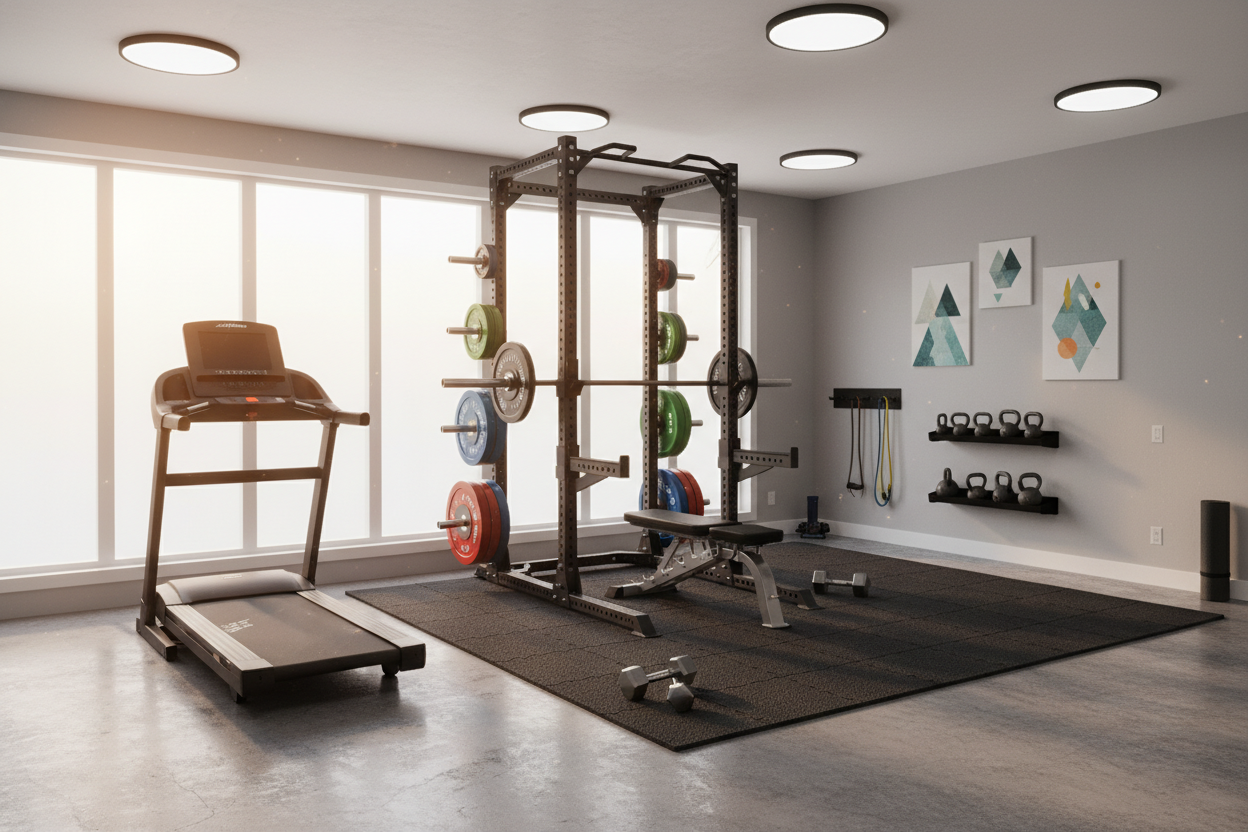
I once spent three hours unboxing a squat rack that looked amazing in the Amazon photos, only to realize I could probably bend the uprights with my bare hands. It is a common trap. When you dig into fitness equipment manufacturing, you realize the glossy marketing photos hide a lot of sins. You are not just buying a piece of metal; you are buying the integrity of the person who welded it and the quality of the raw ore they used.
Quick Takeaways
- Most brands are just white-labeling gear from the same handful of massive factories.
- 11-gauge steel is the gold standard for safety; 14-gauge is for clothes racks, not squat racks.
- 'Booger welds' and excessive plastic end caps are immediate signs of cheap fabrication.
- Precision manufacturing is non-negotiable for anything with a cable or a bearing.
The Illusion of Choice in the Fitness Industry
Walk into any big-box sporting goods store and you will see five different brands of power racks. Here is the dirty secret: there is a high probability they all came out of the exact same gym equipment factory overseas. This is called white-labeling. A brand chooses a pre-designed template from a factory catalog, picks a custom powder coat color, and slaps their logo on the crossmember.
This is why you see so many 'clones' online. One company might charge $400 while another charges $700 for the exact same 2x2-inch steel frame. If you are not careful when building your home gym, you will end up paying a massive premium for a brand name that does not actually own its own production line. Always look for unique design features that prove a company is doing their own engineering.
11-Gauge vs. 14-Gauge Steel: The Factory Floor Reality
When manufacturing fitness equipment, the thickness of the steel—the gauge—is the single most important factor for your safety. In the world of steel, the lower the number, the thicker the metal. 11-gauge steel is roughly 3mm thick and is what you want for anything holding a heavy barbell. 14-gauge is about 2mm thick, which is significantly flimsier under load.
Why do factories use 14-gauge? It is cheaper to buy and, more importantly, much cheaper to ship. Shipping heavy iron across the ocean is a logistical nightmare. By thinning out the metal, a manufacturer can cram more units into a shipping container. If a rack feels suspiciously light or the 'max capacity' seems exaggerated for the weight of the box, the factory probably cut corners on the steel gauge.
Ugly Welds and Plastic End Caps (My Personal Red Flags)
You can tell a lot about the manufacturing of gym equipment by looking at the joints. A high-quality weld should look like a neat stack of dimes. If the weld looks like a lumpy, porous mess—often called a 'booger weld'—it means the factory was rushing the job or using low-grade welding wire. These welds are prone to cracking under the repeated stress of dropping heavy weights.
Another red flag is the over-reliance on plastic end caps. While some plastic is fine for finishing, a quality manufacturer will often use welded metal caps or heavy-duty rubber. If every single edge of your rack is covered in thin, brittle plastic, it is a sign that the fabricator was looking for the fastest way to hide rough, unfinished steel cuts. The Best Home Gym Fitness Equipment Is Just 3 Things, but if those three things have failing welds, your gym is a hazard.
Can You Actually Get Commercial Quality at Home?
True commercial gym equipment manufacturing involves robots, laser cutters, and rigorous stress testing that residential gear rarely sees. Commercial racks are built to survive 24/7 abuse from people who do not own the equipment and therefore do not care if they slam the bars. This level of durability usually requires 3x3-inch 11-gauge steel and oversized hardware.
So, Can You Replicate Fitness 19 Equipment On A Garage Gym Budget? You can get surprisingly close, but you have to be realistic. You do not necessarily need a $3,000 rack for a garage, but you should avoid the $200 'budget' specials that wobble when you rack a hundred pounds. Look for mid-range manufacturers that use commercial-grade materials even if they lack the fancy branding.
The Machines Where Precision Actually Matters
A weight plate is just a hunk of iron; it is hard to mess that up. However, gym equipment manufacturing for machines with moving parts is a different beast. Cable pulleys, selectorized stacks, and guide rods require tight tolerances. If a factory is off by even a fraction of a millimeter, the machine will drag, stick, or feel 'gritty' during your set.
This is especially true for something like a Smith Machine Home Gym Station. These systems rely on linear bearings sliding over polished steel rods. If the rods are not perfectly parallel or the bearings are cheap 'off-the-shelf' parts, the movement will never feel smooth. This is where you see the real difference between a factory that cares about precision and one that just wants to move volume.
My Personal Experience with Cheap Manufacturing
A few years ago, I bought a 'heavy-duty' adjustable bench from a generic brand. On paper, it had a 1,000-lb capacity. The first time I tried to do heavy dumbbell presses, the back pad shifted nearly two inches to the left. When I pulled the upholstery back, I saw that the support bracket was held on by two tiny, uneven tack welds. I ended up selling it for parts. It taught me that a spec sheet is just paper—you have to look at the actual construction to know if it will hold up when you are under the bar.
Frequently Asked Questions
Is 11-gauge steel really necessary for a home gym?
If you are squatting or benching over 225 lbs, yes. 11-gauge provides the structural rigidity you need so the rack doesn't sway or bow under load. It is a one-time investment in your safety.
Why do some brands cost so much more for the same specs?
Often, you are paying for better quality control. A premium brand will reject a batch of racks from the factory if the holes are slightly misaligned, whereas a budget brand will ship them anyway and hope you don't notice.
How can I tell if a weld is bad?
Look for 'spatter' (tiny beads of metal stuck around the joint) and gaps in the bead. A good weld should be continuous, uniform, and look like it has actually fused the two pieces of metal together rather than just sitting on top of them.
Share:
The Hidden Catch With Most All-in-One Exercise Weight Sets
I Tried Lifting With Trendy Design Dumbbells (And Hated It)