
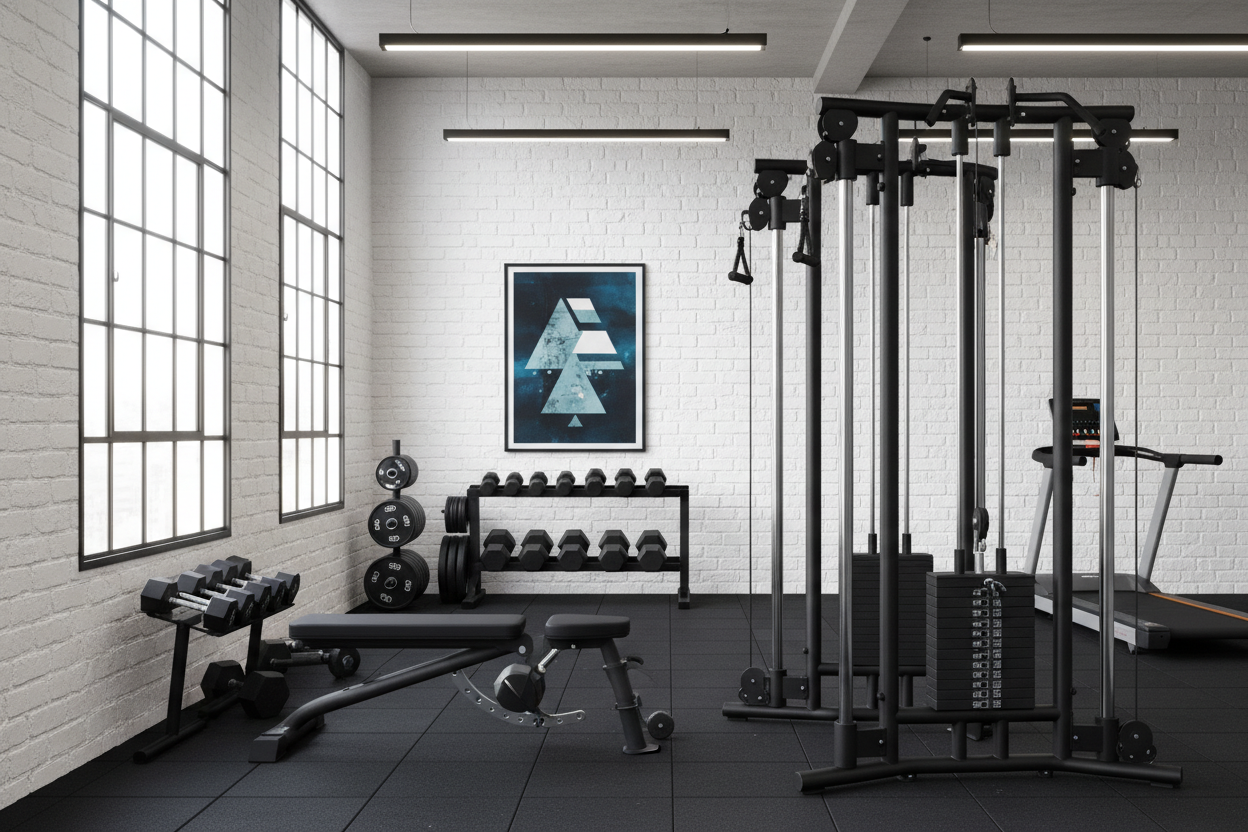
I remember standing over a 315-pound barbell, ready to rip into some heavy rows, and my lower back just gave me the finger. It wasn't an injury, but a deep, throbbing fatigue that made me realize my spinal erectors were the bottleneck for my lat growth. If you've ever had a back pump so bad you couldn't lean over the sink to brush your teeth, you know exactly what I'm talking about. That was the day I stopped being a free-weight purist and bought a weight pull machine.
Quick Takeaways
- Axial loading on barbell rows often limits back volume before the lats actually fatigue.
- A dedicated cable tower provides constant tension that free weights cannot replicate.
- Understanding cable ratios (1:1 vs 2:1) is critical for tracking real progressive overload.
- Selectorized weight stacks save time, but plate-loaded machines save thousands of dollars.
The Lower Back Fatigue Trap
For years, I believed that if you weren't doing bent-over barbell rows, you weren't really training back. I’d grind through deadlifts, move to heavy rows, and then wonder why my lats still felt like they had more in the tank while my lower back was screaming for mercy. This is the axial loading trap. When you’re bent over with a heavy bar, your lower back is working overtime just to keep you from folding in half.
By the time you get to your working sets, your core and erectors are often the first things to fail. This means your lats—the very muscles you're trying to grow—never actually reach true failure. Moving to a cable-based system removes that postural demand. It allows you to isolate the tissue without your spine acting as the limiting factor. I found that my back thickness actually improved faster once I stopped trying to be a 'hero' with the barbell and started focusing on the stretch and squeeze of a cable.
What You Actually Get With a Dedicated Weight Pull Machine
A real cable station is about more than just lat pulldowns. You’re looking for a rigid frame, usually 11-gauge steel, that doesn't wobble when you’re pulling 250 pounds from the floor. Cheap pulley-on-a-string setups you see on Amazon are fine for face pulls, but they fail miserably for heavy rows because the weight swings like a pendulum.
A standalone tower with dual guide rods provides a smooth, vertical path. This stability is what allows you to use tools like an adjustable weight bench to create custom rowing angles. I often pull my bench up to the cable tower for chest-supported rows. By bracing my sternum against the pad, I can move significantly more weight with zero momentum, targeting the mid-traps and rhomboids with surgical precision. If your machine doesn't have a built-in seat, a versatile bench is your best friend for staying anchored.
Plate-Loaded vs. Weight Stacks: The Home Gym Dilemma
If you have the budget, a selectorized weight stack is the dream. There is nothing like moving a pin to jump from 100 to 150 pounds in two seconds. However, for most garage gym owners, a plate-loaded machine is the pragmatic choice. You already own the plates, so why pay $1,000 extra for a stack of iron? The downside is the 'carriage friction.' On cheaper models, the weight carriage slides on plastic bushings that can feel gritty.
It’s a similar sensation to the track friction found on a Valor Fitness Smith machine if the rods aren't properly lubricated with silicone spray. When you’re shopping, look for machines that use linear bearings or high-quality nylon bushings on chromed rods. If the rods are just painted black, the paint will flake off within a month and your rows will feel like you’re pulling a sled through sand. I personally went plate-loaded to save cash, and as long as I keep the rods clean, the 'feel' is 95% as good as a commercial stack.
Stop Ignoring the Starting Resistance
One of the biggest mistakes I see guys make is assuming 100 pounds on a cable machine equals 100 pounds of tension. It rarely does. You have to understand the pulley ratio. A 1:1 ratio means you're pulling the full weight. A 2:1 ratio, which is common on functional trainers, means 100 pounds feels like 50. This can lead to some massive ego bruising when you switch machines.
I’ve seen people get just as confused as they do when trying to figure out the Freemotion Smith machine bar weight, which is often counterbalanced to feel lighter than a standard 45-pound bar. On a cable tower, the carriage itself has weight. My plate-loaded machine has a 15-pound carriage. If I put two 45s on it, I'm actually pulling 105 pounds. If you don't account for that starting resistance, your logbook will be a mess of inconsistent data. Always weigh your carriage or check the manufacturer's specs.
Balancing the Pull: Antagonist Training
Once I added a heavy cable station to my gym, my pulling volume tripled. It’s just so much easier to recover from than heavy free-weight rows. But you have to be careful—if you pull all day and never push, your shoulders will start to roll forward like a caveman's. You need to balance that new lat volume with heavy pressing movements that offer a similar level of stability.
I recommend pairing your cable work with an independent arm chest press. This gives you that same 'locked-in' feeling where you can focus entirely on the muscle contraction without worrying about balancing a barbell. Training in this 'machine-heavy' style for a block can be a great way to give your joints a break while still pushing the intensity on hypertrophy. My chest and back have never looked more proportional than when I started treating my cable rows and machine presses with the same respect I gave the Big Three.
How to Fit a Cable Tower in a Low-Ceiling Garage
The biggest hurdle for most home lifters is height. A standard lat pulldown tower is usually between 82 and 87 inches. If you have a standard 8-foot ceiling, you’re fine. But if you’re in a basement or a low-clearance shed, you might run into trouble. You need to measure your seated height on a sturdy weight bench with your arms fully extended. If your hands hit the pulley before your lats are fully stretched, the machine is useless for pulldowns.
I actually had to move my flooring mats to get an extra half-inch of clearance for my tower. If you're tall, look for a 'long-stroke' machine. There is nothing more frustrating than hitting the 'top' of the machine and hearing the plates clank together before you've finished the rep. Also, consider the footprint. A good tower usually needs about a 4-foot by 5-foot area to be stable. If it's too light, the machine will tip toward you during heavy low rows, so be prepared to bolt it to the floor or weigh down the base with extra sandbags.
FAQ
Is a plate-loaded cable machine loud?
It depends on the bushings. Plastic bushings on metal rods make a 'sliding' sound. If the carriage hits the bottom too hard, it’ll wake the neighbors. I use rubber donut bumpers at the bottom of my guide rods to keep the noise down during early morning sessions.
Can I do triceps and biceps on a weight pull machine?
Absolutely. Any machine with a high and low pulley is a full-body tool. I use the low row for cable curls and the high pulley for overhead tricep extensions daily. It’s the most versatile piece of equipment in my gym after the power rack.
Do I really need a seat?
For lat pulldowns, yes. You need something to tuck your knees under so the weight doesn't pull you off the floor. If your machine doesn't have knee pads, you'll have to get creative with heavy dumbbells on your lap or a DIY crossbar in your rack.
Share:
If I Had to Start Over: The Best Workout Machine at Home
Why the Best Home Gym Machines Aren't What the Influencers Push