
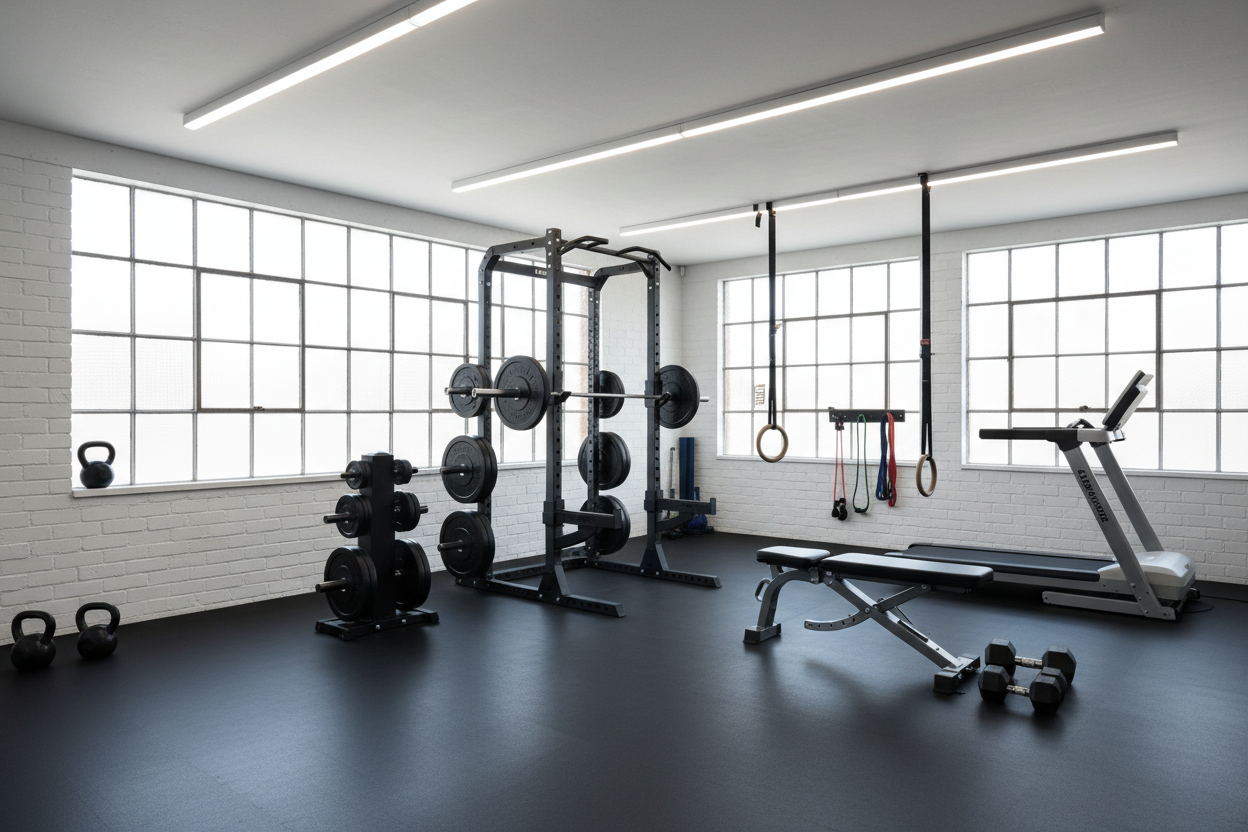
I remember the exact moment I decided to stop paying for a commercial membership. My local gym bumped their monthly rate to $80, the squat rack had a twenty-minute wait, and the 'cleaning' spray smelled like old hot dogs. I went home and started hunting for the best home gym machines, thinking I'd just buy one unit and be done with it. I was wrong, and I spent a few thousand dollars learning why.
- Steel gauge is king; if it's thinner than 11-gauge, it's a coat rack, not a gym.
- Pulley ratios (1:1 vs 2:1) change the effective weight you're actually lifting.
- Your training style—bodybuilding vs. powerlifting—dictates the machine, not the other way around.
- Footprint matters, but 'working clearance' is what prevents you from putting a hole in your drywall.
The Instagram Trap: Why Flashy Gear Usually Sucks
Social media is a graveyard of pretty, white-powder-coated machines that look great in a 15-second reel but shake like a leaf during a 200-pound lat pulldown. These influencers aren't training for PRs; they're training for lighting. A personal home gym should be a sanctuary of iron, not a showroom for flimsy plastic pulleys and chrome-plated trash that flakes off the first time a carabiner touches it.
Real gear isn't always pretty. It's often bulky, heavy, and smells like industrial grease. But when you're grinding out that last rep of a heavy chest press, you want a frame that doesn't groan. The 'aesthetic' machines often sacrifice structural integrity for 'compact' designs that feel cramped and limit your range of motion.
What Actually Makes the Best Weight Machine for Home?
If you want the best weight machine for home use, you have to look at the unsexy stuff. I'm talking about 11-gauge structural steel. Most budget rigs use 14-gauge, which is significantly thinner and prone to warping. If you're pushing serious weight, you need a frame that stays put. Why Most Compact Gym For Home Setups Snap Under Heavy Weight is usually down to this cost-cutting measure.
Next, check the cables. You want 2,000-lb rated aircraft cables with nylon coating. If the pulleys are plastic, they'll develop flat spots and feel like you're pulling through sand within six months. Look for aluminum pulleys with sealed bearings. They're quieter, smoother, and they'll outlast your interest in New Year's resolutions. Also, pay attention to the weight ratio. A 2:1 ratio means a 200-lb stack feels like 100 lbs. That's great for crossovers, but frustrating if you're a heavy hitter.
Matching the Rig to Your Lifting Style
Don't buy a machine because it has 50 attachments. Buy it because it fits how you actually train. A HIIT enthusiast and a traditional bodybuilder need entirely different setups.
Chasing Aesthetics: Best Home Gym Bodybuilding Setups
For hypertrophy, you need constant tension and isolation. The best home gym bodybuilding setup focuses on machines that mimic the natural arc of your joints. I'm a huge fan of converging arms. Instead of a straight bar, independent arms allow you to squeeze at the top of a movement. For example, a Weight Bench Chest Press Machine Independent Arms Z1 Pro provides that pec-focused contraction you simply can't get with a standard barbell in a rack.
Dual-adjustable pulleys are also non-negotiable here. You need to be able to hit high-to-low flies and lateral raises without rearranging your entire garage. Look for a stack that allows for micro-adjustments; jumping 10 lbs at a time is too much for small muscle groups like rear delts.
Moving Iron: The Best Home Gym for Strength Training
If your goal is moving the most weight possible, you need a different beast. The best home gym for strength training usually centers around a heavy-duty rack or a hybrid system. You need safeties that you can trust your life with when you're squatting alone at 6 AM. A Smith Machine Home Gym Station is a solid choice for those who want to push their limits safely without a spotter, offering a fixed path that allows for maximum output on presses and squats.
Evaluating the Top Home Gym Options on the Market
Choosing between home gym options usually comes down to how you want to load the weight. Selectorized stacks are fast—just move the pin and go. They're great for drop sets but expensive to ship. Plate-loaded machines are cheaper upfront because you use the plates you already own, and they usually have a higher weight ceiling. Then there are leverage systems, which feel more like free weights but provide the safety of a machine. Browse a quality Home Gym collection to see which mechanism fits your budget and ceiling height.
My $3,000 Mistake (And How to Avoid It)
When I bought my first best home weight system, I measured the floor space but forgot about the 'working footprint.' I put the machine in a corner, only to realize I couldn't actually extend the leg developer without hitting my workbench. I also bought a 14-gauge 'all-in-one' that wobbled so much during pull-ups it felt like a carnival ride. I Built the Best Weight Home Gym (And Made 3 Massive Mistakes), and the biggest one was prioritizing a low price over a high-quality frame. Buy once, cry once. Get the heavy steel.
FAQ
How much ceiling height do I really need?
Most full-size racks and cable machines sit around 80 to 84 inches. Always leave at least 6 inches of 'head room' if you plan on doing pull-ups, or you'll be greeting your ceiling joists with your forehead.
Are 1:1 or 2:1 pulleys better?
Neither is 'better,' they just serve different purposes. A 1:1 ratio is great for heavy lat pulldowns and rows. A 2:1 ratio offers more cable travel and smoother movement for functional training and isolation work.
Is a Smith machine better than a power rack?
It's about safety and goals. A power rack is superior for building stabilizer muscles with free weights. A Smith machine is better for training to failure safely alone and for specific bodybuilding angles.
Share:
Why I Ditched Barbell Rows for a Weight Pull Machine
I Finally Built a Weight and Dumbbell Set That Doesn't Suck