
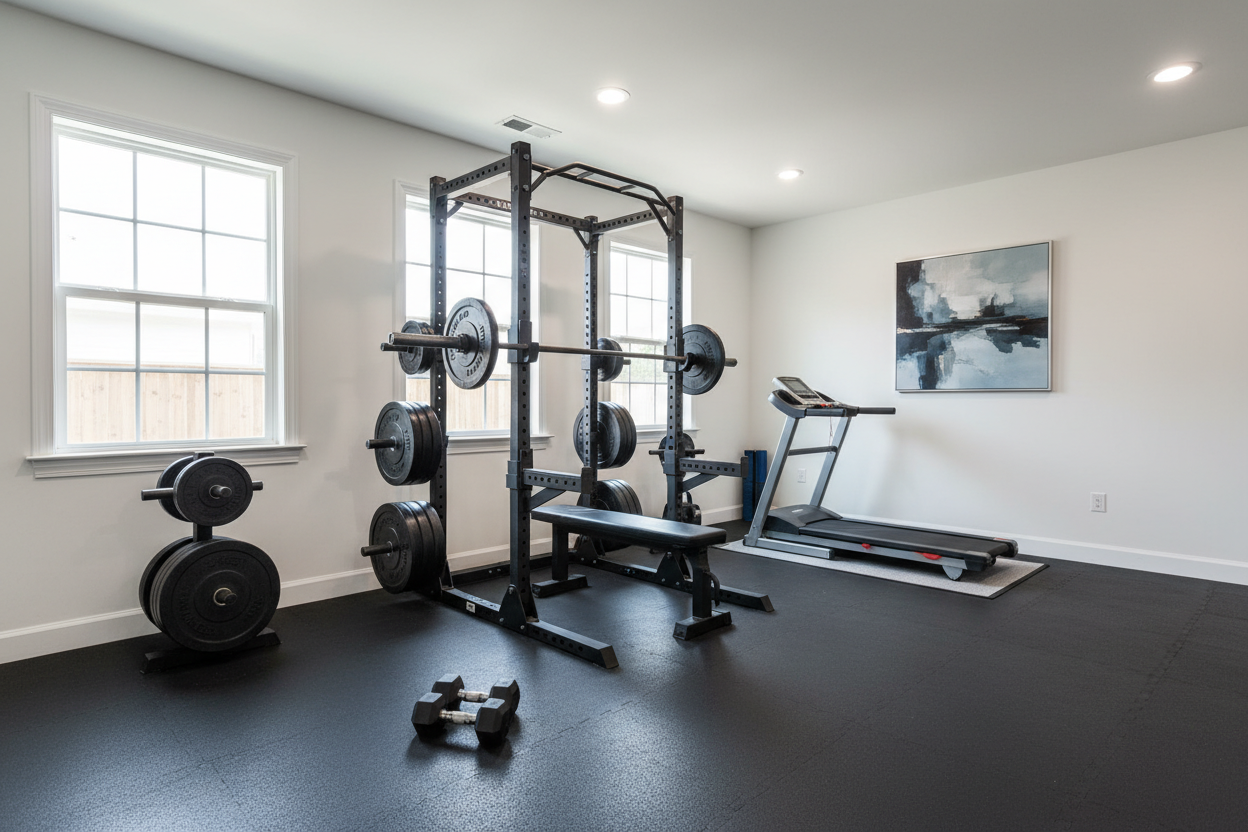
I remember the exact moment I stopped being an equipment snob. I was staring at a digital shopping cart filled with 'precision-calibrated' plates that cost more than my first car. I realized I was about to pay a $700 premium just to have a specific logo facing out during my Instagram sets. I cleared the cart, drove to a local sporting goods store, and bought the ugliest, most basic cheap exercise weights they had in stock.
Iron is Just Gravity (Why Brand Names Don't Matter)
Gravity doesn't have a brand preference. When you're grinding out the last rep of a heavy squat, your central nervous system doesn't care if the mass on your back was cast in a boutique forge or a high-volume factory. A 45-pound plate is a tool designed to provide resistance against the earth's pull. That's it.
The myth that you need 'competition grade' plates for a garage gym is a marketing trap. Unless you are training to break world records where every gram is scrutinized, the 2% weight tolerance on budget iron is irrelevant. If one plate is 44.8 pounds and the other is 45.2, your body won't know the difference. You're better off spending that 'accuracy tax' on a better rack or more flooring.
- Budget Win: Standard cast iron plates are nearly indestructible.
- The Reality: Most 'premium' plates are just painted better, not built better.
- Cost Savings: You can often find cheap fitness weights for under $1.50 per pound if you shop sales.
Splurge on the Bar, Skimp on the Plates
If you have $600 to spend on your lifting setup, put $400 of it into the barbell. The bar is your interface with the weight. It’s where the knurling meets your skin and where the bearings determine the smoothness of the lift. A cheap bar with bad bushings will make even the most expensive plates feel like garbage.
I use a high-end multi-purpose bar with a 190,000 PSI tensile strength and a light zinc coating. It has a predictable whip and doesn't cheese-grate my shins. By opting for cheap workout weights, I freed up the cash to buy a bar that will literally never bend. The plates just sit there; the bar does the work. Don't flip that equation.
The 3 Types of Cheap Workout Weights Actually Worth Buying
Not all budget gear is created equal. If you're hunting for deals, stick to these three categories. First, standard gray or black cast iron. They clank, they’re loud, and they look like a real gym. Second, recycled crumb rubber bumpers. These are the workhorses of the home gym world because they can handle being dropped on concrete without shattering.
If you want a bit of flair without the high-end price tag, you can find colored rubber plate sets that allow you to identify weights by sight. It's a small luxury that doesn't break the bank. Third, basic rubber hex dumbbells. The flat edges keep them from rolling across your garage floor, and the rubber coating saves your toes if you get clumsy.
The Plastic-Filled Trap You Absolutely Must Avoid
There is a limit to how cheap you should go. Avoid those vinyl-coated, cement-filled weights you see at big-box retailers. They are physically massive because cement is less dense than iron. You'll run out of room on your barbell sleeve before you even reach a respectable deadlift weight. Even worse, they crack. Once that plastic shell splits, you'll have sand or concrete dust leaking all over your lifting platform.
It’s a similar frustration to dealing with cheap pulldown machine weights that stick or rattle. When the fundamental material is low-quality, the training experience suffers. Stick to iron or solid rubber. If it’s filled with 'filler,' leave it on the shelf.
Where to Invest the Hundreds of Dollars You Just Saved
By saving $500 on your plate set, you can actually build a complete gym rather than just a lifting station. That money is better spent on a reliable weight bench that won't tip over when you're doing seated curls. Stability is a safety issue; plate brand is an ego issue.
I personally took my savings and put them toward a heavy-duty adjustable weight bench. Having the ability to hit inclines and declines safely is a massive value add for hypertrophy. I’d much rather have a versatile, rock-solid bench and ugly plates than a beautiful set of plates and a bench that feels like it’s made of toothpicks.
Personal Experience: My $50 Marketplace Score
Years ago, I bought a set of rusted 45lb plates from a guy's driveway for $50. They were orange with rust and looked terrible. I spent one afternoon with a wire brush and a $6 can of matte black spray paint. Those plates look brand new today and have been used for thousands of reps. My only mistake was once buying a 'value' set of plastic plates that lasted exactly three months before the 25lb plate burst open during a row. Lesson learned: cheap iron is a bargain; cheap plastic is a waste.
FAQ
Do cheap iron weights rust?
Yes, if your gym is in a humid garage. However, a quick coat of 3-in-1 oil or a fresh hit of spray paint every couple of years keeps them in top shape. Rust is purely cosmetic.
Are budget plates accurate?
Usually, they are within 2% to 5% of the stated weight. If you're worried, weigh them once on a bathroom scale and mark the actual weight with a silver sharpie. Problem solved.
Why are bumper plates more expensive than iron?
The manufacturing process for molding rubber around a steel hub is more intensive. But even then, you don't need the top-tier brands. Crumb rubber is almost always the best value for home use.
Share:
The 'Best Garage Gym Equipment' Lists Are Lying to You
How to Pick the Right Barbell Type When They All Look the Same