
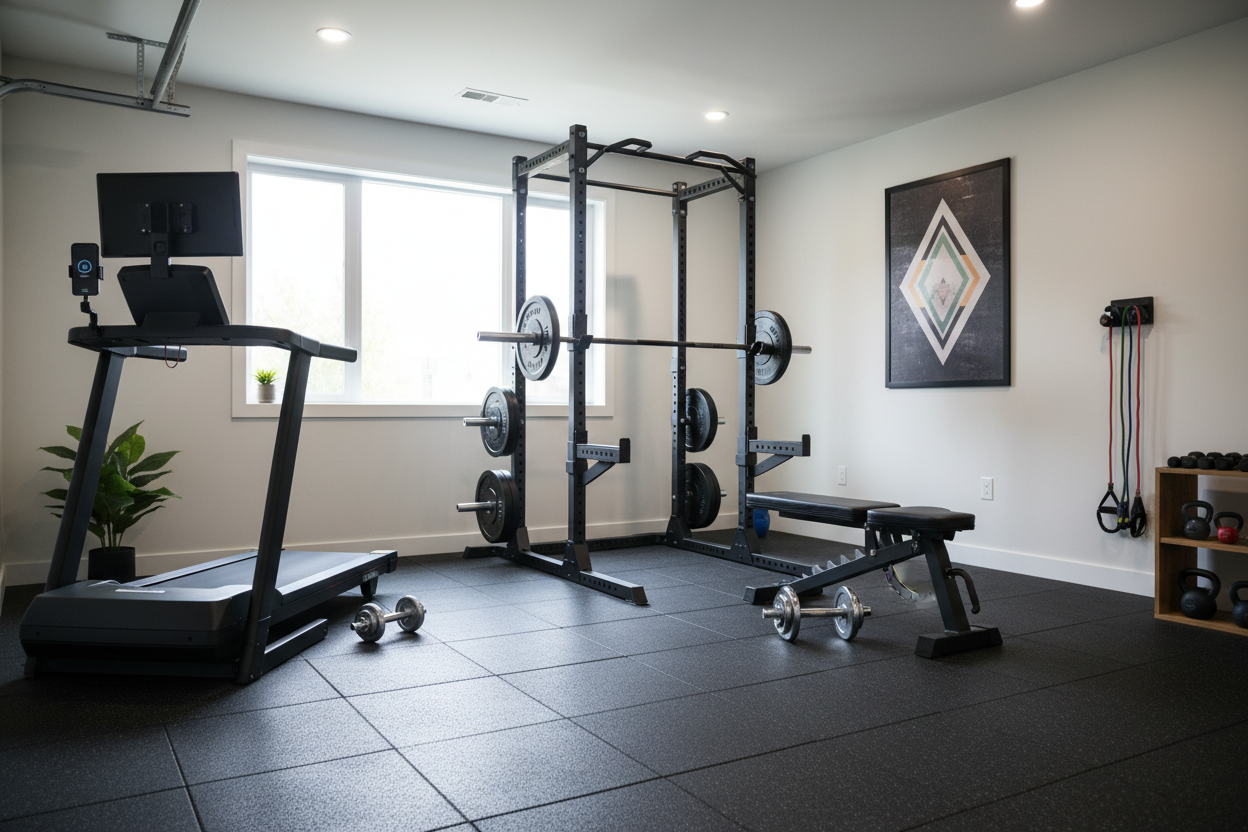
I remember unboxing a high-end rower three years ago. The frame was solid aluminum, but the 22-inch at home workout screen felt like a flagship tablet from 2018. Fast forward to today, and that screen lags so hard I can barely navigate the settings menu. It’s a frustrating reminder that while iron is forever, software has an expiration date.
- Steel lasts a lifetime; tablets last three years.
- Built-in screens often lock you into expensive monthly subscriptions.
- A 'Bring Your Own Device' approach is cheaper and more flexible.
- Resale value on connected fitness drops faster than a budget smartphone.
The Problem With Slapping an iPad on Heavy Iron
Steel doesn't need a firmware update to handle a 500-lb squat. The issue with the best smart workout equipment is the lifespan mismatch. You're buying a machine built to last 20 years with an interface that will be sluggish in four. I've seen screens on $3,000 bikes start ghosting after a few humid summers in a garage gym.
When you buy a screen-integrated machine, you aren't just buying fitness gear. You're buying a computer. And like any computer, the processor inside is going to be obsolete before you even finish paying off the financing. You’re left with a beautiful piece of engineering hampered by a laggy, unresponsive piece of glass.
Subscription Fatigue and the 'Bricked Machine' Threat
Then there's the 'bricked' factor. If you stop paying that $39 monthly fee, many of these machines lose 90% of their functionality. You're left with a very expensive, very heavy clothes rack. You have to ask yourself if the best smart gym equipment is truly worth the monthly fee when you could just follow a program on your phone.
I’ve seen companies go bankrupt and take their servers with them. Suddenly, that screen is a glowing brick. No classes, no metrics, no history. If your workout depends on a cloud server in California, you don't actually own your gym—you’re just renting it from a startup that might not exist in 2026.
When Connected Fitness Actually Makes Sense
It’s not all bad. For some, a smart home workout is the only way they actually stay consistent. If having a trainer scream at you through a screen is what gets you moving, there is legitimate value there. Beginners, especially, benefit from the guided form cues and the gamification of their progress.
I’ve seen some great setups where a smart stepper stair climber keeps someone engaged during a brutal cardio session because the metrics are right there. For grueling, monotonous cardio, the distraction of a high-def screen and real-time leaderboard can be the difference between finishing the session or quitting ten minutes early. In these cases, smart home fitness serves a real purpose.
Bring Your Own Device: The Ultimate Workaround
My preferred setup? A smart home gym built on a traditional home gym foundation. I use a $20 magnetic tablet mount on my power rack. If the tablet dies or gets too slow, I spend $200 on a new one, not $2,500 on a whole new machine. It’s modular, cheaper, and I can watch whatever I want without a proprietary browser blocking me.
Using your own device means you aren't tied to one ecosystem. You can use Peloton’s app today, Apple Fitness+ tomorrow, and a simple PDF program the day after. You get all the benefits of an at home workout screen without the proprietary handcuffs. Plus, you can take that tablet to the kitchen to cook dinner afterward—try doing that with a 22-inch treadmill monitor.
How to Future-Proof Your Training Space
Invest in biomechanics, not megapixels. Buy the rack with the 3x3-inch 11-gauge steel and the barbell with the 190k PSI tensile strength. These things don't need Wi-Fi to work. Focusing on versatile full-body workout equipment ensures your gym is still functional a decade from now regardless of what happens to the tech industry.
The best training spaces are the ones that grow with you. If you buy a 'smart' machine, you’re stuck with that version of fitness forever. If you buy quality mechanical gear, you can swap out your tech every few years for a fraction of the cost. Build a gym that works even when the Wi-Fi is down.
My Personal Fail
I once dropped $1,500 on a 'smart' fitness mirror. It looked incredible in the marketing photos. Three weeks in, the novelty wore off. Six months later, the company stopped supporting the older hardware versions. Now, it’s just a very heavy, slightly-too-dim mirror in my guest room. I could have bought a competition-grade power bar and 300 lbs of plates for that money. Never again.
FAQ
Can I use a smart gym without a subscription?
Most allow a 'manual mode,' but you'll lose the leaderboards, classes, and data tracking that you paid the premium for. It’s like buying a Ferrari and only being allowed to drive it in first gear.
Do built-in screens last as long as the machine?
Almost never. The mechanical parts of a bike or rower can last 15+ years. The tablet attached to it will likely be obsolete or sluggish within 3 to 5 years.
Is a TV better than a built-in screen?
Yes. A wall-mounted TV and a $50 Roku or Apple TV gives you more screen real estate and more app choices for a fraction of the cost of integrated fitness tech.
Share:
Why I Refuse to Lift on the Most Popular Amazon Weights Bench
Are Those Cheap Amazon Adjustable Dumbbells Actually Safe?