
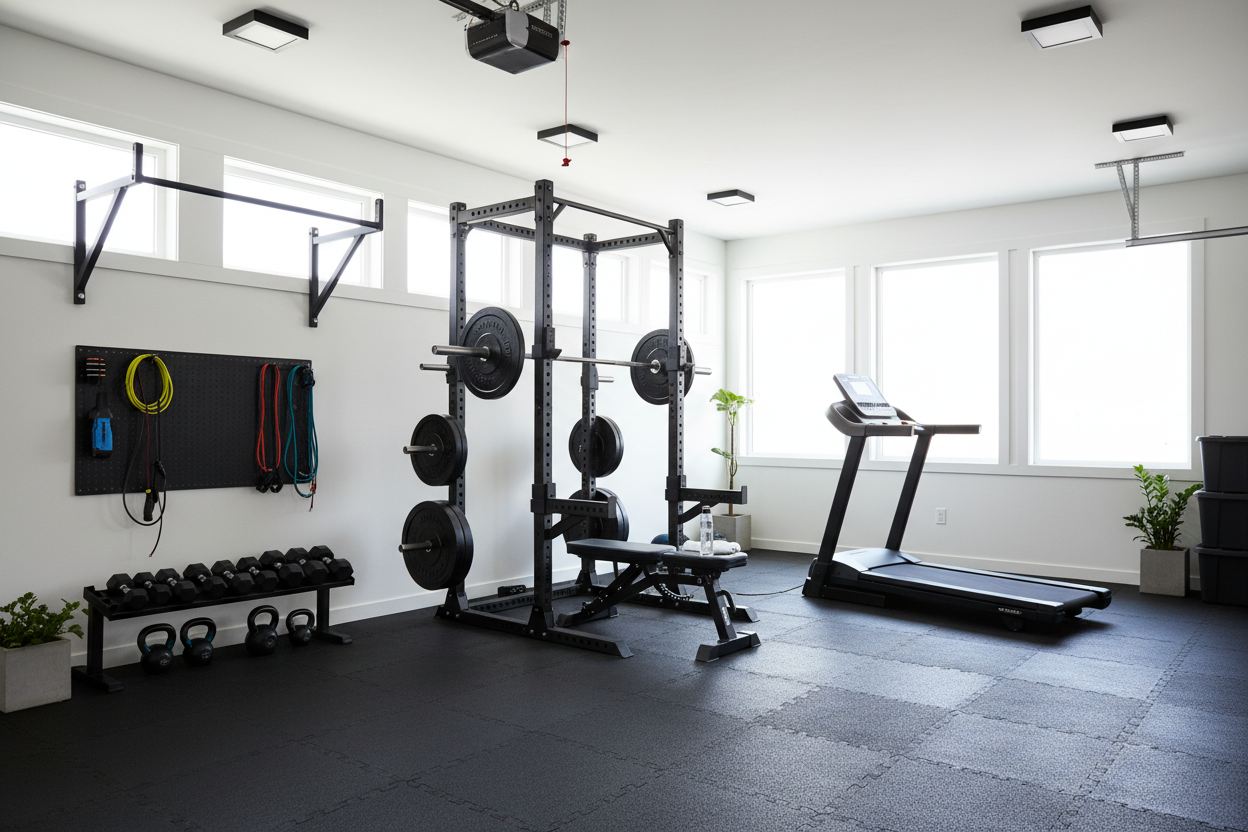
I remember the day I finally cancelled my commercial gym membership. I was tired of the $80 monthly drain, the broken cable machines, and the guy doing curls in the only squat rack. I thought building one of those home garage gyms I saw on Instagram would be a weekend project. I bought a rack, some plates, and figured I was set.
I was wrong. Within three months, my barbell was covered in a fine layer of orange rust, and I was skipping workouts because it was 40 degrees outside. Most people treat a garage weight room like a spare closet, but a garage is a hostile environment for fitness gear. If you don't plan for the specific physics of an unfinished space, your 'best garage gym' will just be a place where you store a lawnmower next to a very expensive coat rack.
- Climate control is more important than your choice of barbell.
- Standard garage floors are sloped, which can wreck your joints over time.
- Rust is the silent killer of garage equipment; choose finishes wisely.
- Visual boundaries between 'storage' and 'gym' are essential for mental focus.
The Brutal Reality of Unfinished Spaces
The honeymoon phase of a new gym for garage use lasts exactly until the first heatwave or cold snap. I’ve seen guys spend five figures on competition-grade plates only to realize they can't breathe in a 100-degree garage with zero airflow. Humidity is your primary enemy. It doesn't just make you miserable; it eats your equipment.
Before you buy a single dumbbell, look at your insulation. An insulated garage door and a high-velocity floor fan are the most underrated pieces of equipment you can own. If you live in a humid climate, a dehumidifier is non-negotiable. If the air feels heavy, you won't train. You'll find excuses to stay on the couch where the A/C is running. Environmental control is the foundation of a usable garage weight room.
Your Concrete Floor is a Hazard (And How to Fix It)
Concrete looks tough, but it's actually quite fragile under impact. More importantly, it’s rarely flat. Most garage floors are sloped 1/8 to 1/4 inch per foot toward the door for drainage. If you set up your rack facing the door, you're essentially squatting with one heel higher than the other. Over a few hundred reps, that’s a recipe for hip and lower back issues.
You need to level your lifting area. I recommend building a plywood platform and using shims to create a perfectly flat surface. On top of that, you need 3/4-inch horse stall mats. These are the gold standard for protecting both the slab and the best home gym weight setup you've invested in. Don't bother with those interlocking foam squares from the toy aisle; they’ll compress and slide the second you try to pull a heavy deadlift.
Stop Buying Indoor Gear for a Garage
There is a massive difference between indoor gym equipment for home use and gear built for the garage. In a climate-controlled basement, you can get away with cheap chrome and thin steel. In a garage, that stuff will be a pile of rust and wobbly joints in a year. Temperature swings cause metal to expand and contract, which can loosen cheap bolts and crack low-grade welds.
When I’m looking at a solid adjustable weight bench, I’m looking for 11-gauge steel and a powder-coated or cerakote finish. Cerakote was designed for firearms; it handles sweat and humidity better than anything else on the market. Also, look for 'overbuilt' specs. A bench rated for 1,000 lbs might seem like overkill, but that extra mass provides the stability you need when the floor isn't perfectly even.
Ditching the Clutter: Building a Real Garage Weight Room
The biggest psychological hurdle to training at home is the lawnmower staring you in the face. If your gym for garage use feels like a corner of a messy shed, your brain won't switch into 'work' mode. You need to create a visual perimeter. I used heavy-duty shelving units to create a wall, effectively cordoning off my lifting space from the household clutter.
If you're tight on space, look for a home gym for garage setup that utilizes wall-mounted folding racks or vertical storage. Getting your plates off the floor and onto the wall opens up the footprint and makes the room feel like a dedicated facility rather than a storage unit. If it looks like a gym, you’ll treat it like a gym.
My Biggest Garage Gym Mistake
When I started, I bought a cheap zinc-plated barbell because it was $100 less than the stainless steel version. Within one Florida summer, the zinc had worn off where the bar sat in the J-cups, and the knurling was filled with rust. I spent more time scrubbing that bar with a wire brush and 3-in-One oil than I did actually lifting with it. I eventually sold it for $40 and bought the stainless bar I should have started with. Buy once, cry once.
Garage Gym FAQ
How do I stop my weights from rusting?
Keep them off the concrete. Concrete holds moisture. Use a toaster rack or wall pegs. A light coat of WD-40 Specialist Corrosion Inhibitor once a season also works wonders on non-moving parts.
Is a garage gym too loud for neighbors?
Dropping 400 lbs on a concrete slab sounds like a gunshot to the person next door. Use 3/4-inch rubber mats and consider 'silencer pads' or drop pads if you plan on doing heavy deadlifts or Olympic lifts early in the morning.
Do I need to bolt my rack to the floor?
If it’s a thin squat stand, yes. If it’s a heavy 3x3 power rack with an extended base, you can often get away without bolting it, but for maximum safety—especially for pull-ups or heavy rack pulls—bolting to the slab or a platform is always the better move.
Share:
I Fixed My Depressing Basement Gym Decor (Without Cheesy Posters)
Are Rubber Barbell Weights Actually Worth the Extra Cash?