
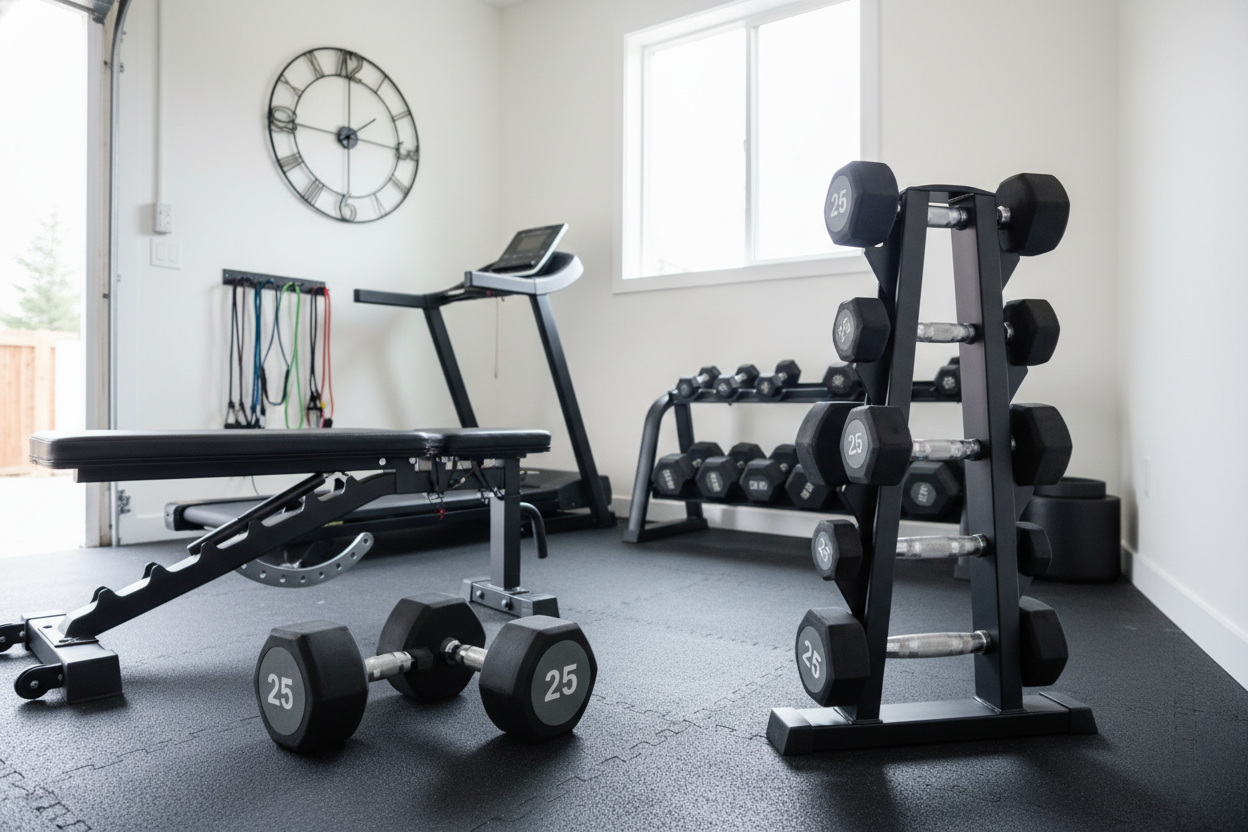
I have spent the better part of a decade mocking anything that looked like it belonged in a neon-soaked 1980s jazzercise video. My garage gym is a shrine to cast iron, rusted plates, and knurled steel that can tear the skin off your shins. But then I tried doing a 20-minute AMRAP in my living room on a Tuesday night while my kids were asleep, and suddenly, my 25 lb neoprene dumbbell became the most valuable tool in my arsenal.
- Floor Friendly: Won't dent your hardwood or crack your tiles.
- Superior Grip: Neoprene texture stays tacky even when your hands are soaking wet.
- Dead Silent: No metal-on-metal clanging during high-speed circuits.
- Fixed Weight: Faster transitions than any adjustable setup.
Confessions of a Garage Gym Iron Snob
For years, I believed that if a weight wasn't made of raw iron or encased in heavy-duty urethane, it wasn't 'real' equipment. I associated neoprene with 2-pound pink weights used for casual walks. I was wrong. When you move your workout from the garage to the living room, the priorities change. You aren't worried about your one-rep max; you're worried about the security deposit on your apartment or waking up the neighbors.
Keeping a pair of these inside the house changed my consistency. On days when I can't get to the garage, I grab the neoprene. It’s a different kind of training. It’s fast, it’s sweaty, and it’s surprisingly brutal. A 25 lb neoprene dumbbell is the 'Goldilocks' weight—heavy enough to make a hundred lunges feel like a death march, but light enough that I'm not worried about a catastrophic failure if I have to drop them quickly.
Why Grippy Coating Matters When You're Dripping Sweat
If you've ever tried to do high-rep snatches or swings with a smooth chrome handle while pouring sweat, you know the fear of a 25-pound projectile flying through your TV. Neoprene has a matte, slightly porous texture that actually gets easier to hold as things get damp. It’s like built-in chalk without the mess.
When looking through a collection of dumbbells, you'll see everything from knurled steel to smooth rubber. For high-intensity conditioning, the neoprene dumbbell 25 lbs option wins every time. The coating covers the entire bell, handle and all, providing a uniform surface that doesn't bite into your palms like aggressive knurling but won't slip like painted iron. It’s the practical choice for those 'metcon' days where the goal is constant movement.
Saving Your Hardwood Floors (And Your Shins)
Let’s talk about the 'thud.' If you drop a traditional rubber hex set on a wood floor, the hard internal cast iron core still sends a shockwave that can leave a nice circular dent. Neoprene is softer. It has a slight 'give' to it that acts as a shock absorber. It’s the difference between dropping a brick and dropping a heavy book.
I’ve used 25 pound neoprene dumbbells for 'man-makers' and renegade rows right on my living room floor without a mat. No scratches, no scuffs, and most importantly, no loud metallic clanging that sounds like a construction site. If you live in an upstairs apartment, your downstairs neighbors will thank you. Plus, if you accidentally clip your shin during a clean, the neoprene-wrapped edge is a lot more forgiving than a sharp-edged iron hex.
Ditching the Clunky Adjustables for Fast Metcons
I own some of the best clunky adjustable dumbbells on the market, and I love them for heavy benching. But for a fast-paced circuit? They’re a nightmare. When your heart rate is 170 BPM and you need to switch from thrusters to lateral raises, you don't want to be fumbling with dials, pins, or expansion kits. The mechanism can get jammed, or worse, you might not seat the plate correctly in your haste.
Grabbing fixed 25 lb dumbbells neoprene style is about speed. There are no moving parts to break. There is nothing to rattle. You pick them up, you do the work, and you put them down. In a workout where every second counts, the simplicity of a fixed weight is a massive advantage. I’ve found that I actually work harder because I’m not taking 'accidental' 30-second breaks just to adjust my equipment.
Are They Actually Heavy Enough to Build Muscle?
There’s a common misconception that you need a 100-lb stack to see results. If you’re trying to win a powerlifting meet, sure. But for 90% of us looking to stay lean and muscular, neoprene weights 25 lbs are plenty if you know how to program. The secret is time under tension and unilateral movement. A 25-lb overhead lunge or a single-arm floor press will humble you quickly if you slow down the tempo.
I often recommend starting with a 15, 20, and 25 lb dumbbell set for anyone building a home setup. This range covers everything from high-rep shoulder volume to heavy-ish lunges. If you find that the 25s are getting too easy for your primary movements, you don't necessarily need to go back to the garage. Upgrading to a 30 lb neoprene dumbbell is the next logical step to keep that floor-safe, grippy benefit while increasing the load. You'd be surprised how much muscle you can maintain—and build—with a single pair of 25s and some creativity.
Do neoprene dumbbells smell?
Unlike cheap rubber hex weights that smell like a tire fire for a month, neoprene is relatively odorless. You might get a faint 'new car' scent for a day, but it dissipates almost immediately.
Can I use these for push-ups?
Yes, but be careful. Because they are often rounder than hex dumbbells, they can roll. Look for neoprene weights with slightly flattened edges if you plan on doing a lot of floor work like renegade rows.
How do I clean them?
Just wipe them down with a damp cloth and a tiny bit of mild soap. Don't use harsh chemicals, as they can cause the neoprene to degrade or peel over time. Dry them off immediately to keep the grip tacky.
Share:
Why a Hammer Strength Dumbbell Costs So Much (And If It Matters)
The Angled Smith Machine Bench Press: Stop Guessing Which Way to Face