
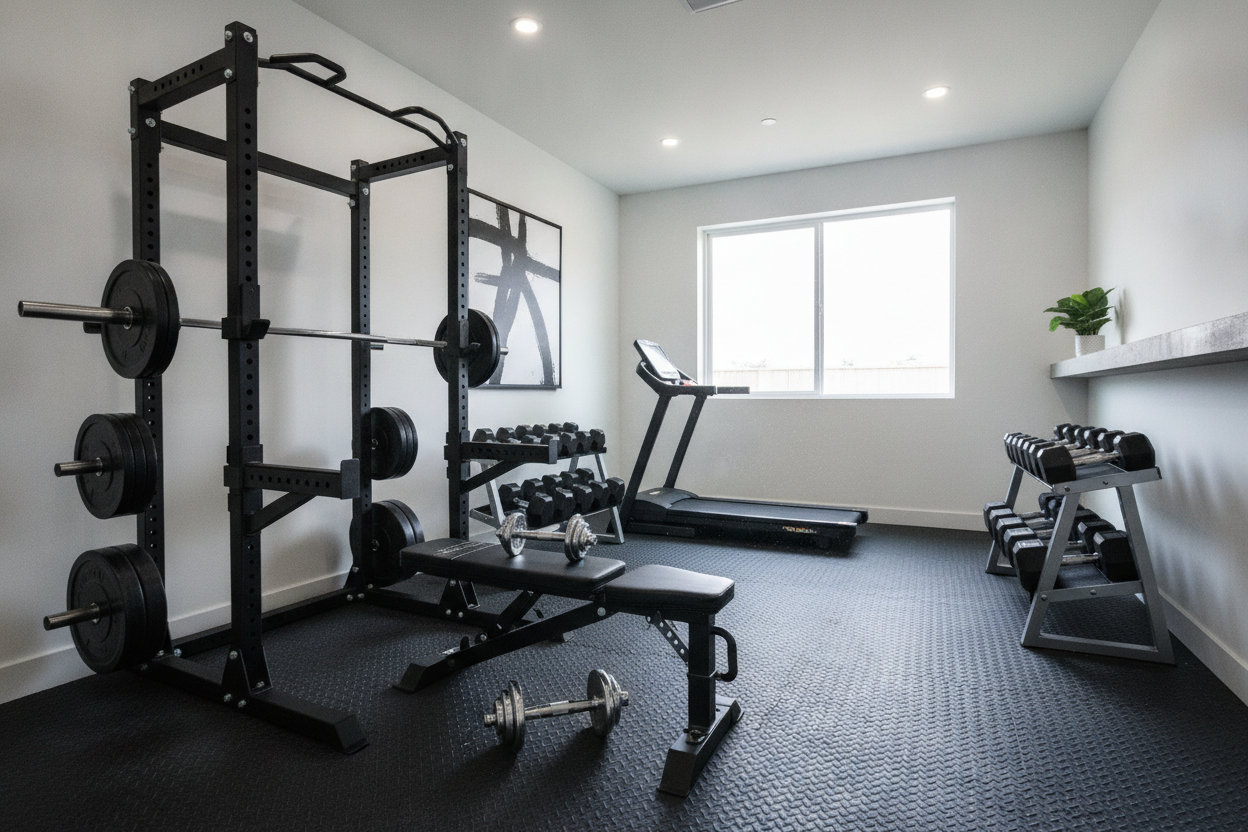
I remember the first time I got fed up with the local commercial gym. The crowds were insane, the music was worse, and the monthly fee just hiked again. I did what most people do: I pulled out my phone, typed in weight bench nearby, and drove to the closest sporting goods store with a 'buy it now' itch. I wanted to start training today, not next week.
That impulse cost me $220 and a near-miss injury three months later. The bench I bought felt fine in the aisle, but once I got it home and actually loaded 225 pounds on the bar, the whole frame groaned. Buying whatever is in stock locally is usually a recipe for wobbly pads, thin steel, and a piece of equipment you'll be trying to offload on Marketplace within a year.
Quick Takeaways
- Local retail benches are designed for easy shipping and shelf appeal, not heavy-duty stability.
- Combo sets with weights included almost always feature 'standard' 1-inch bars that are useless for serious progress.
- If you can shake the bench pad with one hand and it wobbles, it will feel like a seesaw under a heavy load.
- Plywood and cheap foam pads bottom out quickly, leading to shoulder discomfort during presses.
The Big-Box Trap: Why Local Inventory Usually Sucks
When you look for a workout bench in store, you aren't seeing the best equipment available; you're seeing the equipment that fits best on a retail shelf. Big-box stores prioritize 'knock-down' designs. This means the bench comes in twenty different pieces held together by cheap bolts. Every bolt is a potential point of failure and a guaranteed source of wiggle.
High-end benches use welded joints wherever possible. A welded frame is rigid; a bolted frame is a suggestion of stability. Furthermore, the steel gauge used in local inventory is usually 14-gauge or thinner. In the world of iron, a higher gauge number means thinner metal. While it looks okay in a glossy photo, thin steel flexes. If you're planning on doing anything more than light dumbbell curls, that flex becomes a major distraction when you're trying to stay tight during a max effort set.
Retailers also love 'one size fits all' designs. They want a bench that a 5-foot-tall person and a 6-foot-4 person can both use, which usually means the bench is too high for the average lifter to get proper leg drive. If you can't plant your feet firmly because the bench is 20 inches off the ground, your bench press is going to suffer.
The Danger of Buying a Weight Bench With Weights Nearby
It is the ultimate beginner's siren song: the all-in-one kit. You see a weight bench with weights nearby at a price that seems like a steal. You get the bench, a bar, and 100 pounds of plates. But here is the reality: those all-in-one beginner packages are built to a price point, not a performance standard.
The bars included in these sets are almost always 1-inch 'standard' bars, not 2-inch Olympic bars. Standard bars have a much lower weight capacity and won't fit the high-quality plates you'll want to buy later. Even worse, the pre-packaged weight set often consists of vinyl-coated weights filled with sand or concrete. They are bulky, they leak over time, and they are notoriously inaccurate. I’ve seen 25-pound vinyl plates that actually weighed 22 pounds on a scale.
The pads on these combo benches are usually the first thing to go. They use low-density foam that compresses to nothing the moment you sit down. You end up lying on a piece of hard plywood with a thin layer of imitation leather over it. It’s not just uncomfortable; it’s unstable. When your shoulders are digging into a hard board because the foam failed, you’re not focusing on the lift—you’re focusing on the pain.
How to Inspect an Exercise Bench Nearby (If You Must Buy Local)
If you absolutely cannot wait for shipping and need an exercise bench nearby today, you need to be an aggressive inspector. Don't just look at the price tag. Walk up to the floor model and perform the 'Shake Test.' Grab the top of the back pad and give it a firm side-to-side shove. If the hinge mechanism has more than a quarter-inch of play, walk away. That wobble will feel ten times worse when you have dumbbells over your face.
Check the steel. You want to see 11-gauge steel if possible, though you'll rarely find it in a typical sporting goods store. Look at the welds. Are they clean and continuous, or do they look like someone dripped hot glue on the metal? Check the pad gap. When the bench is flat, is there a massive 4-inch gap between the seat and the back pad? A huge gap will swallow your lower back and make your setup feel disjointed.
Real heavy-duty weight benches usually weigh 60 to 80 pounds or more. If you can pick the bench up with two fingers, it’s not heavy enough to support you and a heavy barbell safely. You want mass. Mass equals stability. If the box says the total weight capacity is only 300 pounds, remember that includes your body weight. If you weigh 200 pounds, that bench is only rated for a 100-pound lift. That is a dangerously low ceiling for anyone serious about training.
Marketplace Finds vs. Shipped Equipment: The Brutal Math
The temptation to find a weight bench in store is usually about speed. You want it now. But think about the 'Brutal Math' of a bad purchase. You spend two hours driving around, $30 in gas, and $200 on a mediocre bench. Six months later, you realize it’s trash, and you try to sell it for $50. You’ve lost $180 and hours of your life.
Compare that to waiting four days for a properly engineered adjustable weight bench to arrive at your door. You get a piece of equipment designed by people who actually lift, with 11-gauge steel, high-density grippy vinyl, and a tripod design that doesn't wobble. The cost-per-use over five years is pennies. A good bench is a foundation. If your foundation is shaky, your progress will be too.
I’ve made the mistake of buying for convenience. I once bought a bench from a local classified ad because it was 'only ten miles away.' I got it home, and the back pad was so narrow it felt like I was balancing on a tightrope during chest presses. I couldn't get my lats set, my power dropped, and I ended up buying a real bench online anyway. Save yourself the double-spend.
FAQ
Is a flat bench better than an adjustable one for a home gym?
If you only have space for one, go adjustable. It allows for incline work which is vital for upper chest development. However, a dedicated flat bench is always more stable because it has no moving parts.
What is the ideal height for a weight bench?
The IPF standard is around 17 to 18 inches. Anything taller than 19 inches makes it difficult for most people to get their feet flat on the floor for proper leg drive.
How wide should the pad be?
Look for a pad between 11 and 12 inches wide. Anything narrower doesn't support the shoulder blades properly; anything wider can interfere with your range of motion at the bottom of the press.
Share:
I Bench Tested a Cheap Fitness Gear Dumbbell So You Don't Have To
Why Finding Real Adjustable Dumbbells 150 Lbs Is So Frustrating