
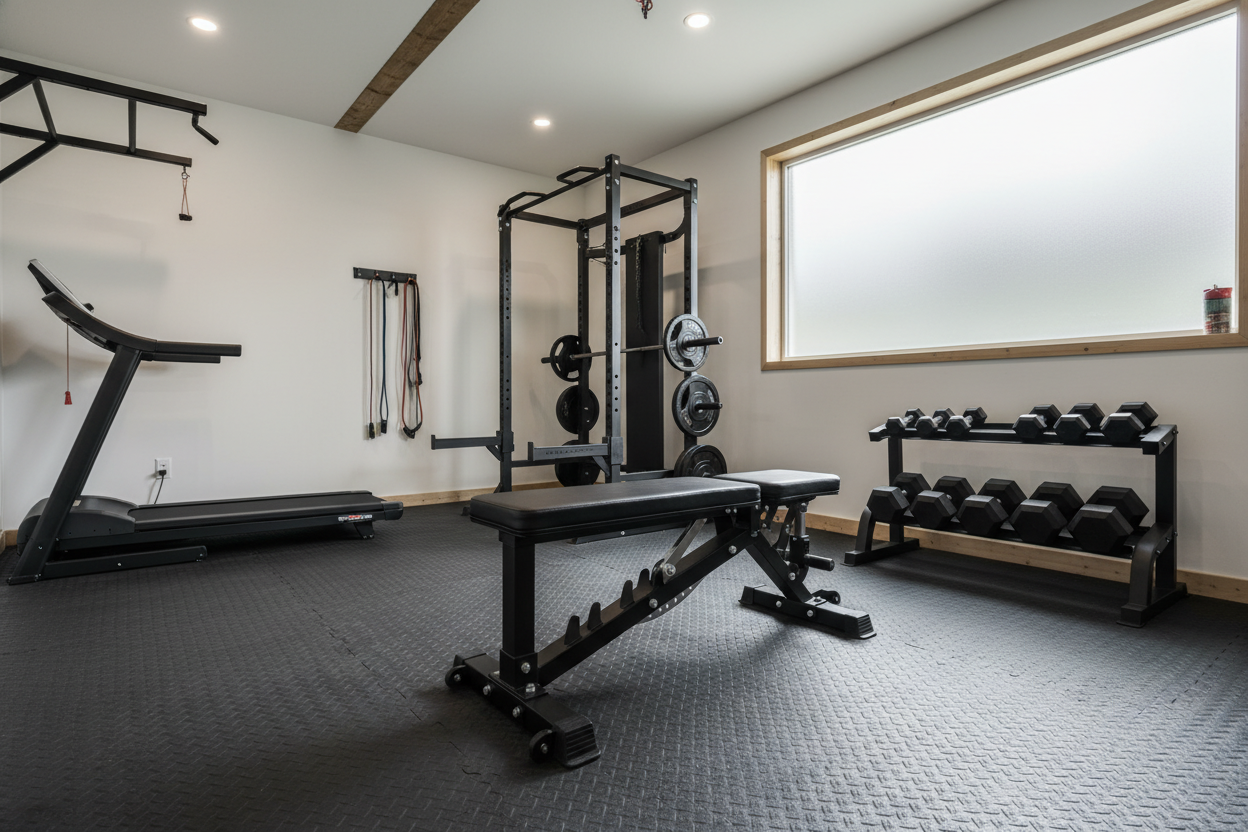
I remember staring at my garage floor, realizing I had about 12 square feet of space left before my car was permanently relegated to the driveway. I did what everyone does: I started hunting for a multi function weight bench that promised to replace an entire commercial gym. It looked great in the photos—preacher pads, leg developers, and enough pins to make it look like a piece of aerospace engineering. But once I got it home, the reality was a lot more wobbly.
Quick Takeaways
- Most leg attachments have terrible pivot points that don't align with your knees.
- Multi-piece pads often create massive gaps that swallow your lower back during heavy presses.
- Thin 14-gauge steel is common in budget units; look for 11-gauge if you plan on lifting over 225 lbs.
- Integrated lever arms are far superior to pin-loaded attachments for a true multi-purpose workout bench.
The Swiss Army Knife Problem of Garage Gyms
The initial appeal of a multi-purpose bench is undeniable. You see a single piece of gear that claims to handle your chest, back, and legs, and your brain immediately calculates the hundreds of dollars you'll save. Manufacturers love this. They market these multifunctional weight benches to beginners who are more impressed by a long list of features than by the thickness of the steel frame.
The problem is that a multi exercise bench is often a jack of all trades and a master of none. When a company tries to cram ten different exercises into one frame, they usually compromise the geometry of the most important one: the bench press. You end up with a multi-functional bench for full-body workout that feels unstable the second you unrack a challenging weight. Doing ten things poorly is a recipe for a frustrated workout and, eventually, a dusty piece of equipment in the corner.
Why Most Leg Developer Attachments Completely Miss the Mark
Let's talk about the leg developer on a typical multi gym weight bench. Most of them are designed as an afterthought. The biomechanics are usually a nightmare. I've tested dozens of these, and the foam rollers almost always pinch your shins or sit too high on the ankle, putting weird shear force on your knee joints.
Then there is the range of motion issue. On a budget multi gym bench with weights, the weight pegs often hit the floor before you reach full extension, or the resistance curve is so front-loaded that it feels heavy at the start and completely dead at the top. Loading plates between your feet while sitting on a narrow pad is an awkward dance that usually results in stubbed toes. If the pivot point doesn't align with your knee cap, you aren't building quads; you're just wearing out your joints.
The Wobble Factor: How Extra Features Ruin Your Bench Press
Stability is the foundation of strength. If you're constantly micro-adjusting to keep a multi position workout bench from tipping, you aren't focusing on the mind-muscle connection. Every extra pin, hinge, and attachment slot on a multi-functional weight bench introduces a tiny bit of 'play' into the system. Over time, those tiny wobbles turn into a bench that feels like it's built on Jello.
The pads are the biggest victim. To accommodate a preacher curl or a leg developer, these benches often use three or four separate pad sections. This creates huge gaps. When you're trying to set your 'shelf' for a heavy press, your shoulder blades end up falling into a hole. Contrast this with the solid, high-density foam foundation you get from a quality weight bench. Without a solid surface to drive your upper back into, your scapular retraction disappears, and your shoulders take the brunt of the load. A multi workout bench shouldn't feel like a puzzle you're trying to balance on.
What a Real All-In-One Setup Actually Looks Like
It’s not all bad news. Some manufacturers are finally moving away from the flimsy pin-and-hole attachments of the 90s. The new wave of multi purpose bench for home gym design uses heavy-duty, bearing-driven lever arms. Instead of a shaky leg extension that feels like it's going to snap, these systems use thick steel arms that mimic the feel of commercial plate-loaded machines.
If you want a multi-functional adjustable weight bench that actually works, look for one that integrates these arms directly into the frame. For example, a chest press machine with independent arms provides a vastly superior workout to cheap, wobbly attachments. It allows for natural movement patterns and handles heavy loads without the frame twisting. This is the difference between a 'fitness toy' and a piece of professional-grade equipment that stays in your gym for a decade.
3 Rules Before You Buy a Do-It-All Bench Station
Before you drop cash on a multi use weight bench, check the weight capacity—and I don't just mean the total. Look for the independent capacity of the pad versus the attachments. If the bench is rated for 600 lbs but the leg developer is only rated for 100 lbs, you'll outgrow it in two months. High-quality multi-functional bench construction usually involves 2x3 or 3x3 inch steel tubing.
Second, prioritize pad density over the number of exercises listed on the box. If you can pinch the foam and feel the wood underneath with your thumb, it’s going to bottom out during a heavy set. Finally, look for bolt-together construction or heavy-duty pop-pins. Avoid anything that looks like it belongs in a late-night infomercial. A real multi function workout bench should feel heavy when you try to move it; if it's light enough to carry with one hand, it's not going to support your 1RM safely.
My Personal Experience
I once bought a multi-functional bench press station from a big-box store because it had a 'lat pull-down' attachment. The first time I tried to use it, the cable felt like it was dragging through sand, and the whole bench tipped forward because there wasn't enough weight on the other end to counter my pull. I ended up selling it for 40 bucks on Facebook Marketplace just to get it out of my sight. Now, I stick to benches with a 3-post design or heavy-duty lever systems. Don't let a low price tag trick you into buying a glorified lawn chair.
FAQ
Can I use a multi function weight bench for squats?
Generally, no. Unless it’s a full power rack combo, most multi-purpose benches aren't designed to hold a barbell at shoulder height for squats. Trying to 'walk it out' from a bench rack is dangerous and awkward.
Are the leg developers on these benches effective for bodybuilding?
They can be okay for high-rep finishers, but they rarely offer the resistance curve needed for heavy hypertrophy work. If you're serious about leg day, you’re better off with a dedicated leg extension machine or high-quality lever arms.
What is the ideal pad width for a multi bench?
Look for a pad that is 11 to 12 inches wide. Anything narrower feels like a balance beam; anything wider can interfere with your arm path during the bottom of a bench press.
Share:
I Finally Found an All In One Home Gym With Leg Press Worth the Space
Why Free Weight At Home Gyms Best The Expensive Smart Rigs