
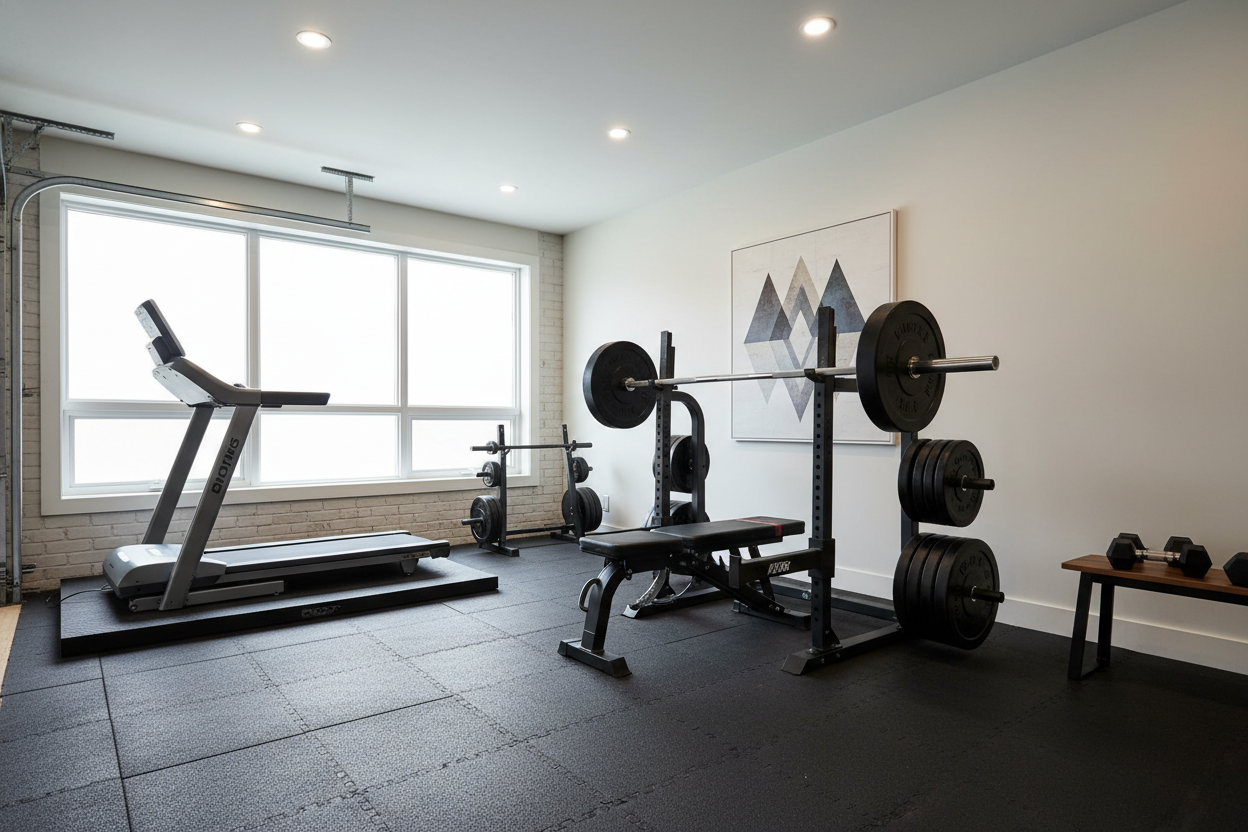
I still remember the first time I felt a bench frame flex under my shoulder blades. I was chasing a 225-lb PR in my garage, and the bargain rack I’d bought at a big-box store started to sing a song of structural failure. It’s a terrifying feeling that makes you realize your olympic bar and bench set isn't just equipment—it's a safety device. If you're tired of outgrowing your gear every six months, it's time to stop shopping for toys and start looking at tools.
Most people start their home gym journey by scrolling through Amazon at midnight, looking for the lowest price tag. They end up with a setup that wobbles when they rack the weight and a bar that feels like a greased pipe. I’ve been that guy, and I’ve got the scarred drywall to prove it. Buying right the first time is actually the cheapest way to build a gym.
Quick Takeaways
- Avoid all-in-one bundles from non-specialty retailers; they usually cut corners on the bar's steel quality.
- Look for a bench with at least an 800-lb total weight capacity to ensure it doesn't flex under heavy loads.
- Prioritize a barbell with a 28mm to 29mm diameter and a minimum 190,000 PSI tensile strength.
- Ensure the bench pad is at least 11-12 inches wide to support your scapula during heavy drives.
The 'Starter Bundle' Trap
We've all seen them: the massive boxes sitting in the aisle of a sporting goods store labeled as a complete olympic bench press set with weights for under $300. It looks like a steal until you realize the bar is made of two pieces of hollow pipe bolted together and the bench is held up by bolts the size of a toothpick. These bundles are designed for people who intend to use them as clothes hangers, not for people who actually want to get strong.
The biggest issue is the lack of balance in quality. Usually, you’ll get a decent set of cast iron plates, but the bar and bench are sacrificial. I’ve seen the dangers of cheap olympic bar packages firsthand—bars that bend permanently after a 315-lb squat and benches that tip over because the footprint is too narrow. When you buy a pre-packaged set, you're often paying for the convenience of one box while sacrificing the integrity of the two things keeping the weight off your chest.
If you’re serious about progressive overload, those 300-lb capacity limits on budget benches will become a liability faster than you think. Remember, that 300 lbs includes your body weight. If you weigh 200 lbs, you’ve only got 100 lbs of 'safe' room on the bar. That’s not a gym; that’s a ticking clock. Scrutinize the individual components of any bundle before you swipe your card.
The Three Bench Specs You Can't Ignore
A heavy-duty bench is the foundation of your upper body training. First, look at the steel gauge. If it’s not 11-gauge or 14-gauge steel, keep walking. Thin steel vibrates and flexes, which kills your confidence when you're trying to grind out a final rep. A solid versatile weight bench with barbell rack should feel like it’s bolted to the earth even if it isn't.
Second, check the pad width and density. I once owned a bench with a 9-inch pad that felt like I was trying to balance on a balance beam while pressing. You want a 12-inch wide pad. This supports your shoulders properly, reducing the risk of impingement and allowing you to actually use your legs to drive the weight up. The foam should be high-density; if you can feel the plywood base with your thumb, your back will feel it under a heavy bar.
Third, look at the J-cups and uprights. Are they adjustable? Many cheap sets have fixed uprights that are either too high or too low for your arm length. This forces you to do a 'mini-rep' just to get the bar out of the rack, which is a great way to wreck your rotators. You want Westside hole spacing or at least plenty of adjustment points so you can set your liftoff height perfectly.
Don't Compromise on the Iron
The barbell is the most important piece of equipment you will ever own. It’s the direct interface between you and the weight. Most budget bars in an olympic bar and bench set have what I call 'passive' knurling—it’s basically smooth. As soon as you sweat, that bar is going to slide in your hands. You want a medium-aggressive knurl that bites into your palms without drawing blood every session.
Tensile strength is the real metric of a bar's quality. Anything under 165,000 PSI is likely to deform over time. I aim for 190,000 PSI or higher. This ensures the bar has 'whip' (it bends and snaps back) rather than 'set' (it stays bent). Also, pay attention to the sleeves. Budget bars often use bolts to hold the sleeves on, which eventually loosen and rattle. Look for snap-ring construction and bushings that provide a smooth, consistent spin.
Another common trap is the weight of the bar itself. You might assume every big bar is 45 lbs, but budget manufacturers often ship bars that weigh 35 or 40 lbs to save on shipping and material. This means the real weight of your bench press bar might be throwing off your training logs. If you're following a program like Starting Strength or 5/3/1, accuracy matters. A bar that isn't a true 20kg/45lb standard is just making your math harder and your progress slower.
Piecing Together the Perfect Setup
You have two choices: buy a high-end curated bundle from a reputable strength brand, or piece it together yourself. If you have the budget, a multi function bench press set from a dedicated lifting company is usually the way to go. These sets are designed by people who actually lift, meaning the rack heights are correct, the bar knurling is functional, and the bench won't collapse under a heavy load.
If you're on a tighter budget, I recommend buying a high-quality barbell first, then finding a used power rack or heavy-duty bench on the secondary market. You can always buy more plates later, but you can't 'fix' a cheap bar. A good bar will last 20 years; a cheap one will last 20 weeks. Look for sets that allow for expansion, such as those with plate storage or spots for dip attachments.
The goal is to buy gear that scales with you. If you’re a beginner now, you won’t be in a year. Don't buy equipment that you’ll have to sell on Facebook Marketplace at a loss in twelve months because it can't handle your new strength. Invest in 11-gauge steel and high-tensile iron today, and you’ll never have to buy them again.
Personal Experience: My $150 Mistake
Early in my lifting days, I bought a 'complete' set from a local liquidator. I was so proud of the deal I got. Three months later, I was doing floor presses because I no longer trusted the bench to hold 225 lbs. The bar had developed a permanent slight curve, making every lift feel lopsided. I ended up spending more money replacing that junk than I would have spent on a mid-tier Rogue or Rep setup from the start. Learn from my ego; buy the heavy steel first.
Frequently Asked Questions
What is the difference between a standard and Olympic bar?
Standard bars are 1 inch in diameter and usually have a very low weight capacity. Olympic bars are 2 inches at the sleeves, much stronger, and designed to handle hundreds of pounds safely. Never buy a 1-inch bar for serious strength training.
How much floor space do I need for an Olympic bench set?
An Olympic bar is 7.2 feet long. You need at least 9 to 10 feet of width to safely load plates without hitting walls. For the length, 6 to 8 feet of depth is usually plenty for the bench and a spotter area.
Can I use bumper plates on a bench press set?
Yes, but they take up more room on the sleeve. If you're a heavy lifter, you might run out of room on the bar if you use thick bumpers. For benching, thin cast iron or machined plates are usually preferred to keep the center of gravity tight.
Share:
Is the Best All-In-One Gym Machine Just a Huge Compromise?
Are $50 Benches for Working Out Actually Safe?