
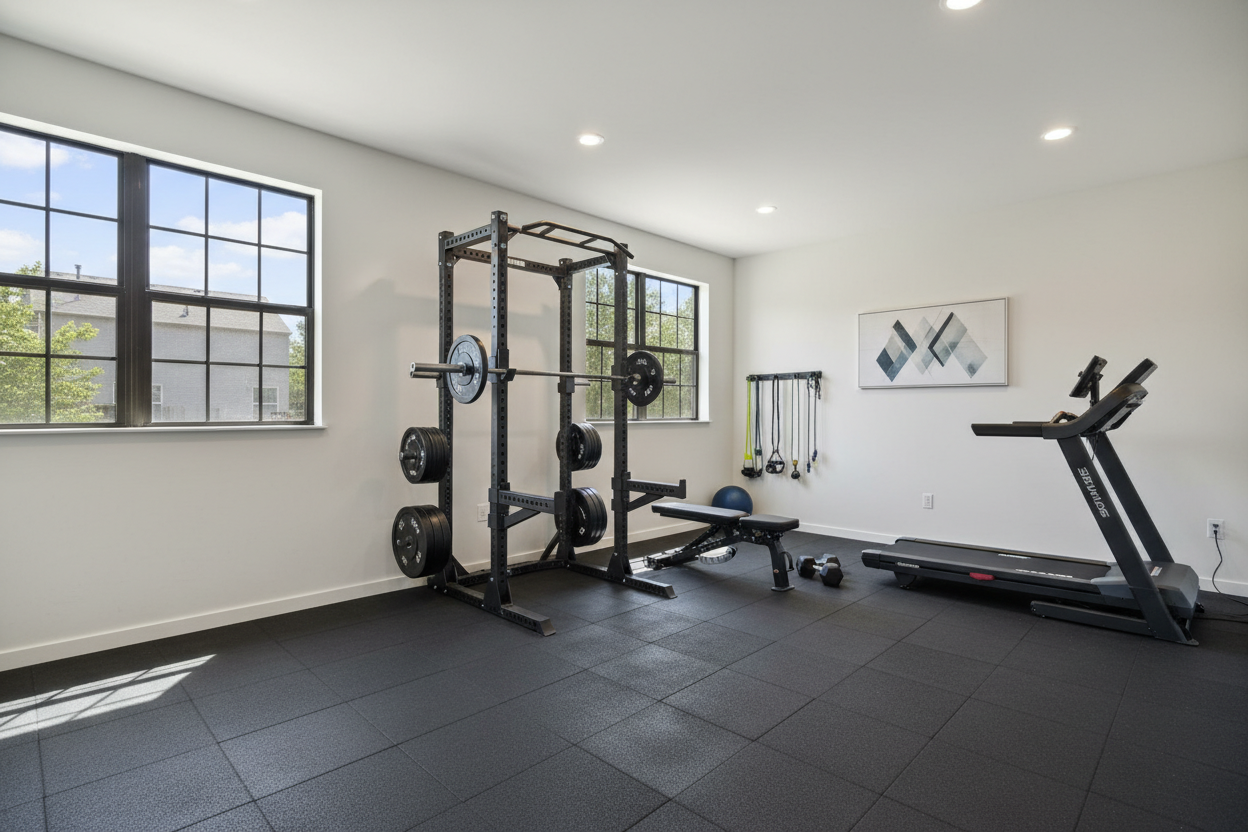
I remember the night I finally quit my commercial gym. I was waiting fifteen minutes for a squat rack while a teenager filmed a TikTok nearby, and I realized I could buy my own equipment for the cost of two years of dues. I went home and started scrolling, convinced I needed a complete home gym that looked exactly like the local warehouse box. I was wrong.
Building a training space isn't about collecting the most pieces of steel; it is about choosing the right ones. Most people end up with a garage full of 'good deals' that they never actually touch because the space is too cramped to move. I have tested the 11-gauge steel racks and the flimsy Amazon specials, and I can tell you that a functional setup is much simpler than the influencers make it look.
- Prioritize the Big Four: Ensure your gear allows you to squat, hinge, push, and pull without compromise.
- Footprint is King: Measure your ceiling height and floor space twice before ordering anything with a pull-up bar.
- Buy Once, Cry Once: A cheap barbell with bad knurling will ruin your motivation faster than a bad workout.
- Modular is Better: Start with a solid foundation and add specialized pieces only when your progress stalls.
The Frankenstein Equipment Problem
We have all seen it: the Facebook Marketplace special. A mismatched bench from 1994, some rusted hex dumbbells, and a pull-up bar that looks like it might snap the door frame. While it is cheap, this rarely results in a functional at home full gym. It creates a psychological barrier. When your gym is a cluttered mess of random gear, you are less likely to step out there at 6:00 AM when it is freezing cold.
A cohesive space matters. When your plates actually fit the bar properly and your bench doesn't wobble during a heavy press, you train harder. Chasing random deals often leads to a 'Frankenstein' setup where nothing quite works together, leaving you with a garage that feels like a storage unit rather than a place of high-performance training.
What Actually Makes a Setup 'Complete'?
A setup is complete when it allows you to hit every major movement pattern: squat, hinge, vertical push/pull, and horizontal push/pull. You do not need twenty machines to do this. You need versatility. When looking for home gym solutions, I look for pieces that serve at least three different purposes. If a machine only does one thing and takes up 10 square feet, it doesn't belong in a residential garage.
Your complete home gym equipment should be centered around a focal point. For most of us, that is a rack. Everything else—the dumbbells, the bands, the benches—should orbit that central piece. If you can't perform a heavy deadlift and a pull-up in the same 8x8 area, your layout needs a rethink.
The Foundation: Heavy Iron and a Rack
If you are building a home gym for strength training, 80 percent of your results will come from a quality power rack, an Olympic barbell, and an adjustable bench. I prefer a 3x3-inch 11-gauge steel rack because the stability is unmatched. You shouldn't feel like the rack is going to tip over when you re-rack a 300-lb squat.
Invest in a bar with decent whip and sleeves that actually spin. If you buy a cheap 'box set' barbell from a big-box retailer, the bushings will seize up within six months, and your wrists will pay the price during cleans or presses. A solid 20kg bar and a stack of bumper plates are the heartbeat of any serious setup.
Bridging the Gap with Cables and Machines
Free weights are great, but isolation work is where you really round out a physique. This is where modern Smith machine home gym station units have changed the game. Unlike the clunky, friction-heavy machines of the 90s, today's hybrid systems combine cable pulleys with a guided bar, saving you from needing a separate functional trainer.
Cables provide constant tension that you just can't get from a barbell. For face pulls, tricep extensions, and lat pulldowns, a smooth pulley system is a lifesaver for your joints. If you are tight on space, look for a rack-mounted cable attachment rather than a standalone tower.
Are All-In-One Systems Actually Worth the Cash?
I get asked this constantly: should you buy a Does an All-in-One Machine Actually Equal a Complete Gym for Home? or piece it together? If you are a minimalist or have a very small footprint, an all-in-one complete home gym system is often the smarter financial move. It eliminates the need for five different pieces of gear and usually comes with integrated storage for your plates and bars.
The downside is the fixed path. If you are a competitive powerlifter, you need the specificity of a standalone rack. But for the person who wants to stay lean, build muscle, and move well, the convenience of having a crossover, a Smith machine, and a squat rack in one footprint is hard to beat. Just make sure the cable ratio (usually 2:1 or 1:1) matches the type of lifting you plan to do.
The Space and Budget Reality Check
Don't buy a GHD or a massive leg press until you've lived with your basic setup for three months. You need to see how you move in the space. A personal home gym should grow with your strength. I always recommend starting with the 'Big Three' (Rack, Bar, Bench) and then adding specialized tools like a strength training glute bench once you realize your posterior chain needs extra attention.
Budget for flooring first. Do not drop iron on bare concrete. Horse stall mats from a farm supply store are the gold standard—they are 3/4-inch thick, nearly indestructible, and much cheaper than 'specialty' gym flooring. If you can't afford a full set of dumbbells, a pair of high-quality adjustables that go up to 80 or 90 lbs will save you both a fortune and a wall of rack space.
Stop Overcomplicating Your Setup
The best equipment is the stuff you actually use. I've seen guys with $20,000 setups who just use the treadmill as a clothes rack, and I've seen guys build pro-level physiques with a sandbag and a pull-up bar. Build your gym for the athlete you are today, but leave just enough room for the athlete you want to be next year.
Personal Experience: My Biggest Mistake
Early on, I bought a cheap, bolt-together squat stand because it saved me $200. The first time I tried to rack a heavy set of squats, the whole thing shifted six inches backward. It was terrifying. I sold it for a loss a week later and bought a real power rack. I learned the hard way that when it comes to holding several hundred pounds over your head, 'good enough' isn't good enough. Buy the heavy-duty steel the first time.
FAQ
How much ceiling height do I need for a home gym?
Most standard power racks are about 84 to 92 inches tall. You want at least 12 inches of clearance above the rack if you plan on doing pull-ups, otherwise, you will be hitting your head on the ceiling every rep.
Are bumper plates better than iron plates?
If you are lifting in a garage or spare room, bumpers are quieter and safer for your floor. Iron plates are thinner, allowing you to fit more weight on the bar, but they make a lot of noise and can crack concrete if you don't have thick mats.
Do I really need a 1,000-lb capacity bench?
Yes. Even if you only press 200 lbs, that capacity rating is a proxy for build quality. A bench rated for 1,000 lbs will have better welding, thicker padding, and won't wobble when you are trying to stay tight during a lift.
Share:
Stop Guessing Your Real Smith Machine Resistance Weight
I Wasted Years on Bad Exercise Equipment Routines (Do This Instead)