
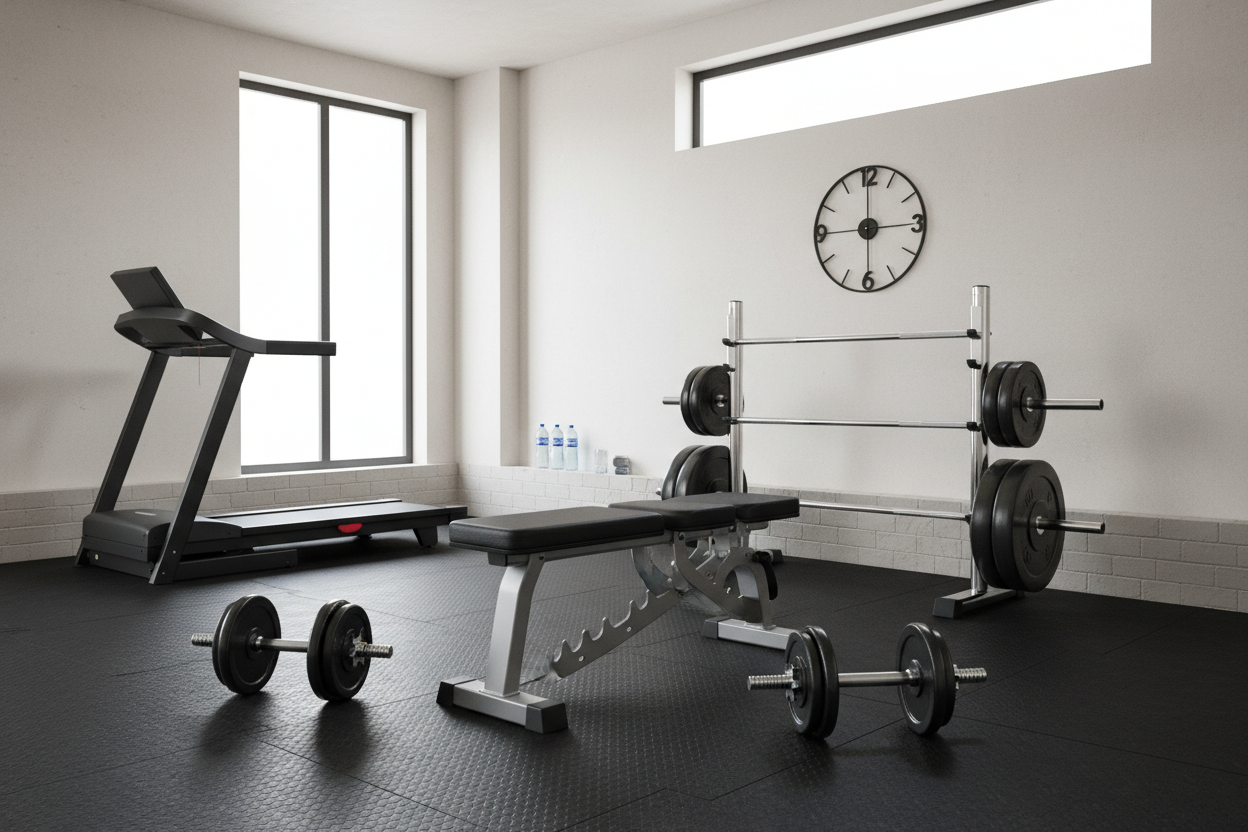
I remember the first time I tried to bench 225 lbs on a $70 Amazon special. The frame groaned, the vinyl felt like a Slip 'N Slide, and I spent more energy trying not to tip over than actually moving the bar. It was a wake-up call that a bench for weight lifting isn't just a marketing term—it's a safety requirement for anyone moving beyond the pink dumbbell stage.
- Stability is more important than weight capacity ratings.
- Pad density directly impacts your power transfer and shoulder health.
- The height of the bench dictates whether you can actually use leg drive.
- Adjustment mechanisms are common failure points in cheap 'workout' benches.
The Dangerous Illusion of the 'Do-It-All' Fitness Pad
Most people start their home gym journey with a generic a workout bench. It's usually lightweight, it folds in half, and it fits under a bed. While that's fine for seated curls or light overhead presses, it becomes a liability the moment you slide it into a rack. These 'fitness pads' are built with thin-walled, 14-gauge steel (or worse) that flexes under load.
A dedicated bench for weight lifting is a different animal. It's built with 11-gauge steel and features a tripod or wide-base design that stays glued to the floor. When you're unracking a heavy barbell, you need to know the foundation won't shift. If the bench weighs less than you do, it's probably not meant for heavy triples.
Why the Gym Bench Seat Dictates Your Leg Drive
If you think the gym bench seat is just a place to sit, you're missing out on half your strength. Leg drive is the secret to a massive press, but you can't get it if the bench height is wrong. Most cheap benches are 19 or 20 inches tall to accommodate the folding hinges. That's too high for anyone under 6 feet tall to get their feet flat and driven into the floor.
A commercial-grade frame typically adheres to the 17-inch height standard. This allows you to tuck your feet, arch your back, and transfer force from the floor through your hips and into the bar. If your feet are dangling or you're on your tiptoes, your power is leaking out of the bottom of the lift.
The Squishy Pad Problem: Stop Sinking Into Your Lift
There is a massive difference between 'comfortable' and 'functional' when it comes to a weight bench seat. Cheap benches use soft, open-cell foam that feels great when you first sit down. However, once you put 200 lbs on your chest, you'll sink right through that foam until your spine is hitting the plywood base. This instability is a nightmare for your rotator cuffs.
You want high-density, closed-cell foam. It should feel stiff—almost hard—to the touch. This firmness allows your shoulder blades to retract and 'bite' into the pad, creating a stable platform to press from. I always tell people to check the specs that make a bench feel solid before buying. Look for a pad thickness of at least 2.5 inches with a grippy vinyl cover that prevents you from sliding toward the head of the bench.
Hinge Strength and the Incline Press Trap
If you're using an adjustable weight bench, the adjustment mechanism is the single point of failure. Many 'workout' benches use a thin pop-pin that handles all the shear force. I've seen these pins bend and even shear off when a lifter drops heavy dumbbells back onto their shoulders. It's a terrifying way to find the limits of your equipment.
Real lifting benches use a ladder-style adjustment or a massive steel pin reinforced by a secondary housing. This ensures that the force is distributed across the frame rather than a single 10mm piece of cheap metal. If you're doing incline work, the 'gap' between the seat and the back pad should also be minimal so you don't lose your positioning mid-set.
Is It Time to Upgrade Your Foundation?
If your bench wobbles when you sit down, or if you feel the frame flexing during your warm-up sets, you've outgrown your gear. A solid bench is an investment in your safety and your PRs. For those who have reached their limit with free weights or have nagging injuries, transitioning some of that volume to a chest press machine can be a smart move, but nothing replaces a rock-solid flat or adjustable bench.
Personal Experience: The Lesson of the 'Wobble'
I once owned a bench that claimed a 600-lb capacity. On paper, it was plenty for my 300-lb bench. In reality, the tripod base was so narrow that I nearly flipped the whole thing over while doing heavy one-arm rows. I realized then that 'weight capacity' doesn't mean 'stable while moving.' I ended up selling it for $20 just to get it out of my sight and bought a real 11-gauge steel beast that hasn't budged in five years.
FAQ
Is a flat bench better than an adjustable one?
Flat benches are always more stable and have no 'gap' in the pad. If you are a competitive powerlifter, a flat bench is the gold standard. If you want versatility for inclines and seated work, a high-quality adjustable is the way to go.
How wide should the pad be?
12 inches is the industry standard. Anything narrower feels like a balance beam; anything wider can actually block your shoulder blades from moving naturally through the lift.
Does the vinyl texture really matter?
Absolutely. Slick vinyl is dangerous. You need a 'sticky' texture so that when you set your lats and drive your legs, your upper body stays exactly where you put it.
Share:
What Is the Precor Icarian Line Smith Machine Bar Weight, Actually?
I Survived on Water Jugs Before Buying Real Household Fitness Equipment