
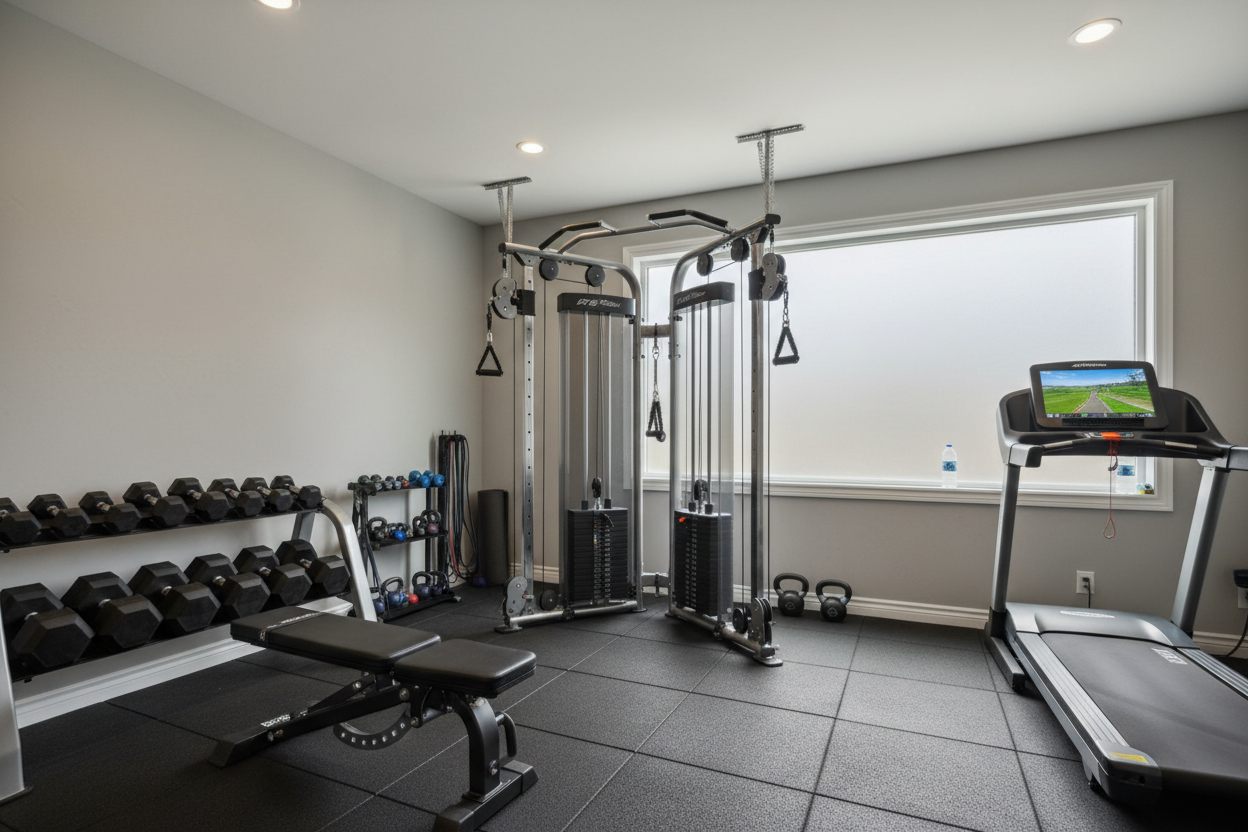
I remember staring at my garage wall last winter, trying to figure out if I could cram another piece of iron in there without hitting my car door. My commercial gym just hiked dues for the third time, and I was tired of waiting 15 minutes for the cable crossover just to do three sets of face pulls. That is when I started hunting for functional trainer home gyms that actually felt like the real deal.
Adding a dual-pulley rig is a massive commitment. It is not just the money—it is the footprint. But after testing dozens of these machines, I have realized that the right setup makes your garage feel like a pro facility, while the wrong one becomes a very expensive clothes rack.
Quick Takeaways
- Look for 11-gauge steel frames; anything thinner will wobble during heavy rows.
- The pulley ratio (2:1 vs 1:1) is the most misunderstood spec in the industry.
- Aluminum pulleys are a non-negotiable upgrade for smoothness.
- Integrated rack systems are the best way to save floor space in tight garages.
The Cable Machine Dilemma: Do You Actually Need One?
Let’s be real: you can build plenty of muscle with just a barbell and a rack. But free weights suck at maintaining constant tension through a full range of motion. That is where a cable machine functional trainer shines. It fills the gaps in your programming that dumbbells simply cannot touch—think high-to-low woodchops, cable flies, and consistent resistance on lateral raises.
For most lifters, multi functional trainers represent the ultimate versatility piece. If you are tired of your accessory work feeling clunky or incomplete, cables are the solution. The trade-off is the floor space. You are essentially trading about 15 to 20 square feet for the ability to perform hundreds of movements. In my experience, if you have the room, it is the single best addition you can make after a solid power rack.
What Separates the Best Home Functional Trainers From Cheap Junk
When you are looking at a functional trainer machine for sale, do not just look at the price tag. Look at the guide rods. Cheap machines use thin, chrome-plated rods that flake and cause the weight plates to stutter. You want solid steel, polished to a mirror finish. This is what makes the best home functional trainers feel buttery smooth.
Then there are the pulleys. Most entry-level functional trainer equipment comes with nylon plastic pulleys. They work fine for a month, but eventually, they develop flat spots or start to squeak. I always recommend upgrading to aluminum pulleys. The difference in friction is night and day, especially when you are pulling heavy. Aluminum does not warp under load, meaning your functional cable path stays true for years.
The 2:1 vs 1:1 Pulley Ratio Trap (And Why It Matters)
This is where most people get burned. Most home functional trainers use a 2:1 ratio. This means if you have 200 lbs on the stack, you are actually feeling 100 lbs of resistance at the handle. Why do manufacturers do this? It makes the cable travel longer, which is essential for cross functional trainer movements like lunges or sprints where you need a lot of reach.
A 1:1 ratio is 'true' weight—100 lbs on the stack is 100 lbs in your hand. This is great for heavy lat pulldowns, but the cable travel is much shorter. For a garage gym functional trainer, the 2:1 ratio is usually the sweet spot because it allows for more 'functional' movement variety, even if it means you have to buy a heavier weight stack to get the resistance you want for rows.
How to Save Space Without Sacrificing Stability
If you are working with a one-car garage, you do not have room for a standalone functional trainer compact unit and a full power rack. The smartest move I have seen lately is combining your squat stand with your cables into one footprint. It anchors the machine to the floor (and the wall, usually), giving you commercial-grade stability without the 8-foot wide footprint of a standalone unit.
Before you buy, grab a tape measure. I have seen too many people forget to account for the 'pull out' distance. You need at least three feet of clearance in front of the machine to actually use it. If you are tight on space, check out my guide on how to fit a functional trainer for home gym setups without losing your parking spot.
Should You Just Buy a Used Functional Trainer Cable Machine Instead?
The used functional trainer cable machine market is tempting. You might find an old Life Fitness or Matrix unit from a closing gym for $1,500. But be warned: functional trainer gym equipment from commercial settings has lived a hard life. The cables are often frayed, the bearings are shot, and getting replacement parts for a 10-year-old model is a nightmare.
Unless you find a mint-condition steal, an affordable functional trainer designed for residential use is usually a better bet. You get a warranty, fresh cables, and a machine that hasn't been covered in some stranger's sweat for a decade. Plus, modern residential units are often more functional trainer compact than the bulky monsters found in commercial clubs.
Final Verdict: Pulling the Trigger on a Dual Pulley Rig
If you are serious about hypertrophy or rehab work, the best functional trainer garage gym setup is one that integrates with your existing rack. It saves money, saves space, and gives you the most bang for your buck. If you are in the north, finding the best functional trainer canada suppliers will save you a fortune on shipping those heavy weight stacks.
Check your ceiling height, decide on your ratio, and don't skimp on the pulley material. Your elbows and shoulders will thank you later.
My Honest Mistake
I once bought a plate-loaded functional trainer cable system because it was $400 cheaper than a selectorized stack. I hated it within a week. Loading and unloading plates for every single set of crossovers is a flow-killer. If you can swing the extra cash, get the weight stacks. The ability to just move a pin and keep training is worth every penny of the 'lazy tax.'
FAQ
Can I perform pull-ups on these machines?
Most best functional trainer home gym units include a multi-grip pull-up bar across the top. Just make sure your ceiling height allows for your head to clear the bar without hitting a joist.
Are the cables replaceable?
Yes. In fact, you should inspect your functional cable every six months for fraying. Most manufacturers sell replacement kits, or you can get custom lengths made fairly cheaply.
How much weight stack do I actually need?
If you are using a 2:1 ratio, aim for at least 160 lbs per side. This gives you 80 lbs of actual resistance, which is plenty for most isolation work. If you plan on doing heavy rows, look for 200 lbs or more.
Share:
I Finally Tried a Smith Machine That Moves Forward and Back
Why Every Rig Feels Cheap After an Atlantis Smith Machine