
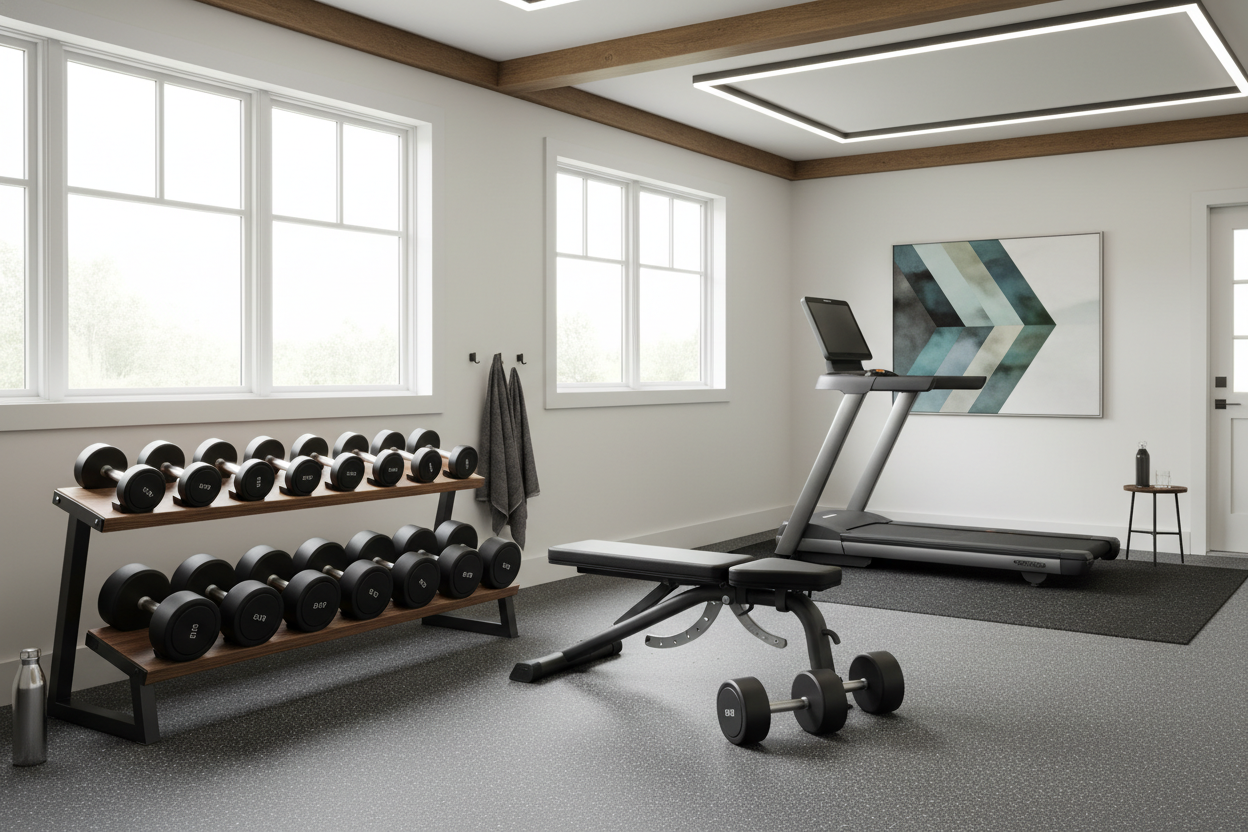
The first thing you notice about a budget garage gym is the smell. It is that acrid, recycled-tire-fire scent that sticks to your clothes and makes your wife complain about the garage air venting into the kitchen. That is the 'rubber tax' you pay for saving a few bucks. If you are tired of the stink and the clunky dimensions, you have probably scrolled through high end dumbbells at midnight and wondered if that extra zero on the invoice actually moves the needle on your bench press.
I have spent a decade chasing the perfect home setup, and I have made the mistake of buying the cheapest iron I could find just to fill a rack. It usually ends with a headache from the fumes and a 50-pound dumbbell that actually weighs 47.4 pounds. High-end weights are a luxury, sure, but for the serious lifter, they are often the last set of weights you will ever need to buy.
Quick Takeaways
- Urethane is chemically stable, meaning it does not smell and won't rot or crack like cheap rubber.
- Precision machining ensures a 50lb dumbbell actually weighs 50lbs, not 48 or 52.
- Compact heads allow for a deeper range of motion on presses and rows.
- Straight, knurled handles provide a vastly superior grip compared to slippery, contoured chrome.
The Rubber Hex vs. Premium Urethane Reality Check
Most of us start our lifting careers with a standard rubber hex dumbbell set. They are the workhorses of the industry, and they get the job done. But let's be real: rubber hex weights are bulky. The heads are massive because the material is less dense, and the rubber is often a low-grade compound that off-gasses for months. If you are training in a basement with poor ventilation, that smell is a dealbreaker.
Premium urethane is a different animal. It is harder, thinner, and virtually indestructible. You can drop these on a platform for years and the coating won't peel or 'bloom' with that white powdery oxidation you see on old rubber. The construction is also different; high-end options usually feature a solid steel bolt or a welded design that prevents the heads from spinning or, worse, snapping off when they hit the floor.
What You Actually Get When You Pay Up
When you cross the $3.00-per-pound threshold, you aren't just paying for a brand name. You are paying for the handle. Most budget dumbbells use a contoured, 'ergo' handle with passive knurling that feels like a wet bar of soap once you start sweating. Premium sets use straight, stainless steel or hardened chrome handles with aggressive, volcano-style knurling. It bites into your hand and stays there.
Then there is the size. A 100lb urethane dumbbell is significantly smaller than its rubber hex counterpart. When you are doing heavy incline presses, those extra two inches of clearance mean you can get a full stretch at the bottom of the movement without the heads clanking together and killing your momentum. It is a subtle difference that changes the entire feel of a heavy session.
The Truth About Weight Tolerances
Cheap cast iron is notorious for 'ghost weight.' I have seen budget 50s vary by as much as three pounds in either direction. That might not matter for a casual bicep curl, but if you are pushing your limits on a heavy overhead press, a 5-pound imbalance between your left and right hand is a recipe for a shoulder tweak. High-end brands guarantee a 1% to 2% tolerance, meaning your weights are actually what the sticker says they are.
Do Premium Fixed Weights Make Sense for Space-Starved Gyms?
Here is the hard truth: a full rack of fixed dumbbells is a floor-space hog. If you are working in a 10x10 spare bedroom, a 5-50lb set takes up an entire wall. In those cases, dropping $2,000 on a fixed set is a logistical nightmare. This is where heavy-duty adjustable dumbbells become the smarter investment. You get the weight range of an entire rack in the footprint of two shoes.
However, if you have the square footage, nothing beats the workflow of fixed weights. There is no fumbling with pins or dials between sets. You grab the 60s, hit your reps, and drop them. If you are running high-intensity supersets, that speed is worth the premium price tag.
When to Save Your Money (And When to Splurge)
You do not need to buy a matching set of urethane weights from 5lbs to 100lbs. That is a vanity play. When building your dumbbell collection, be strategic. You can absolutely get away with cheap rubber hexes for your 10s, 15s, and 20s. You are likely using those for lateral raises and face pulls where precision and 'drop-ability' matter less.
Splurge on the 'heavy' pairs—the weights you use for your primary presses and rows. These are the ones that take the most abuse and where handle grip is most critical. If you find yourself doing more isolation work, you might realize you don't even need the heavy top-end weights, especially if you are already training arms on a Smith machine to keep the tension constant without the stability tax of free weights.
Personal Experience: The Lesson of the Rattling 80s
I once bought a pair of budget 80lb hex dumbbells because they were on sale for 80 cents a pound. During a heavy set of rows, I set one down a bit too hard on the edge of the mat. The internal cast iron core cracked. For the next three years, that dumbbell rattled like a spray paint can every time I moved it. It drove me crazy. I eventually sold them for a loss and bought a pair of urethane-coated fixed weights. I have dropped the new ones hundreds of times, and they still look—and sound—brand new. Buy once, cry once.
FAQ
Is urethane better than rubber?
Yes, in every functional way. It is more durable, has no odor, and allows for a more compact dumbbell head. It is just significantly more expensive.
Do I need a special rack for high-end dumbbells?
Not necessarily, but most premium dumbbells have a larger diameter handle, so make sure your rack saddles are wide enough to accommodate them without scratching the finish.
Why are some dumbbells so much smaller than others?
Density. High-end weights often use solid steel cores rather than bulky cast iron. This makes the heads smaller, which is a massive advantage for range of motion during heavy lifts.
Share:
Lower Back Pain on RDLs? Try This Smith Machine Hamstring Fix
Free Weight Snobs Are Missing Out on These Smith Machine Squat Benefits